Portuguese
  Spanish


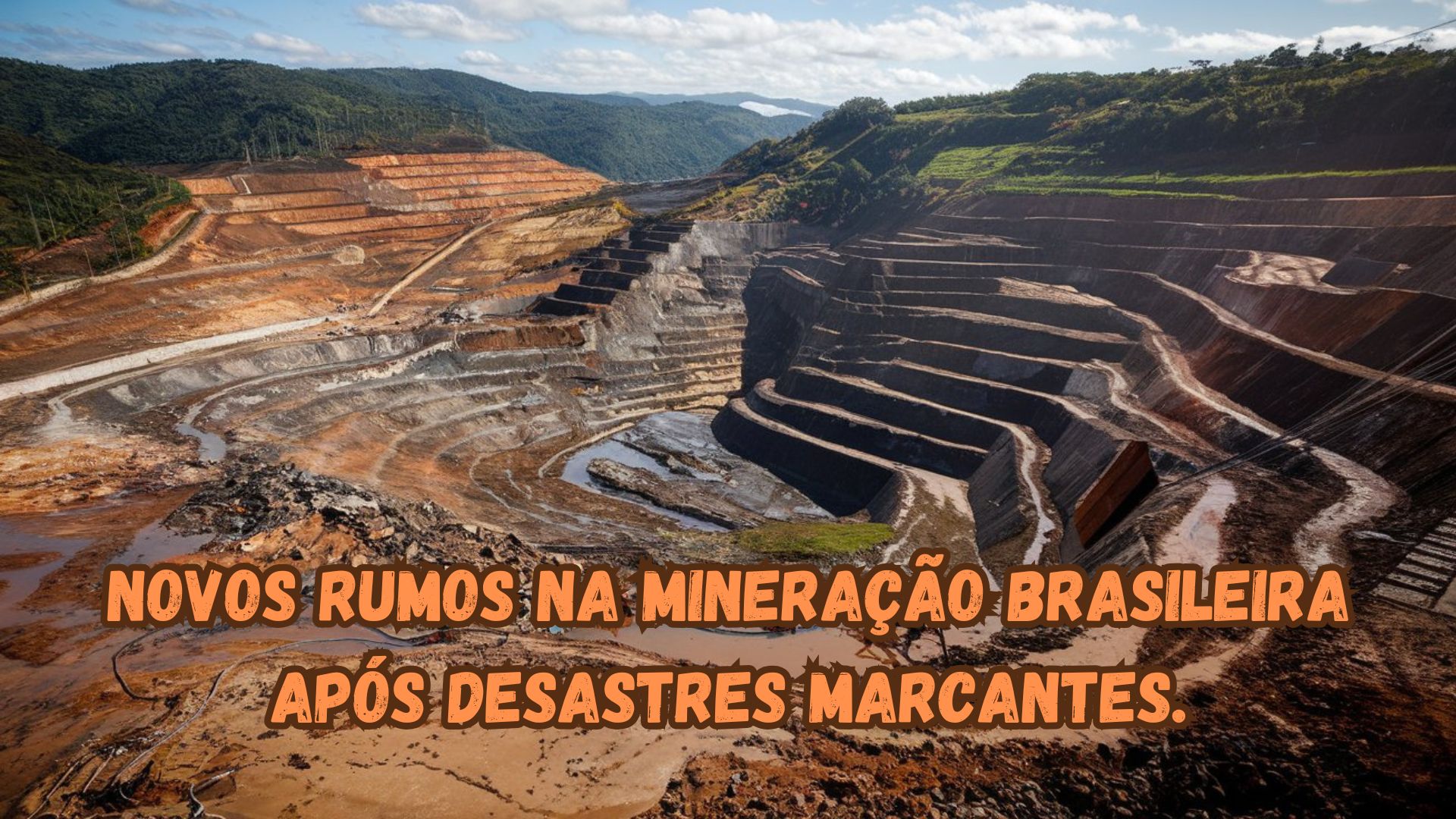

Discover How Mining Is Reinventing Itself with Sustainable Initiatives, Transparency, and a Renewed Commitment to Society After Brazil’s Largest Socio-Environmental Disasters.
Transformative Tragedies in Mining
Certainly, the disasters in Mariana in 2015 and Brumadinho in 2019 have profoundly marked mining in Brazil. Indeed, these events not only caused devastating human losses but also left deep scars on the sector’s relationship with society. Furthermore, the environmental and social impacts generated remained a constant reminder of the need for change. Therefore, understanding the subsequent actions of the sector is essential for assessing the future. Moreover, it is undeniable that these events have forever transformed public perception of mining in the country.
Regaining the Social License to Operate
To overcome the impact of these tragedies, companies such as Samarco, Vale, and BHP needed to adopt significant changes. Thus, more than just advertising strategies, it was necessary to implement concrete actions that demonstrated commitment to the communities. In this sense, it was crucial to show a genuine effort to repair the damage and prevent new incidents. Additionally, transparent communication played a fundamental role in this process. In this way, the rebuilding of trust began to take shape. Still, the challenge remains, and the efforts must continue steadily.
A History of Resistance and Controversies
Historically, mining has faced challenges related to illegal mining, which destroys ecosystems, inhumane labor practices, such as in Serra Pelada, and environmental impact, often denounced by cultural figures like Carlos Drummond de Andrade. However, the industry has advanced toward sustainability and transparency, creating new narratives to transform this reality and change public perception. Furthermore, it is important to highlight that these advances were only possible due to social pressure and recognition of the importance of more responsible practices. Consequently, this transformation is underway, but still requires much effort.
-
Brazilian Company in Minas Gerais Innovates by Using Electric Currents to Extract Critical Metals from Industrial Waste

-
U.S. Acquires Brazil’s Only Rare Earth Mine for $2.8 Billion, Diverting It from China

-
Indian Project Aims to Recover Zinc and Silver from Mining Waste, Targeting Over ₹3.8 Billion Revenue in 28 Months
-
Giant 142 kg Emerald from Brazil’s Bahia Region Auctioned with Starting Bid of Nearly $16 Million



Strategic Actions Guiding Transformation
The dissociation of legal mining from illegal mining has been a priority. To achieve this, the sector implemented tracking systems in partnership with institutions like USP and WWF and strengthened enforcement over gold trading, generating greater control. Moreover, it launched the International Conference on Amazon and New Economies, promoting sustainable solutions and highlighting the concern for the balance between exploitation and conservation. Finally, in light of the accidents, legislation has been strengthened to ensure the decharacterization of critical dams, using tools like the Prox app to increase transparency and ensure public safety. With this, the sector aims to demonstrate its seriousness and commitment to society and the environment.
Vale’s Commitment to Transformation
After Brumadinho, Vale adopted concrete measures, such as eliminating critical dams by 2035, protecting 800,000 hectares of forests, and increasing diversity in its teams. Consequently, these initiatives strengthen the company’s image and represent a milestone in the pursuit of a more responsible, sustainable, and committed sector. Additionally, the company has invested in more open and accessible communication channels, getting closer to communities and listening to their demands. In this way, Vale positions itself as a leader in implementing innovative and responsible practices, reflecting its commitment to preventing similar tragedies from happening again.
Examples of Humanized Communication
Anglo American has strengthened ties with communities using channels like WhatsApp and promoting educational seminars, getting closer to people and reinforcing transparency. Meanwhile, Gerdau, to engage the public, has invested in creative campaigns that connect steel to people’s daily lives, participating in popular events like Rock in Rio and the Carnival in Salvador, humanizing its image and showing relevance. Additionally, these initiatives demonstrate that effective communication is essential for strengthening the relationship between companies and society. Consequently, both companies have stood out as positive examples in this challenging scenario, contributing to improving public perception of the sector.
Trust as a Pillar of the Future
Although the wounds from Mariana and Brumadinho are still recent, the sector’s initiatives point toward a path of reconstruction. With campaigns such as “Minerals. Present in Whatever You Imagine,” mining seeks to reaffirm its importance and gain the public acceptance necessary to move forward, redefining its image and strengthening societal trust. Furthermore, it is important to recognize that the ongoing effort to promote safer and more sustainable practices is crucial for securing public support. In this way, the sector works not only to correct past mistakes but also to build a more promising and transparent future.
The transformation that mining in Brazil is undergoing goes beyond rhetoric. By combining innovation, sustainability, and transparent actions, the sector works to restore society’s trust and ensure a safer and more sustainable future. Ultimately, these changes demonstrate that a new chapter is being written. Therefore, it is essential that the efforts do not cease, as the commitment to society and the environment will be the true foundation to consolidate this transformation. Additionally, the sector must continue to show tangible results to ensure the continuity of this progress.