






 Portuguese
  Spanish


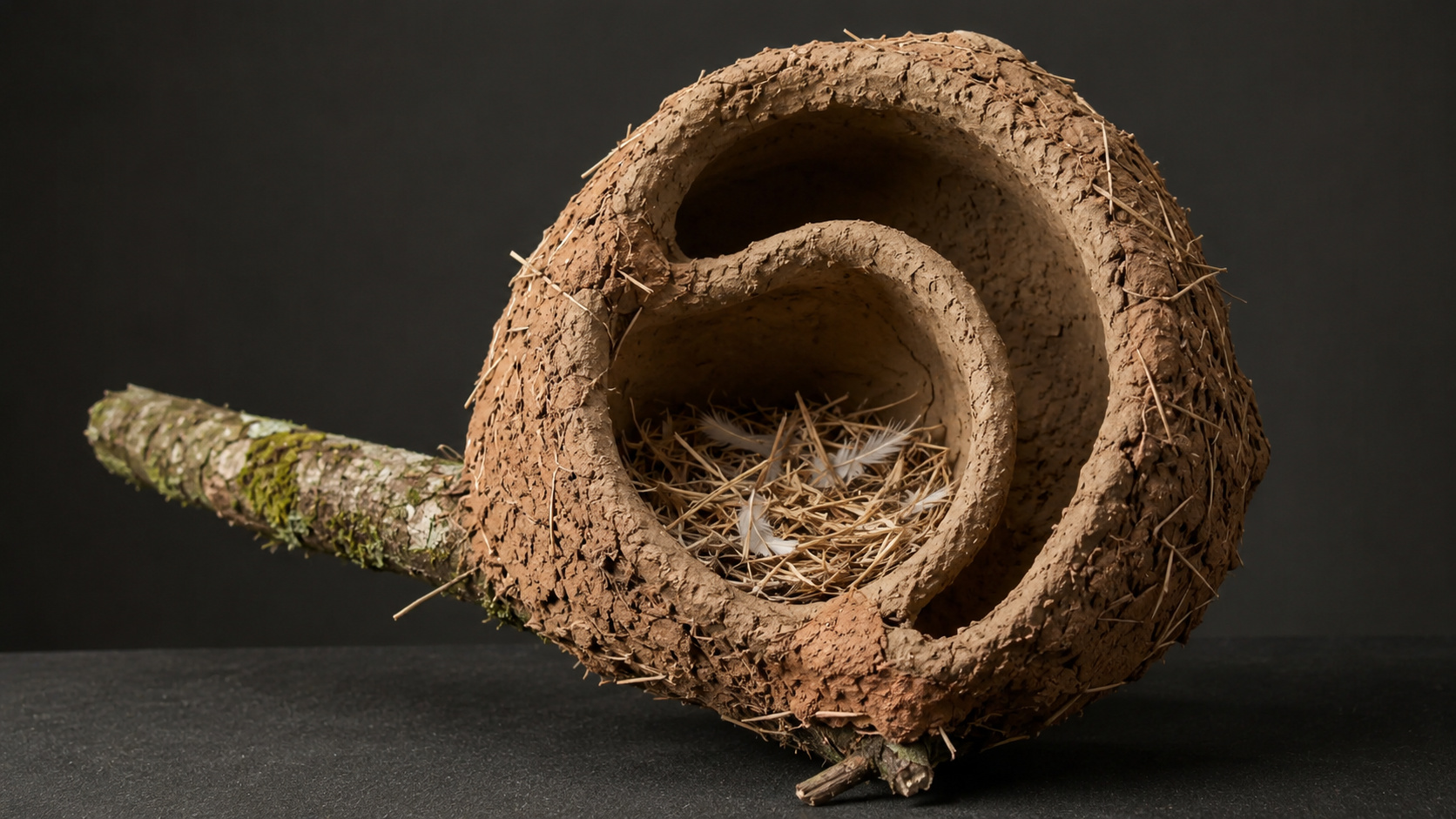

Brazilian bird uses clay, plant fibers, and an internal wall to build a natural shelter resistant to climate extremes.
The Rufous Hornero (Furnarius rufus) is one of the most impressive examples of natural engineering among Brazilian birds.
The species builds oval clay nests capable of maintaining a stable internal microclimate, even in the face of intense heat, cold, wind, and rain.
This ability is noteworthy because the shelter does not only serve as protection against predators. In practice, the nest acts as a passive thermal insulation system, created with soil, organic matter, and water.
-
Crab Trapped in Plastic Bottle for 62 Days Near Okinawa Highlights Little-Known Impact of Marine Pollution on Small Animals

-
Esperanza’s Bamboo Barrier in Oaxaca Redirects River and Reduces Erosion by 85% in Five Years

-
Family Builds Homemade Wind Turbine to Power Off-Grid Home, Video Reaches 555,000 Views on Ngô Thị Huyền’s Channel
-
Indian Brand Creates Sneakers from Recycled PET Bottles and Discarded Tires, Repurposing Over 1 Million Bottles and Raising $4 Million for Expansion




Thus, the bird transforms simple materials into a resistant, efficient structure adapted to climate extremes.
Clay engineering ensures nest resistance
The construction begins with the selection of materials.
The Rufous Hornero usually seeks soils with a good presence of clay and silt, avoiding very sandy soil, which reduces the firmness of the structure.
During construction, the pair incorporates plant fibers, dry grass, fine roots, fragmented leaves, and, when available, fresh herbivore manure.
This mix functions as a kind of biological cement.
The fibers help distribute tensions and reduce cracks during the drying of the clay in the sun.
As a result, the nest gains compact, durable walls with low heat conduction.
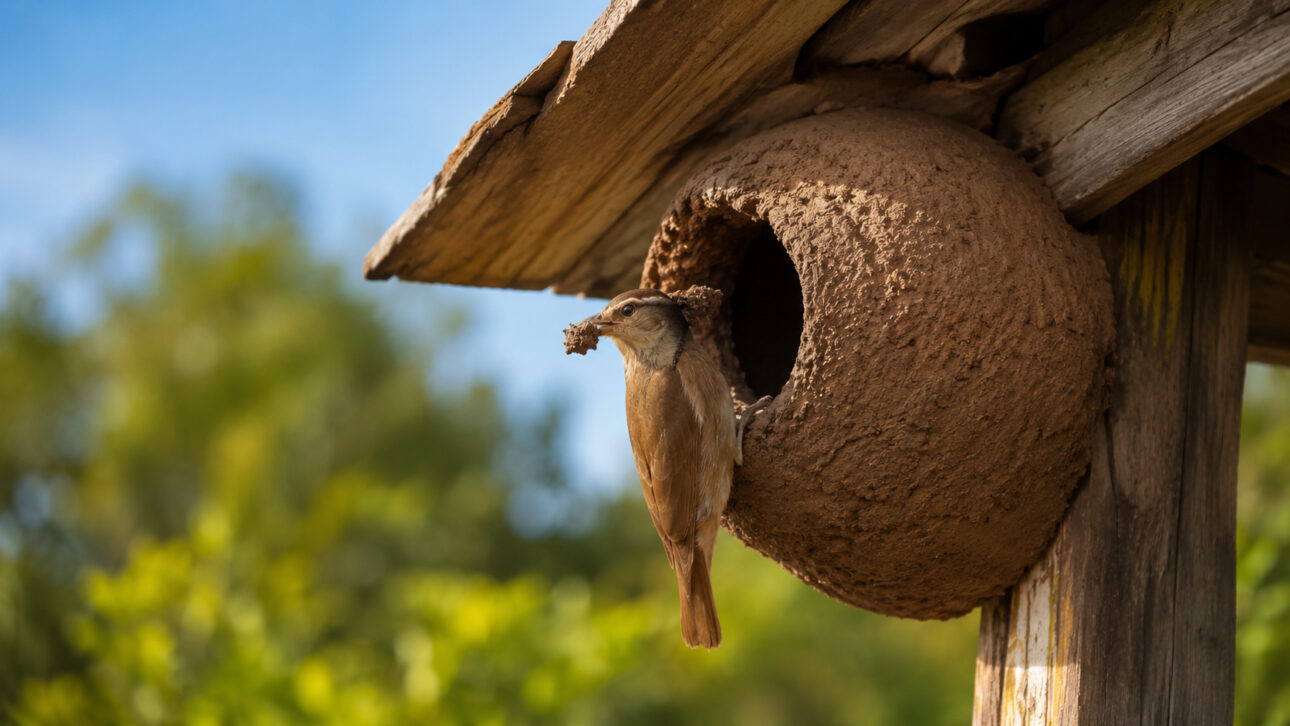
Nest entrance blocks wind and rain
The shape of the entrance also plays an essential role.
The semicircular opening narrows towards the interior, helping to control air circulation.
The orientation of the entrance is not random.
Ecological behavior research indicates that the bird tends to position the opening on the opposite side of cold winds and the strongest rains in the region.
Consequently, the outside air enters with less force.
This choice reduces sudden temperature changes and keeps the inner chamber more protected.

Internal wall creates maze effect
The greatest innovation of the nest is inside the structure.
Unlike a single space, the shelter has an internal dividing wall, forming a corridor similar to a maze.
This wall fulfills three important functions:
- Reduces wind speed before it reaches the eggs;
- Creates a thermal transition area between the entrance and the main chamber;
- Blocks direct sunlight, preventing overheating.
Thanks to this maze effect, the air circulates slowly.
In this way, the interior remains more stable, protected, and suitable for the development of the young.
Incubation chamber retains heat
The most protected area of the nest is the incubation chamber.
In this space, the female deposits the eggs and maintains the embryonic development process.
To enhance thermal comfort, the floor is lined with fine grass, moss, fur, and feathers.
This material creates an insulating layer around the eggs.
Thus, the heat produced by the bird during incubation remains retained for longer.
According to ecological studies on the Furnarius rufus, this protection helps maintain temperatures close to 35°C, a condition favorable to embryo development.
Resilient nest gains importance in extreme climate
The study of the ovenbird’s architecture has become even more relevant in the face of climate change.
Heatwaves, storms, and prolonged droughts pose risks to birds living in fields, pastures, and open areas.
In this scenario, the mud nest offers greater thermal resistance than simple structures made only with twigs.
The continuity of this strategy depends on the availability of natural resources.
Water, clay soil, and organic matter are essential for construction.
Therefore, soil degradation and severe drought can hinder the reproduction of the species.
What does science learn from the Rufous Hornero?
The architecture of the Rufous Hornero shows how nature develops efficient solutions using few resources.
With clay, fibers, and strategic orientation, the bird creates a sturdy, ventilated, and thermally protected shelter.
This behavior reinforces the importance of preserving natural environments where the species finds the necessary materials to build its nests.
Moreover, it reveals how Brazilian biodiversity holds valuable examples of adaptation, resilience, and ecological intelligence.
What catches your attention the most about the Rufous Hornero’s nest: the clay’s resistance, the thermal insulation, or the labyrinth effect created inside the structure? Share your opinion!


