Portuguese
  Spanish


Inaugurated in 2022 in the Wuchang district, the complex covers about 800,000 square meters and thirteen floors. The title of the world’s largest mall is contested, but the rooftop equestrian center and indoor ski slope make it more like a theme park than a regular store.
A commercial building so large that it fits an equestrian center on the roof and a ski station in the middle sounds unlikely, but it exists and is located in Wuhan, China. It is the Wushang Dream Plaza, also called Wuhan Dream Times Plaza, often cited as the largest mall in the world in a single building. Opened in November 2022 in the Wuchang district, the complex covers about 800,000 square meters of commercial area.
What draws attention is not just the size, but what was crammed inside. According to the development and the architecture firms responsible, the place includes an equestrian center on the rooftop, an indoor ski slope of about 30,000 square meters with snow all year round, an indoor amusement park, and more than 600 stores. The reported cost was about 12 billion yuan, around 8.6 billion reais.
The mall that became a city within a city
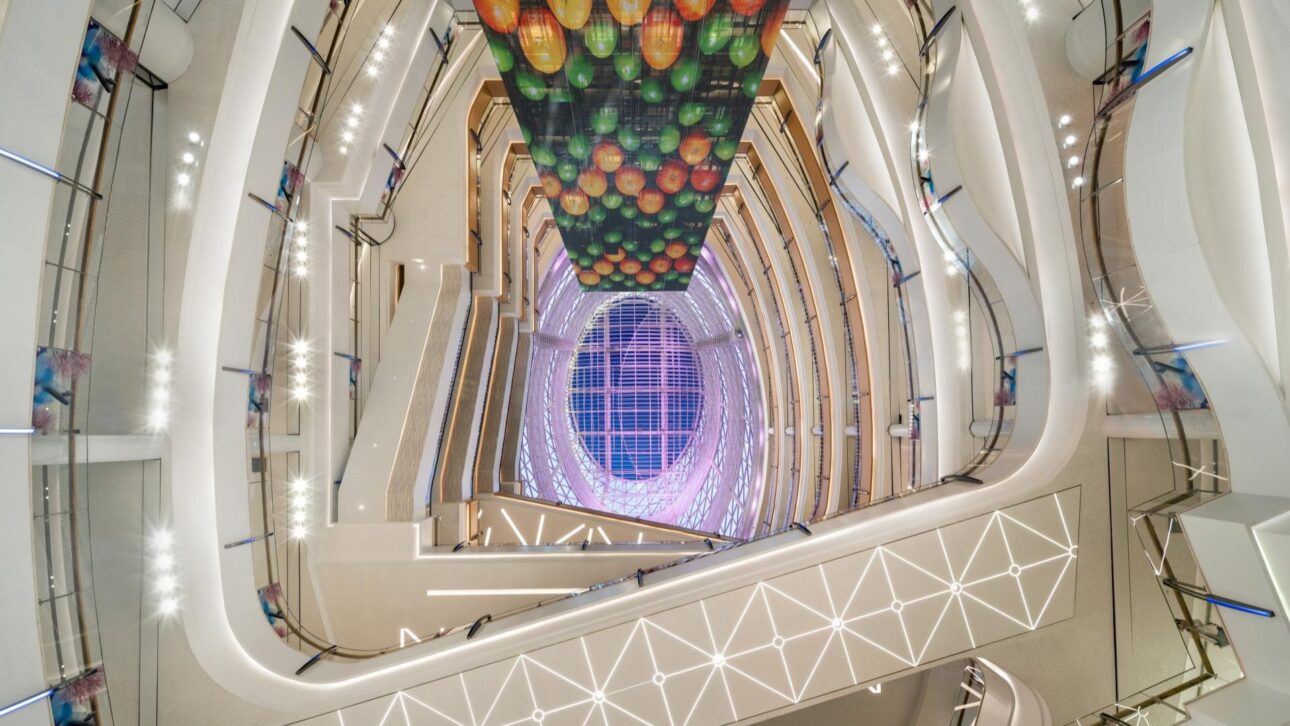
According to the architectural and lighting projects, the commercial area extends from the first basement to the ninth floor, and the complex reaches thirteen levels when counting the underground levels.
-
18-Year-Old Student Designs Modular Microhouse from Fiberglass and PET to Combat Homelessness in Brazil, Plans to Live in Prototype for a Year to Demonstrate Quick Assembly

-
The Frenchman Who Brought the World Cup to Life: Overcoming Resistance and Crossing the Atlantic with the Trophy to Create Football’s Biggest Tournament

-
Archaeologists Reexamine 4,500-Year-Old Tombs in Ancient Mesopotamia, Suggesting Some Early Kings May Have Been Powerful Women
-
The North Face Co-Founder Donates Vast South American Lands to Create National Parks in Patagonia, Turning Private Wealth into Environmental Legacy



It was developed by the Wushang group and conceived back in 2017, as part of the city’s five-year plan.
The label of the world’s largest, however, requires caution.
Although the enterprise itself and part of the press describe it as the largest mall in the world, the title is contested by other giants, such as the Dubai Mall, the Iran Mall, and Chinese malls, which claim the title using different metrics.
The offices involved in the project adopt a more cautious definition and treat it as the largest single commercial building in Central China, which is already impressive for a single address with over 600 stores.
A rooftop equestrian center and skiing in the heat
According to reports from visitors and travel press, it is possible to take riding lessons up there, in a climate-controlled structure that houses everything from large horses to ponies trained for children.
Placing stables, animals, and tons of water dozens of meters above the ground requires extraordinary structural reinforcement, distributed through the building’s columns.
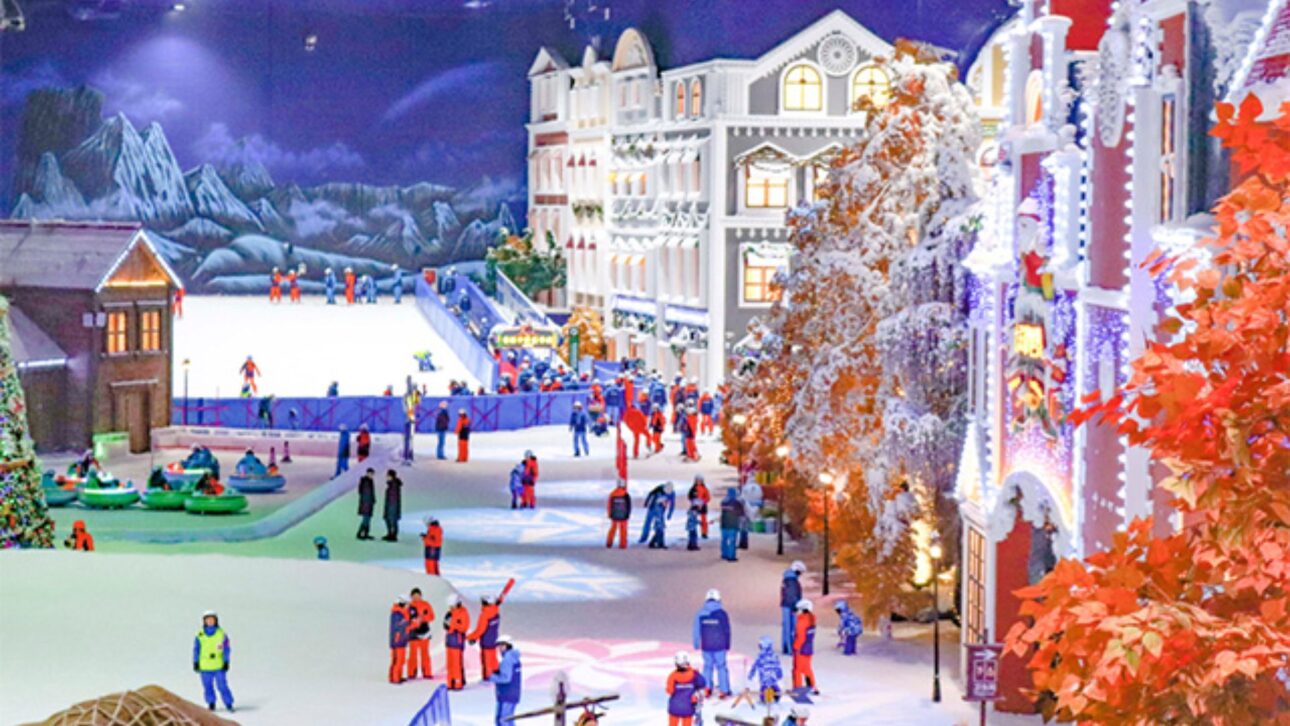
Almost at the opposite end, the complex tackles Wuhan’s famous heat with an indoor ski station.
The slope is about 30,000 square meters and was built by the Sunac group, maintained at around five degrees below zero, with real snow all year round and ramps ranging from beginner to professional level.
In a city known for its stifling summers, skiing inside the largest mall in the world is no longer a fantasy, and the slope has become one of the place’s biggest attractions.
Roller coaster, vertical forest, and indoor fun
The list of attractions at the largest mall in the world continues at a theme park pace.
The Wushang Dream Plaza has an indoor amusement park of about 36,000 square meters, with more than twenty rides, including a suspended roller coaster that snakes under the structure, carousels, and even a cinema with effects.
It is worth noting that exaggerated numbers circulate about this space, such as a supposed area of 540,000 square meters, which does not correspond to the project data.
The heart of the complex is a nine-story central atrium.
In it, a huge LED panel dominates the environment and serves as a stage for fashion shows and events, while a vertical forest about 15 meters high, with water projections, creates a green breath in the middle of the concrete.
The combination of digital media and physical space is precisely what differentiates this type of development from traditional shopping malls.
More than shopping, a mall designed as a public square


Despite all the technology, the place’s proposal is social.
The development presents itself as a platform for family gatherings and sells the idea of a micro-vacation within the city.
On the upper floors, there are large rest areas, with bleachers facing large windows that overlook the historic Baotong Temple across the street, inviting people to stay without the obligation to spend.
In practice, the mall has become a meeting point for various generations.
In the morning, it’s common to see grandparents strolling with their grandchildren while the parents work, elderly people gathering to chat, and even Tai Chi practitioners exercising in the atrium.
Directly connected to the subway, the complex dispenses with the sea of parking lots of car-dependent malls and establishes itself as a model of experiential shopping center in times of electronic commerce, even though the title of the world’s largest mall remains more linked to marketing than to a consensus.
Wushang Dream Plaza shows how far the ambition of commercial architecture goes when the goal is no longer just to sell.
Between the rooftop equestrian center, the indoor ski slope, and the indoor roller coaster, the place blurs the line between mall, park, and public square.
More than competing for the title of the world’s largest mall, it points to an idea of urban space where shopping is just one of the many things you can do.
And you, would you visit a mall where you can ski and ride a horse on the same day? Do you think this megacomplex model would make sense in large cities in Brazil, or do you prefer malls the way we know them? Leave your opinion in the comments, respecting different views, and share this article with those who enjoy architecture and curiosities.