






 Portuguese
  Spanish


The new structure at the Langley Research Center combines the functions of two nearly octogenarian tunnels in a single building. The construction has been completed and the facility is now entering the final commissioning phase before starting tests for space and aeronautical missions.
NASA has completed the construction of its first major wind tunnel in over four decades, named the Flight Dynamics Research Facility, or FDRF, at the Langley Research Center in Hampton, Virginia, USA. The vertical-type facility was designed to combine and expand the functions of two historic structures that have been in operation since the late 1930s and early 1940s, which will be retired. The agency’s stated goal is to support future human flights to the Moon and Mars, as well as aircraft research.
The new tunnel replaces the 12-Foot Low-Speed Tunnel, built in 1939, and the 20-Foot Vertical Spin Tunnel, erected in 1940 with the first tests conducted in 1941. According to NASA, these two facilities have supported the development of virtually all U.S. military aircraft designed since World War II, as well as parachute systems and space missions. The new structure promises to perform this same work with much superior performance and significantly lower maintenance costs.
What changes with NASA’s new facility
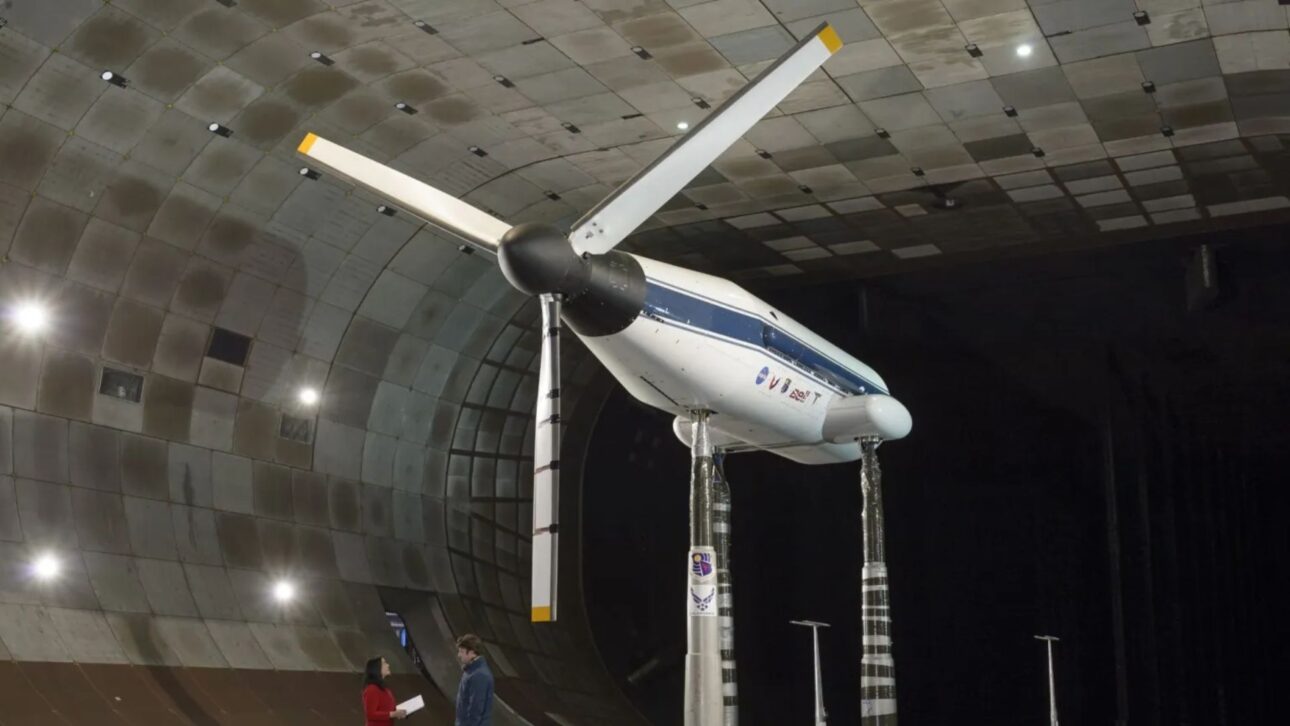
According to technical documentation presented by NASA engineers at the AIAA SciTech forum, the new facility has a vertical test section of about 6 meters, with a twelve-sided shape, and the entire building exceeds 37 meters in height.
-
Tired of Seeing Homelessness, New Westminster in Canada to Open Region’s First Tiny Home Village: 30 Container Homes with Central Kitchen, Meals, and Facilities

-
Brazil’s Santa Catarina Port Drives 770 Tons of Steel Piles into the Sea, Reaches Midpoint of $100 Million Project to Dock Two Ships Simultaneously by October
-
Expanded Polystyrene Gains Ground as a Lightweight Alternative to Traditional Masonry in Construction
-
Abandoned Brazilian Coastal Stadium, Once Hosting Major Soccer Matches, to Be Demolished for $10 Million NASCAR-Inspired Racetrack


The old complex, besides being dispersed, was located in an area prone to flooding, a problem that the new location resolves.
The performance gain is especially evident in the quality and speed of the airflow inside the tunnel.
The maximum air speed in the new facility reaches about 52 meters per second, equivalent to approximately 189 kilometers per hour, compared to the much lower values of the old tunnels.
The turbulence, in turn, drops to less than 0.5 percent, compared to 1.5 to 2 percent of previous structures, which means a much smoother airflow and more reliable data for researchers.
How a Vertical Spin Tunnel Works
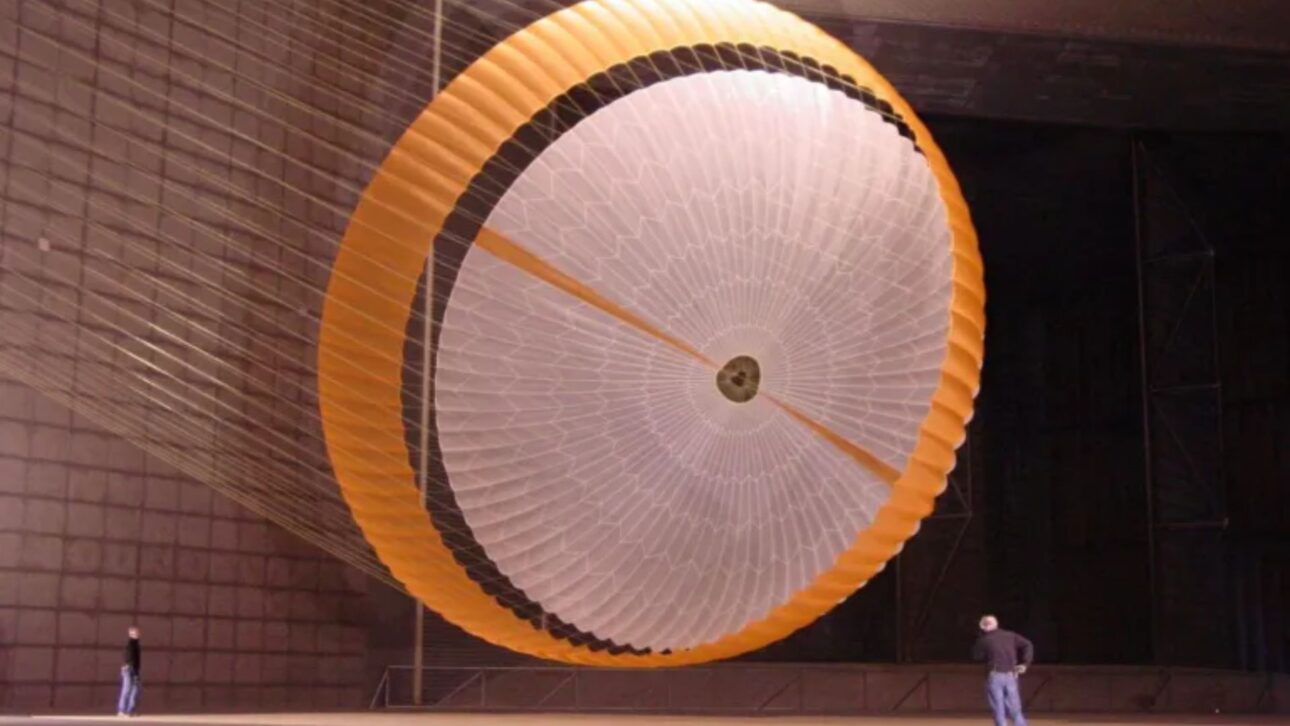
An airstream is driven from bottom to top by large fans, and scale models of aircraft or spacecraft are manually launched into this column of air.
Thus, engineers can observe how the object falls, spins, and behaves, studying situations of loss of control and recovery capability.
This type of test was originally created to investigate the so-called spin, a dangerous condition in which the aircraft enters an uncontrolled spin and plummets.
Over eight decades, the old vertical spin tunnel accumulated more than 600 projects, helping to make flights safer.
The new facility preserves this capability and adds modern features, such as better temperature control, maintained at a more stable level to ensure consistency in measurements.
From Aviation to the Exploration of Other Worlds
Although NASA is globally associated with space, it’s worth remembering that the acronym starts with aeronautics, and the new tunnel reflects this dual role.
The facility will test both the next generation of commercial aircraft, within the agency’s goal of reducing emissions by 2050, and vehicles intended for other celestial bodies.
The parachute technology developed at Langley, for example, has already been essential for bringing back to Earth samples collected in space on previous missions.
For the most ambitious missions, the FDRF was designed to support the entry, descent, and landing phases on other worlds.
Besides the Moon and Mars, the agency mentions interest in studying arrivals on bodies with dense atmospheres, such as Venus and Titan, Saturn’s largest moon, rich in methane.
These environments impose specific challenges of deceleration and stabilization, precisely the type of problem that a high-performance vertical rotation tunnel helps to solve before any real flight.
A final phase before the first tests


It is important to accurately record the current stage of the project, to avoid confusing the completion of construction with the full start of operations.
The construction part was completed, and the agency stated in June 2026 that it is putting the final touches on the installation.
The full operation entry still depends on a commissioning stage, in which the tunnel is calibrated and its performance validated before receiving the first research programs.
The design and construction contract, valued at 43.2 million dollars, was conducted in partnership with the United States General Services Administration and executed by the construction company BL Harbert International.
The construction is part of a comprehensive plan to revitalize the Langley facilities, expected to extend over about two decades.
When fully active, the FDRF is expected to take over all research functions currently performed by the two historic tunnels, which will then be deactivated.
The completion of the new wind tunnel marks a significant step in the renewal of NASA’s research infrastructure, inheriting facilities that shaped aviation in the last century.
More than just a replacement, the FDRF promises to unite tradition and technology to prepare the ground for human flights to the Moon and Mars and for a new generation of aircraft.
The next step will be to transform the newly constructed structure into a fully operational testing tool.
And you, which mission would you like to see take off from the research conducted in this new NASA wind tunnel? Comment on what caught your attention the most in this facility, if you believe humanity will reach Mars in the coming decades, and which other worlds in the solar system would be worth exploring. The conversation is open to all science and space exploration enthusiasts.


