






 Portuguese
  Spanish


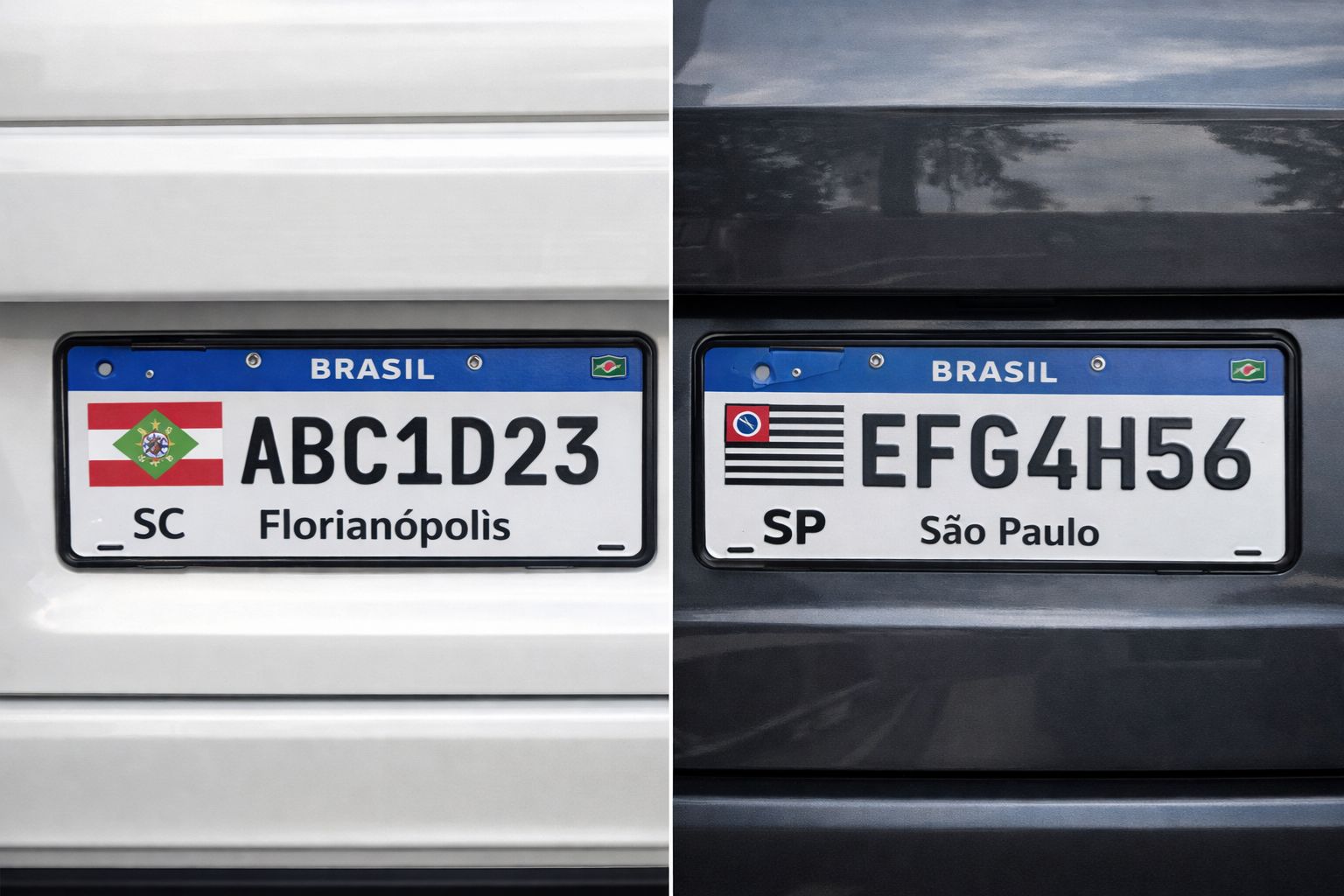

Vehicle plates in Brazil may return to displaying the name of the municipality, the abbreviation, and the flag of the state of registration. The project, already approved by the Senate, advanced in the Transportation Commission of the Chamber and alters the Mercosur standard adopted in recent years, which removed the origin identification of cars.
The vehicle plates in Brazil may undergo another significant change. A bill proposing the return of the city name, state abbreviation, and the flag of the Federation unit on the plates advanced this week in the Chamber of Deputies, after already being approved by the Senate. The proposal directly alters the Brazilian Traffic Code and reinstates information that was removed from vehicle plates after the adoption of the Mercosur standard, which unified the visual model among the countries in the bloc but eliminated the origin data that allowed identification of where each car came from.
The justification for the change combines public safety and cultural identity arguments. The author of the project, Senator Esperidião Amin (PP-SC), argues that the absence of the city and state names on vehicle plates makes it difficult to immediately identify the origin of vehicles involved in incidents, forcing security agents to resort to electronic systems to obtain information that was previously visible to the naked eye. The rapporteur in the Chamber, Deputy Hugo Leal (PSD-RJ), added that the measure “will recover the cultural and identity significance of the plates, reinforcing the sense of belonging to the region and local pride.”
What will change on vehicle plates if the project is approved
According to information from the portal ndmais, the text that advanced in the Chamber states that vehicle plates registered in Brazil must return to displaying three pieces of information that were removed with the adoption of the Mercosur standard: the name of the municipality where the vehicle is registered, the state abbreviation, and the flag of the Federation unit. This information occupied space at the top of the old plates and disappeared when the new model was implemented, leaving only the alphanumeric sequence and the Mercosur logo.
-
2027 Toyota Corolla Cross Unveiled: New Design, Enhanced Fuel Efficiency, Reduced Maintenance Costs, Advanced Technology, Connected Services, and Up to 10-Year Warranty

-
Fiat Cronos Precision 2018: Affordable Sedan with Spacious Trunk and Reliable Maintenance
-
Volkswagen to Cut Production by 1 Million Cars by 2030, Reducing Jobs and Platforms, Focusing on More Profitable Models

-
Toyota Launches First 100% Electric Car in Brazil: bZ4X with 343 HP, All-Wheel Drive, 361 km Range, Priced at $419,990 BRL, Limited to 99 Units




The change does not alter the basic structure of the Mercosur standard, which maintains the sequence of letters and numbers in the format adopted internationally. What the project does is reintegrate regional identification data on vehicle plates, creating a hybrid model that preserves the standardization of the economic bloc while restoring local information that many drivers, police officers, and citizens missed. For those who already have plates in the current standard, the legislation will need to define whether the change will be mandatory or applied only to new registrations.
Why the origin identification was removed from vehicle plates
The adoption of the Mercosur standard for vehicle plates in Brazil began in 2018 and aimed to create a unique model that facilitated the circulation of automobiles among the countries in the bloc. The standardization required all member countries to use the same visual format, which implied the removal of local information such as the name of the city and the state flag, data that made no sense in a model designed to work in Argentina, Uruguay, Paraguay, and Brazil simultaneously.
In practice, the unification brought benefits for international circulation but generated internal criticism. Highway police and security agents became exclusively dependent on electronic inquiries to identify the origin of vehicles, a process that requires time and connectivity in situations where speed can be decisive. Citizens also complained about the loss of the visual identity that old vehicle plates provided, with their colorful flags and the name of the city of origin that many considered a source of regional pride.
The safety argument behind the change in vehicle plates
The main technical argument of the project is that the reintroduction of the name of the city and state on vehicle plates facilitates police approaches and investigations. Without visible identification, agents need to rely on electronic systems to obtain vehicle data, which can take more time in urgent situations, such as chases, accidents, or inspection operations in areas with limited internet coverage.
Senator Esperidião Amin argues that the change has a direct impact on the performance of security forces and regulatory agencies. The logic is that a police officer who sees a plate with the name of a distant city in a neighborhood where mainly local vehicles circulate can identify an atypical situation more quickly than if they need to consult a system before deciding whether to approach the vehicle or not. This type of instant visual identification was routine before the Mercosur standard and, according to the project’s supporters, its absence represented a loss for public safety.
What is needed for the change in vehicle plates to become law
Despite progress in the Chamber’s Transportation and Traffic Commission, the project that alters vehicle plates is still not concluded in the Legislative. The proposal is under review by the CCJ (Commission on Constitution, Justice, and Citizenship), where it will be evaluated for legality and constitutionality. The CCJ has the power to block the project if it considers that it violates any constitutional principle or conflicts with international agreements signed by Brazil within the scope of Mercosur.
If approved conclusively in the CCJ, the text may go directly to presidential sanction without the need for a vote in plenary, unless there is a request from deputies to bring the matter to a general vote. To become law, the project needs to be approved by the Chamber, maintain the text compatible with the Senate version, and receive the sanction of the Presidency of the Republic. The timeframe for this to happen is uncertain, as it depends on the legislative agenda and any amendments that may alter the content during the process.
The cultural debate behind identity on vehicle license plates
Besides safety, the project touches on an issue that many Brazilians felt firsthand when they lost the regional identification of their cars. Deputy Hugo Leal highlighted that the initiative rescues the cultural and identity significance that vehicle license plates carried, with state flags that visually differentiated a car from Minas from a car from Rio Grande do Sul, or the name of a small town in the interior that proudly appeared under the sequence of letters and numbers.
This cultural dimension is not trivial. For many drivers, the car plate was an extension of regional identity, a symbol of belonging that communicated origin even before any conversation. The standardization of Mercosur eliminated this layer of meaning in the name of uniformity, and the project in progress proposes to restore it without abandoning the international format. If approved, Brazilian vehicle license plates will once again tell a story about who carries them and where they come from.
Vehicle license plates in Brazil may return to showing the name of the city and the state flag. Do you miss this identification? Do you think the change improves safety or is it just nostalgia? Leave your opinion in the comments.








