






 Portuguese
  Spanish


The mirror present in most modern elevators goes far beyond aesthetics. According to the portal O Antagonista, the item performs functions related to psychological comfort, accessibility for people with reduced mobility, and the perception of safety inside the cabin, and it is not a legal requirement in most cases.
You have probably entered an elevator, looked at the mirror on the wall, and moved on without questioning why it is there. Most people assume it is a decorative element or a feature to check their appearance before reaching their destination. But the mirror present in modern elevator cabins exists for much more practical and less obvious reasons than they seem at first glance, and all of them have to do with how humans react to small, enclosed spaces shared with strangers. The portal O Antagonista published an explanation on June 11, 2026, about the five real reasons behind this design choice.
What is striking is that, despite being present in practically all buildings, the installation of mirrors in elevators is not a legal requirement in most cases, according to the information published by O Antagonista. Builders and manufacturers adopt the solution on their own initiative because it significantly improves the user experience at a relatively low cost. In other words: the mirror is there because it works, not because the law requires it.
The space that seems larger than it is
Elevator cabins are usually small and enclosed by definition. This environment can cause discomfort for many people, especially on longer trips or during peak hours when more passengers share the same reduced space. The mirror directly affects this perception by creating a visual sensation of depth and amplitude, making the cabin appear larger than it actually is.
-
Simple Home Exercise Can Enhance Stability and Balance for Those Over 60

-
Spanish Farmers Turn Surplus Wool into Thermal Pool Umbrellas to Solve Rural Surplus Problem

-
Brazilian Ship Refuels with 30% Renewable Fuel in Rotterdam: Transpetro Tests B30 for the First Time, Aiming to Reduce Maritime Emissions and Showcase a Quiet Transition in Key Global Ports
-
Brazilian Man Ingeniously Transforms Air Fryer into Functional Speaker with Radio and Volume Controls



This optical effect is the same used in other indoor environments, such as small bathrooms, narrow corridors, and compact restaurants, where mirrors are deliberately used to expand the perception of space without any structural work. In the case of the elevator, the benefit is twofold: in addition to visually enlarging the space, the reflection also breaks the monotony of the enclosed walls, making the experience less oppressive for those sensitive to confined spaces.
Claustrophobia and the invisible psychological comfort
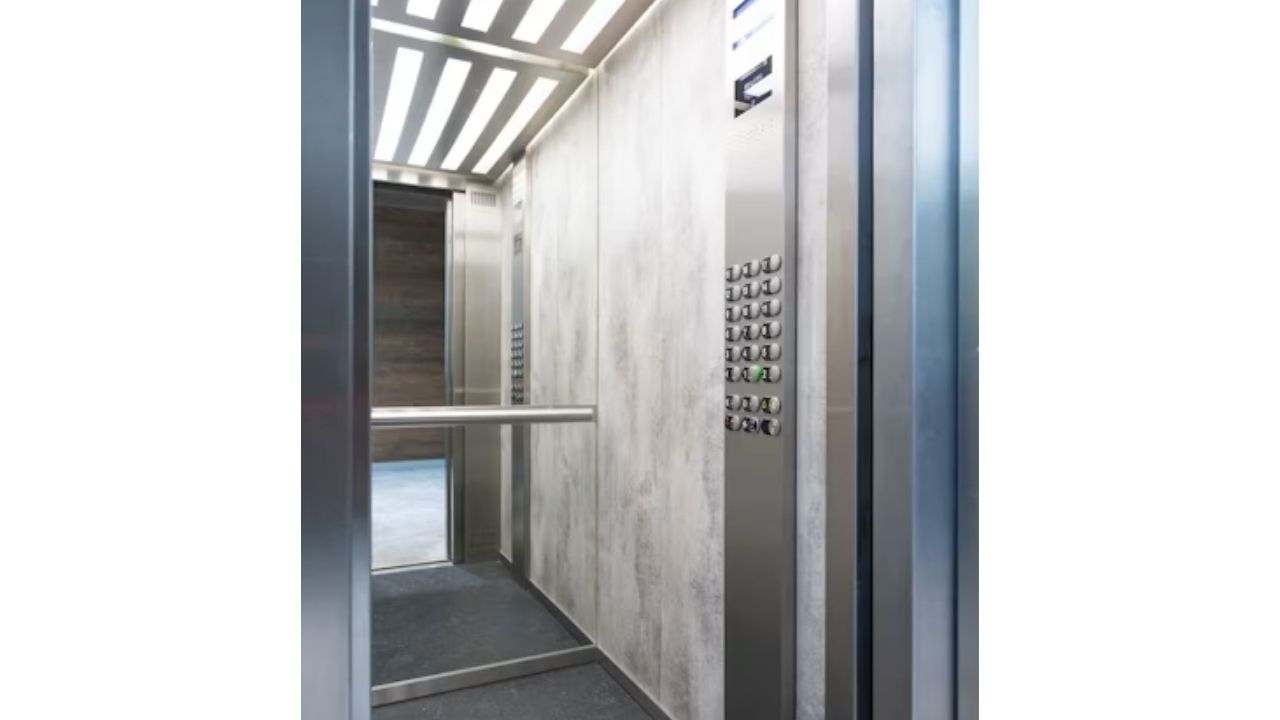
Enclosed environments, without windows and with mechanical movement, can trigger discomfort in people with varying degrees of claustrophobia, the fear of confined spaces. The mirror helps reduce this feeling of confinement by providing the user with a visual reference of the surrounding environment, creating the perception that the space is larger and more open than the physical limits of the cabin allow.
This mechanism acts silently and automatically: most people do not consciously realize that the mirror is influencing their level of comfort during the journey. According to O Antagonista, the main function of the item is precisely linked to this psychological aspect, not to vanity or decoration, as many people assume. The mirror also offers a point of distraction during the journey, reducing monotony and making the experience more bearable for those who face discomfort in enclosed environments.
Safety: see without needing to turn around
Entering an elevator with strangers is a situation that can cause apprehension, especially at night or in places with less foot traffic. The mirror solves part of this problem by allowing passengers to observe what is happening around them without needing to turn around, which would be socially awkward and potentially perceived as threatening by the other side.
With the reflection, it is possible to maintain a peripheral view of the environment and other people present in the cabin without direct eye contact. This contributes to a greater perception of control and tranquility within the space. According to O Antagonista, this function of discreet surveillance is one of the practical reasons that justify the presence of the mirror beyond the aesthetic aspect, it transforms the cabin into an environment where everyone can feel safer without needing to openly show distrust.
Accessibility for wheelchair users: a little-discussed function
Among the five reasons listed by O Antagonista, one of the least known to the general public is the direct benefit for wheelchair users. In compact elevators, the available space to maneuver the equipment is quite limited, which makes it difficult to exit when the doors open. The mirror positioned on the back wall of the cabin allows the user to see the door and the external corridor through the reflection, facilitating positioning and maneuvering to exit without needing to completely turn the chair inside the cabin.
This accessibility function is practical and concrete, and represents one of the most objective uses of the mirror in the context of elevators. In many cases, it is precisely this benefit that leads construction companies to adopt the item even without legal obligation, recognizing that it improves the autonomy of people with reduced mobility in one of the most restricted spaces of modern vertical architecture.
Why the mirror became standard without becoming law
The set of five reasons, visually expanding the space, reducing claustrophobia, increasing the perception of security, facilitating accessibility, and making the journey more pleasant, explains why the mirror has become almost a universal element in modern elevators even without mandatory legal support in most situations. It is rare for such a simple product to gather so many distinct functions at the same time, all aimed at improving the human experience within one of the most standardized and ignored environments of everyday urban life.
What the analysis published by O Antagonista on June 11, 2026, makes clear is that the presence of the mirror in the elevator is the result of an accumulated logic of good construction practices, not of aesthetic whim. Every time someone enters a cabin and feels that the environment is not as small as it seems, or feels a bit safer without really knowing why, the mirror is doing exactly the job it was placed there for, in a discreet, silent, and completely unnoticed way by most people.
Had you thought of any of these reasons before reading this? Which one surprised you the most? Leave your comment, sometimes the most common details of daily life hide the most interesting stories.


