Portuguese
  Spanish


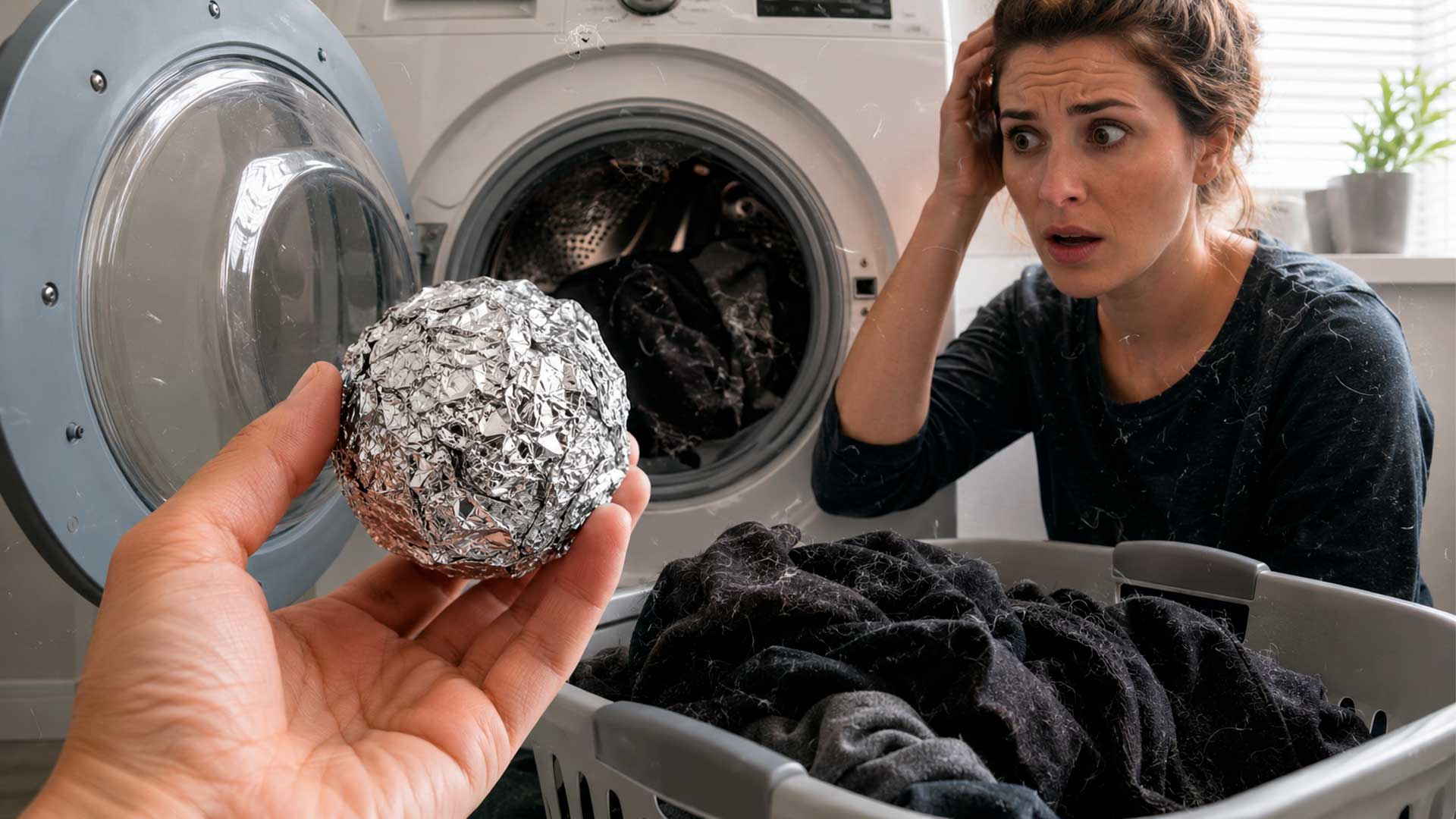

Trick promises to reduce static electricity and prevent hair and lint from sticking to clothes, but the effect is more plausible in drying than during washing with water
Putting a ball of aluminum foil inside the washing machine has caught attention on social networks again as a cheap solution for clothes covered in hair, lint, and static electricity. The most repeated explanation states that the metal would conduct the electrical charges formed by the friction between the fabrics, reducing the adhesion of particles.
A publication by Revista Oeste, released on June 7, 2026, presented the practice as a resource that can help mainly with synthetic clothes. However, the content itself acknowledges that the result tends to be subtle, does not replace soap, and can vary depending on the fabric and equipment.
The main caveat is the moment when static electricity really becomes a problem. Wet clothes hardly accumulate charges in the same way as dry fabrics, because water facilitates the redistribution of these charges and reduces the effect caused by friction.
-
London Building Features 25 Apartments, Including 8 Social Housing Units, with Shared Spaces in a Model Combining Architecture, Community Management, and Aging Planning

-
After a court-ordered shutdown years ago, Onça Puma nickel mine in Brazil’s Pará region restarts, boosting production from 25,000 to 40,000 tons annually, becoming the largest ferronickel operation in Brazil while staying 13% under budget.

-
World’s Largest Playing Card Manufacturer is Belgian, Producing Everything from Market Decks to Pokémon, Magic, and Las Vegas Casino Cards
-
World’s Largest Cork Producer in Portugal Harvests Over 5 Billion Corks Annually from Trees Without Cutting Them Down


Therefore, although there is a physical logic behind the use of metallic materials to discharge static electricity, there is no robust technical proof that throwing aluminum foil in the washer eliminates hair, lint, or dirt. In the technical sources consulted for this report, the most consistent guidelines focus on separating fabrics, controlling drying, and correctly using the machine’s cycles.
The aluminum foil ball promises to neutralize accumulated charges on clothes


The tip usually recommends that one or more sheets be crumpled until they form a compact ball, placed in the drum along with the clothes. Since aluminum is a conductive material, it could receive or redistribute part of the electrical charges present in the fabrics.
This possibility helps explain why metallic objects can momentarily reduce the sensation of clothes sticking to the body. A metal hanger passed over a dry piece, for example, can facilitate the discharge of accumulated electricity.
The problem is that many contents mix different phenomena. Static electricity, lint, pet hair, and fabric pills are not exactly the same thing, although they may appear together and make the clothing look more worn after washing.
Water, friction, and synthetic fabrics explain how static electricity arises
Static electricity occurs when materials come into contact, experience friction, and exchange electrons. Depending on its composition, a fabric can lose or gain charges, becoming electrically unbalanced until it can discharge them.
According to an explanation by physics professor Ivana Dimitrova from Northeastern University, humidity helps to transport and redistribute these charges. In dry environments, there is less water available to perform this process, allowing electricity to accumulate more easily.
This explains why the problem tends to be more intense during periods of low humidity and after clothes are fully dried. Excessive heat and prolonged time in the dryer remove a large portion of the water from the fabrics, favoring the accumulation of charges.
Materials like polyester and nylon also deserve attention because they absorb less moisture than many natural fibers. Therefore, sportswear, uniforms, microfiber pieces, and synthetic fabrics often exhibit more static cling.
Cotton, linen, and other materials that retain a bit more moisture usually suffer less from the phenomenon. This does not mean they are completely free of charges, but that the conditions for accumulation are generally less favorable.
The effect of aluminum makes more sense in the dryer than in the washer
Whirlpool states that static electricity forms mainly during drying or while clothes are being worn. The company highlights that wet clothes do not usually accumulate static, although habits adopted during washing can influence the result after they are taken to the dryer.
Inside a dryer, fabrics are in constant motion, repeatedly coming into contact and losing moisture. The combination of friction, heat, and drying creates a much more favorable scenario for the pieces to stick to each other.
Educational material maintained by NASA also uses synthetic clothes in a dryer as an example of charge formation by friction. When dry fabrics are separated, the difference in charges can produce crackling, cling, and even small visible sparks under specific conditions.
In this environment, a well-formed conductive ball could contribute to discharging part of the electricity. Still, this does not mean the result is guaranteed, nor that aluminum foil has been approved by the manufacturer for all dryer or washer-dryer models.
Aluminum foil does not remove dirt nor prevent the formation of lint balls
One of the biggest exaggerations related to the trick is the promise that the ball would leave clothes cleaner. Aluminum does not contain detergents, enzymes, or agents capable of dissolving grease, removing stains, or suspending dirt in water.
It is also incorrect to claim that the method completely eliminates pet hair. The reduction of static can make it harder for some particles to adhere, but wet hair can still remain attached to fibers, accumulate in the machine’s rubber parts, or stay in the filter.
The so-called lint balls, technically known as pilling, occur when fibers break, curl, and remain attached to the surface of the clothing. The University of Georgia explains that synthetic fabrics may experience this problem more frequently, but an aluminum ball does not reverse already damaged fibers nor replace the care indicated on the label.
Loose objects inside the washer can pose risks to the equipment
Aluminum foil is lighter and more malleable than a coin or a key, but it can lose pieces, create edges, or deform during the cycle. If a part comes loose, there is a possibility it could reach crevices, filters, hoses, or the drainage system.
Technical guidelines gathered by the maintenance company Roto-Rooter warn that loose metallic objects can hit the drum, damage the pump, or block drainage. The warning mainly addresses rigid items but emphasizes the importance of not placing materials not specified by the manufacturer inside the equipment.
Aluminum edges can also snag on lace, embroidery, loose threads, and delicate fabrics. Items with sequins, appliqués, tulle, or metallic finishes are especially vulnerable to friction with objects added to the drum.
Before testing any home tip, the consumer should consult the machine’s manual and the clothing labels. If the manufacturer does not authorize the use of additional objects, the safest option is not to perform the procedure, especially during the warranty period.
There are safer ways to reduce static, hair, and lint
Separating synthetic clothes from pieces made with natural fibers is one of the simplest measures. It is also important to avoid putting towels, fluffy blankets, or clothes that shed fibers together with black pieces, sports fabrics, and materials that attract lint.
Not overloading the machine improves the movement of the pieces, rinsing, and removal of residues. The correct amount of detergent also makes a difference, as excess can remain in the fabrics and promote particle retention.
Maytag recommends controlling the drying time, separating clothes by type of material, and, when possible, letting them dry naturally. The company also mentions dryer balls, made of wool, plastic, or rubber, which help separate fabrics and improve air circulation.
Fabric softeners can reduce friction but should be used according to the label. Some products leave residues that impair the absorption of towels and the performance of sportswear, microfibers, waterproof fabrics, or flame-resistant garments.
For those living with pets, removing excess hair before washing, cleaning the filters, and performing periodic maintenance on the machine usually produces more predictable results. No trick replaces cleaning the equipment, the proper cycle, and adhering to the manufacturer’s instructions.