






 Portuguese
  Spanish


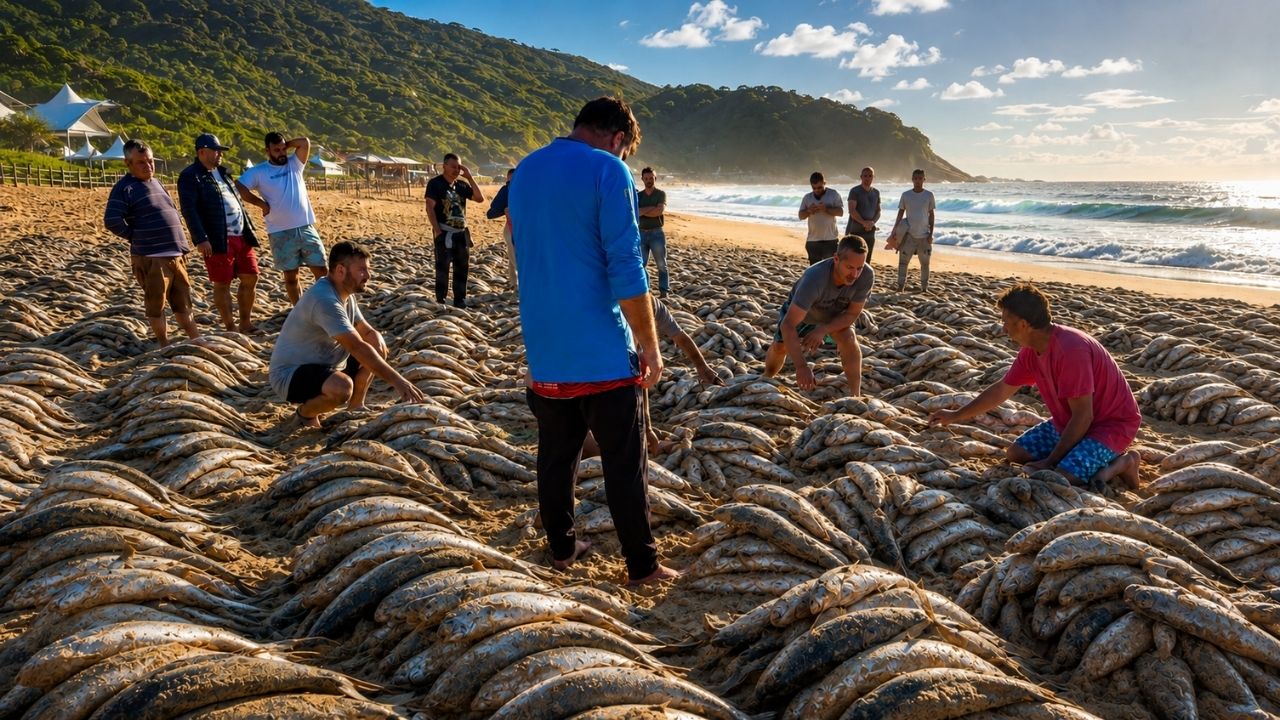


The federal government announced the release of a new quota of 400 tons for mullet fishing in Santa Catarina, following protests by artisanal fishermen on the Santa Catarina coast. The information was released by the ND Mais portal on June 11, 2026, based on reports from the licensed president of Sebrae Nacional, Décio Lima.
For days, fishermen from Santa Catarina watched schools of mullet passing close to the coast without authorization to cast their nets. The suspension of beach seine fishing, decreed by the Ministry of Fisheries and Aquaculture after approximately 90% of the quota planned for the 2026 season was used, generated an immediate reaction at different points along the Santa Catarina coast. The most visible episode was the peaceful protest held by fishermen at Bombas Beach, in Bombinhas, on the northern coast of Santa Catarina, where workers took to the streets to demand the resumption of activity and denounce the economic and cultural impacts of the stoppage on communities that have lived off fishing for generations.
The pressure had an effect. As reported by NDTV RECORD and published by ND Mais on June 11, 2026, the federal government decided to release a new mullet fishing quota for the entire coast of Santa Catarina. The information was passed on by the licensed president of Sebrae Nacional, Décio Lima, who participated in a meeting at the Palácio do Planalto on Wednesday, June 10, with the Minister of Fisheries and Aquaculture and the Minister of Environment and Climate Change to specifically address the issue. Until the ND Mais report was closed, the measure was still awaiting the publication of the joint ordinance by the two ministries to have official validity.
How the suspension came about and why it provoked such a reaction
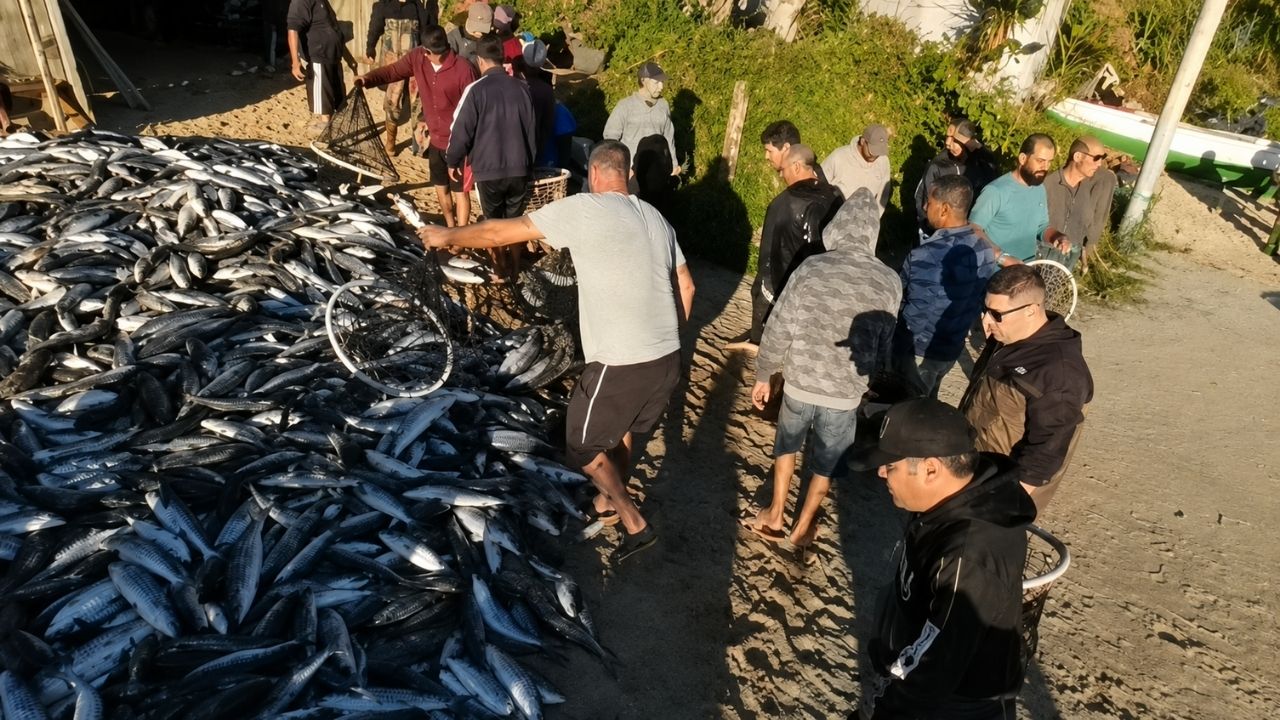
The mullet fishing in the beach seine modality was proceeding within the quota established for the 2026 season until the Ministry of Fisheries and Aquaculture ordered the activity to cease after finding that about 90% of the authorized volume had been used. In 2026, the total approved quota for mullet fishing had reached 5,216 tons, according to information published by ND Mais.
-
Regenerative Farmers Use Keyline Plow to Improve Pasture Hydration, Storing 1 Gallon of Water Every 30 Centimeters

-
Bicolor Pumpkin Resembling Hand-Painted Art Discovered by Brazilian Researchers in the Capital Due to “Spontaneous Mutation”

-
In China, a 26-story building produces 1.2 million pigs annually, revolutionizing livestock farming with tube feeding and AI surveillance.
-
With Nearly 60% Desert, Israel Desalinates Seawater and Recycles 90% of Wastewater to Build a Billion-Dollar Agricultural Powerhouse in Dates and Cotton



The suspension came precisely at a time when schools of the species were being spotted in large quantities near the coast, which intensified the frustration of the fishermen. For traditional communities that economically depend on the mullet season, one of the most important in the Santa Catarina fishing calendar, the forced halt represented not only an immediate loss of income but also a conflict between environmental regulation and the culture and subsistence of families who have been engaged in this activity for decades.
What Décio Lima announced and how the quota would be divided


At the meeting held at the Palácio do Planalto on June 10, 2026, Décio Lima, licensed president of Sebrae Nacional, reported that the federal government had decided to release a new quota. According to him, the volume should reach 400 tons, distributed equally between the North coast and the South coast of Santa Catarina, 50% for each region.
In a statement released by NDTV RECORD and reproduced by ND Mais, Lima stated: “The quota that should reach the level of 400 tons, and both South and North will be able to fish in a proportion of 50% for the South, 50% for the North.” The leader added that he dedicated himself intensively throughout the day to address the complexities of the issue and ensure a favorable outcome for the trawl fishing sector in Santa Catarina. The equal division between the North and South regions represents an attempt to meet in a balanced way the different fishing communities that had expressed dissatisfaction with the suspension.
The night before and the announcement that preceded the meeting
Décio Lima’s announcement on June 10 was not the federal government’s first move towards reopening. On the night of Tuesday, June 9, 2026, the Executive had already informed the expansion of the mullet quota specifically for artisanal fishermen in the North region of Santa Catarina, based on the latest assessment of the available species stock.
On that occasion, the government had already made it clear that fishing would remain suspended until the publication of a joint ordinance by the Ministry of Fisheries and Aquaculture and the Ministry of Environment and Climate Change, a condition that was still pending at the time ND Mais published the report on June 11. The sequence of events, protest, partial announcement on Tuesday night, meeting in Brasília on Wednesday, and declaration about the 400 tons, shows a negotiation process that accelerated under direct pressure from the fishermen of Santa Catarina.
What is still needed for fishing to be officially resumed
Despite the optimism expressed by Décio Lima and the information about the 400 tons, the effective resumption of mullet fishing in Santa Catarina depended, at the time of the ND Mais report’s publication, on formalization through a joint ordinance by the ministries of Fisheries and Aquaculture and Environment and Climate Change. Without the publication of the official act, the verbally announced release still had no legal backing to authorize fishermen to return to the sea.
This pending issue is relevant because it represents the gap between political decision and its legal implementation, a step that can be more or less quick depending on the priority given by the ministries involved. For the fishermen waiting in the coastal communities of Santa Catarina, the publication of the ordinance was the only document that would turn expectation into concrete authorization to cast the nets again. ND Mais did not report, until the closing of the article, a scheduled date for this publication.
Mullet fishing represents income, tradition, and identity for entire communities on the coast of Santa Catarina. Do you think the government acted correctly by suspending fishing and then backing down? Are the extra 400 tons enough to compensate for the stopped period? Leave your opinion in the comments, fishermen and those living near the sea have much to say about this.


