






 Portuguese
  Spanish


Planned capital in the 19th century features urban beaches, extensive cycling network, gastronomy linked to mangroves, and one of the best quality of life indicators in the Northeast region, maintaining a compact urban model that facilitates commuting and concentrates tourist attractions just minutes from the historic center.
With 182.163 km², Aracaju is one of the smallest capitals in the country in terms of territorial extension and gathers, in a compact area, a center planned in the 19th century, urban beaches, a structured waterfront, and a cycling network close to 90 km.
The capital of Sergipe, however, does not appear as the northeastern leader in the IPS Brazil 2025.
The most recent data from the Social Progress Index (IPS Brazil) 2025 shows Aracaju with 65.73 points, behind João Pessoa, with 67.00, and Teresina, with 65.76, in the ranking of Northeast capitals.
-
Man Who Spent 27 Years Cleaning Classrooms in Louisiana Becomes Principal of the Same School at 39

-
Discarded Firefighter Uniforms Repurposed into Fire-Resistant Fabric by Spanish Company
-
Brazilian Designers Turn Urban Waste into Vegan Fashion, Diverting Nearly 1 Ton of Waste and Earning $2.2 Million in 2024
-
Farmer Discovers Rare Roman Mosaic in England, Unveiling Scenes from the Trojan War and Transforming British Archaeology After Decades of Mystery




In 2024, however, the city had occupied the best regional position, with 67.89 points.
Planned city in Sergipe preserves historical urban layout
Aracaju became the capital of Sergipe on March 17, 1855, when the administrative seat was transferred from São Cristóvão to the region near the Sergipe River.
The change occurred during the provincial government of Inácio Joaquim Barbosa, as part of a project aimed at economic and administrative modernization.
The urban design was the responsibility of engineer Sebastião José Basílio Pirro, who organized the streets in straight lines and symmetrical blocks.
The geometric shape, associated with a chessboard, became one of the historical marks of the city and still guides the reading of the old center.
The choice of the new territory brought challenges.
The area had swamps, marshes, and sections prone to flooding, which required landfills and interventions to allow urban expansion.
Even so, Aracaju established itself as one of the first planned Brazilian capitals, in contrast to cities that grew adapted to the terrain.
The very name of the capital has Tupi origins and is often translated as “cashew tree of the parrots”.
The word combines terms associated with parrots and the fruit of the cashew tree, according to the institutional history of the municipality.
Quality of life in Aracaju remains among the best in the Northeast
The IPS Brazil evaluates the social progress of municipalities based on public indicators, without limiting itself to economic performance.
The methodology considers dimensions such as basic human needs, foundations of well-being, and opportunities, with scores on a scale from zero to 100.
In the 2025 edition, Aracaju recorded 65.73 points in the overall index.
The result keeps the capital of Sergipe among the best performances in the Northeast, but places it in the third regional position among the capitals, behind João Pessoa and Teresina.
The score of 67.89, cited in previous surveys, corresponds to IPS Brazil 2024.
As the 2025 edition had changes in indicators and statistical treatment, the index’s own authors inform that the two series should not be directly compared.
Even so, the capital retains attributes frequently associated with urban quality of life.
The reduced area brings neighborhoods, services, beaches, and public facilities closer, while the regular layout facilitates travel in part of the city.
Orla de Atalaia concentrates beaches, bike paths, and tourist attractions
The Orla de Atalaia is the main postcard of Aracaju and is about 6 km long.
The space includes a promenade, walking areas, bike paths, sports courts, playgrounds, landscaping, bars, restaurants, and points of high tourist circulation.
Among the most well-known places are the Arcos da Orla, the Passarela do Caranguejo, and the Oceanário de Aracaju, linked to the Tamar Project.
The oceanarium was inaugurated in 2002, is known for its turtle shape, and is presented by Tamar as the first in the Northeast.
The city also appears in the debate on active mobility.
Information provided by the Aracaju City Hall to the Municipal Chamber in 2024 indicates nearly 90 km of infrastructure for cyclists, with approximately 88 km of segregated and exclusive bike paths.
Besides Atalaia, the tourist itinerary usually includes the Museum of the Sergipe People in the historic center and tours around the Orla Pôr do Sol region.
From there, boats depart to areas such as Crôa do Goré, a sandbank in the Vaza-Barris River that becomes visible with the tide.
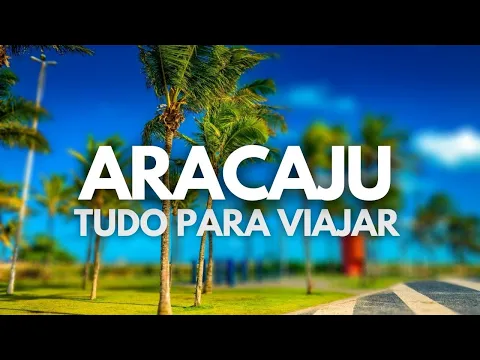

Sergipe cuisine transforms crab into a cultural symbol
The cuisine of Aracaju has a strong connection with rivers, the sea, and mangroves.
The crab is one of the symbols of this repertoire and stands out in the Atalaia Waterfront, especially in the Crab Walkway, where bars and restaurants specializing in it are concentrated.
The consumption of the crustacean involves its own ritual, with the food served whole and accompanied by items such as vinaigrette and pirão.
The tradition has helped transform the gastronomic experience into a tourist attraction in the capital of Sergipe.
The City Hall also promotes the Crab Festival, held with the participation of restaurants and institutions related to tourism and gastronomy.
In recent editions, the program brought together 15 establishments, as well as cultural attractions and a craft fair.
Other local flavors reinforce the Sergipe identity, such as dishes with aratu, shrimp, cashew nuts, and preparations based on cassava and coconut.
In municipal markets, these products share space with crafts, spices, sweets, and traditional items of the state.
The combination of a compact city, historical planning, extensive waterfront, bike paths, and regional gastronomy explains why Aracaju continues to be among the best-rated northeastern capitals in social indicators, even without occupying the regional leadership in the most recent ranking.


