Portuguese
  Spanish


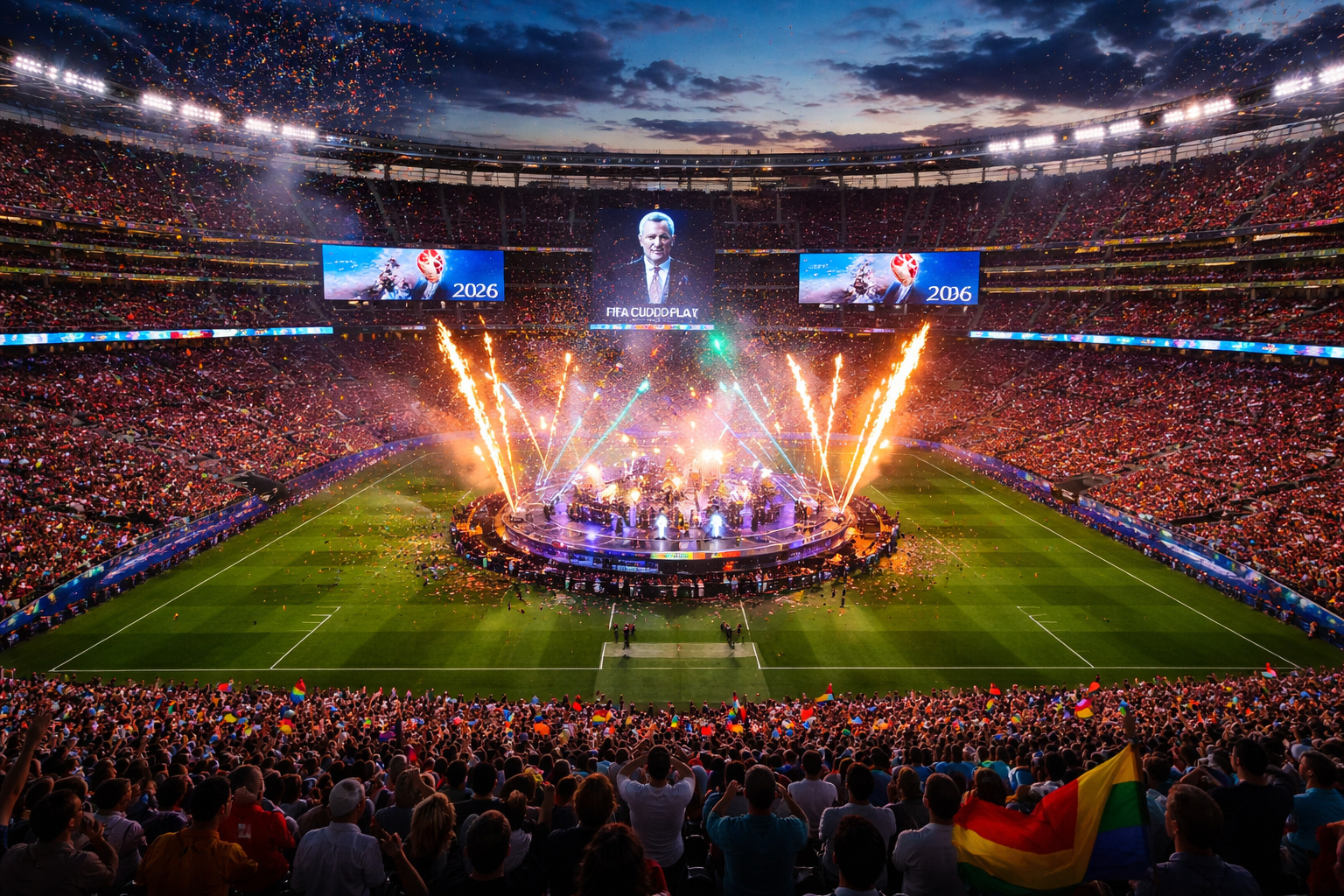

The unprecedented decision by FIFA integrates football and entertainment and transforms the dynamics of the 2026 World Cup final
The final of the 2026 World Cup will undergo an unprecedented change that directly alters the dynamics of the event.
FIFA confirmed the holding of a show during the halftime of the match, which extends the total time of the game and introduces a new format of spectacle.
The game is scheduled for July 19, 2026, at MetLife Stadium in East Rutherford, United States.
The initiative was announced by Gianni Infantino, president of the organization, as part of a strategy to expand the global reach of the tournament.
The proposal integrates football and entertainment, creating a broader experience for the international audience.
Organization of the spectacle involves names linked to Coldplay
The production of the show will be under the responsibility of Global Citizen, an organization focused on major global impact events.
Chris Martin and Phil Harvey, members of Coldplay, are involved in the creative process of the presentation.
The proposal aims to develop a show with international standards, inspired by major entertainment productions.
The artists who will participate in the event have not yet been officially confirmed.
Expectations involve globally recognized names, aligned with the global profile of the World Cup.
Artistic participation reinforces the cultural dimension of the competition
The presence of professionals linked to music enhances the cultural character of the tournament final.
FIFA believes that the inclusion of musical performances strengthens the multicultural image of the competition.
The strategy also helps attract new audiences, in addition to maintaining the interest of traditional fans.
The integration between sports and entertainment reflects a change in the format of major sporting events.
This approach follows trends already observed in other international spectacles.
-
Son of Poor Farmers Fled Home Four Times Seeking Work, Founded Hyundai, and Transformed It into a Global Industrial Giant in Over 190 Countries

-
13-Year-Old Raises Funds to Build Well, Transforming Lives in Cambodian Community Lacking Clean Water

-
Man with Metal Detector Finds Medieval Silver Seal in England, Uncovers 2,000-Year-Old Roman Gem with ‘Richard’s Secret’

-
Thailand Converts 8 Tons of PET Bottles into 3,500 School Backpacks, Showcasing Circular Economy with Over 40 Factories Involved





Planning initiated in 2024 structures the change in format
The project began to be structured in 2024, according to information released by FIFA itself.
The initiative is part of a broader plan aimed at innovation in the format of the World Cup.
The choice of MetLife Stadium highlights the importance of infrastructure to host large-scale events.
The venue was considered strategic to offer a global experience to the audience.
The decision also reinforces the intention to transform the final into an event that goes beyond football.
Strategy broadens global reach and diversifies the audience
FIFA aims to keep the World Cup among the top sporting events on the planet.
The integration with entertainment broadens the competition’s reach and diversifies the audience profile.
The adopted model follows changes in content consumption on a global scale.
The proposal combines sports excitement with cultural elements to strengthen the event.
The strategy positions the Cup as a complete spectacle within the international scene.
New experience redefines the format of the World Cup final
The 2026 final will be held in a broader format, with an extended duration and inclusion of musical attractions.
The event will incorporate entertainment elements that go beyond traditional football.
The change establishes a new standard for the audience experience in major competitions.
The proposal reinforces FIFA’s intention to innovate and maintain the tournament’s relevance.
This new format may influence future editions of the World Cup.