Portuguese
  Spanish


With Caoa Changan, Jetour, and Dongfeng already confirmed, Brazil enters 2026 with another round of advancement from Chinese brands, arriving with SUVs, store expansions, embedded technology, and ambitious plans to compete in an increasingly competitive market
Three Chinese brands have already secured their presence in Brazil in 2026, reinforcing the advance of automakers from the Asian country in the national market.
According to Auto Esporte, after Brazil welcomed eight new Chinese brands throughout 2025, the momentum continues strong this year with the confirmation of Caoa Changan, Jetour, and Dongfeng, three manufacturers that have already formalized their plans and promise to increase competition in strategic segments.
The new wave of Chinese brands shows that expansion has not slowed down with the turn of the calendar. From January until now, two companies have already officially announced their operations here, while a third has confirmed that it is about to arrive.
-
End of an era in Brazil: beloved sedan by Brazilians is discontinued despite having a 2.0 engine with 151 hp, CVT transmission, 466-liter trunk, and up to 650 km of range.

-
New Law Proposal in Brazil Could Heavily Penalize Drivers: Dangerous Overtaking May Become a Serious Offense with Fines Increased Tenfold and a 12-Month License Suspension; Update on 2026 Progress

-
Electric Revolution: Watts W125 Motorcycle Offers 160 km Range, 90 km/h Speed, and Affordable Price Starting at $3,000
-
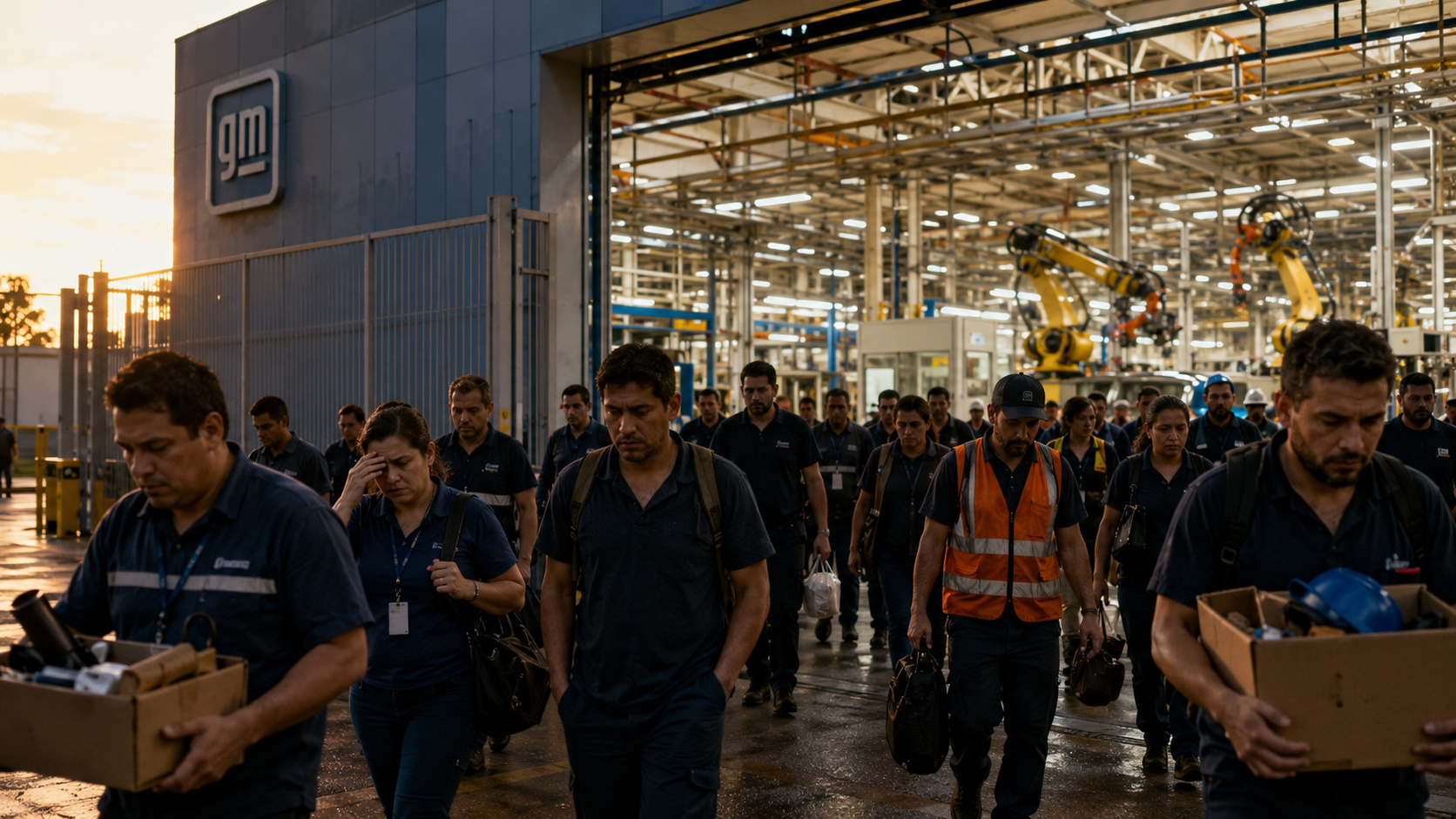
General Motors Replaces Over a Thousand Workers with 50 Cobots at Electric Vehicle Plant, UAW Union Criticizes Move Amid Industry’s Automation Push



The scenario points to a more competitive market, with more SUV options, electrified models, cars with technological appeal, and brands trying to quickly gain market share.
Dongfeng prepares debut and expands Chinese offensive
Dongfeng is the most recent among the three to confirm its arrival in Brazil. The manufacturer has been operating in China since 1969 and maintains an international presence through various sub-brands.
The company’s debut in the Brazilian market was announced in a LinkedIn post, which hinted at a strategy similar to that of other Chinese automakers that have recently entered the country.
In the publication, the new Head of Sales stated that the company has an ambitious project, structure, and long-term vision.
Despite this, the brand has not yet revealed which vehicles will be launched here. Even without this confirmation, expectations are high because the group works with a broad portfolio, with products aimed at different market segments.
International partnerships reinforce Dongfeng’s weight
Dongfeng also draws attention for its importance within the Chinese automotive industry. Like GAC, Chery, and SAIC, the automaker is state-owned and maintains strategic alliances with several global brands. In China, the company partners with Nissan, Honda, Stellantis, and Kia, sharing vehicle and platform projects.
An example of this integration is the hybrid pickup Frontier Pro, already confirmed for Brazil and originally developed by Dongfeng in the form of the V9. This detail reinforces the technical weight of the manufacturer and shows that its operation goes far beyond models sold only under its own banner.
Jetour has already started operations with three models
Another brand that has officially established a presence in Brazil is Jetour. In March 2026, the manufacturer officially began its operations in the country with three models: S06, T1, and T2. The company also promises to launch three more new models by the end of 2026, accelerating its expansion in a short period.
Jetour was born in 2018 as a subsidiary of Chery and bets on well-equipped cars with an adventurous look. Even with this more robust style, none of the models presented so far come with four-wheel drive. Still, the brand tries to stand out through the combination of appearance, equipment, and commercial strategy.
The promotional pre-sale prices have been maintained, but only until the end of April. The idea is to use this period to boost initial sales and strengthen the brand’s presence in the country right from the first months of operation.
Network grows and brand bets on after-sales structure
Jetour has also started to build its commercial and service structure in Brazil. In February, the brand had 14 points of sale and claims it wants to reach 100 points, including dealerships and stores, by the end of 2026.
The company has also installed a distribution center for replacement parts in Cajamar, São Paulo. This structure is one of the bases of the operation and helps reduce the common distrust regarding the arrival of new manufacturers. Additionally, all models sold by Jetour come with an ADAS system, a set of sensors and electronic assistants designed to help mitigate accidents.
Caoa Changan marks the return of a well-known name
The third brand already guaranteed in Brazil in 2026 is Caoa Changan. This move unites the Caoa group, which already has a long-standing partnership with Chery, with a Chinese manufacturer that has previously entered the Brazilian market under the Chana brand. In that earlier phase, the operation failed to establish itself and was marked by jokes.
Now, the proposal is different. The new brand will be Caoa Changan and will use the factory in Anápolis, Goiás, as its industrial base. The idea is to reposition the operation and try to build a new image for the manufacturer in the country.
Uni-T opens operations focusing on technology
The first model from Caoa Changan is the Uni-T, a coupe SUV sold for R$ 170,000. The car arrives to compete in an important segment of the market and is positioned as a direct competitor to the Corolla Cross.
In the mechanical set, the model features a 1.5 turbo flex engine with 180 horsepower and a dual-clutch automatic transmission with seven gears. The aim is to combine performance with a strong technological appeal. Among the highlights is the ability to perform maneuvers via remote control, a feature used as one of the main differentiators of the utility vehicle.
Three brands reinforce competition and increase pressure in the sector
The arrival of Caoa Changan, Jetour, and Dongfeng shows that Chinese presence continues to grow in Brazil at a rapid pace. Each of the three brands is betting on different paths, but all are entering an increasingly competitive market, focusing on technology, structure, product variety, and rapid expansion.
The result is a more dynamic sector with new competitors vying for space in important segments. After eight new Chinese brands arrived in Brazil in 2025, the year 2026 already confirms that the offensive is far from stopping.
This article was prepared based on information published by Autoesporte and related content from Quatro Rodas about the arrival of the Chinese brands Caoa Changan, Jetour, and Dongfeng in Brazil.