





 Portuguese
  English
  Spanish
  3 min of reading


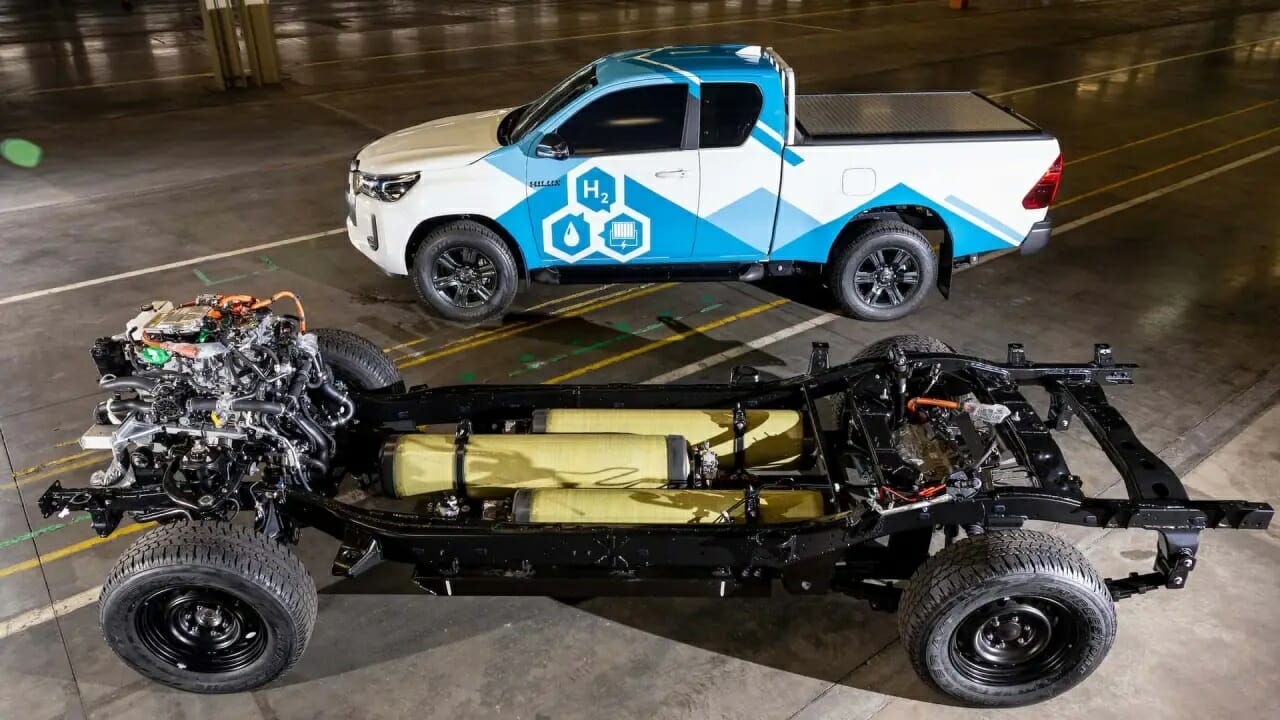
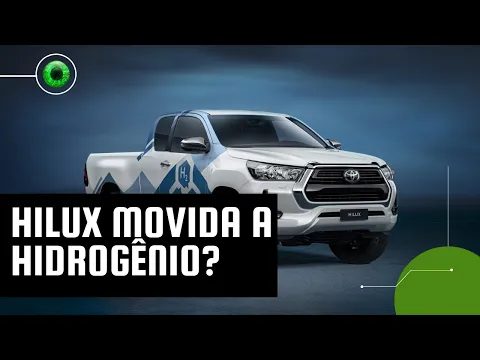
Toyota Has Started Production of the Much-Awaited Hydrogen Hilux. The Toyota Hilux Project Has Been Under Development Since 2022 and Promises to Deliver 600 km of Range.
Toyota has developed its first prototype of the Hilux with Hydrogen Fuel Cell on its production line in England. This is a project supported by funding from the UK government and in collaboration with consortium partners. The Japanese automaker plans to build 10 Toyota Hydrogen Hiluxes by the end of the year.
The Toyota Project Started in 2022
The powertrain of the hydrogen Hilux uses components from the Toyota Mirai. The Japanese automaker estimates that the model will have a range of 600 km between hydrogen refuels. For comparison, the Hilux in the Australian market, which comes equipped with a 2.8-liter turbo-diesel engine, can travel about 1,150 km between refuels.

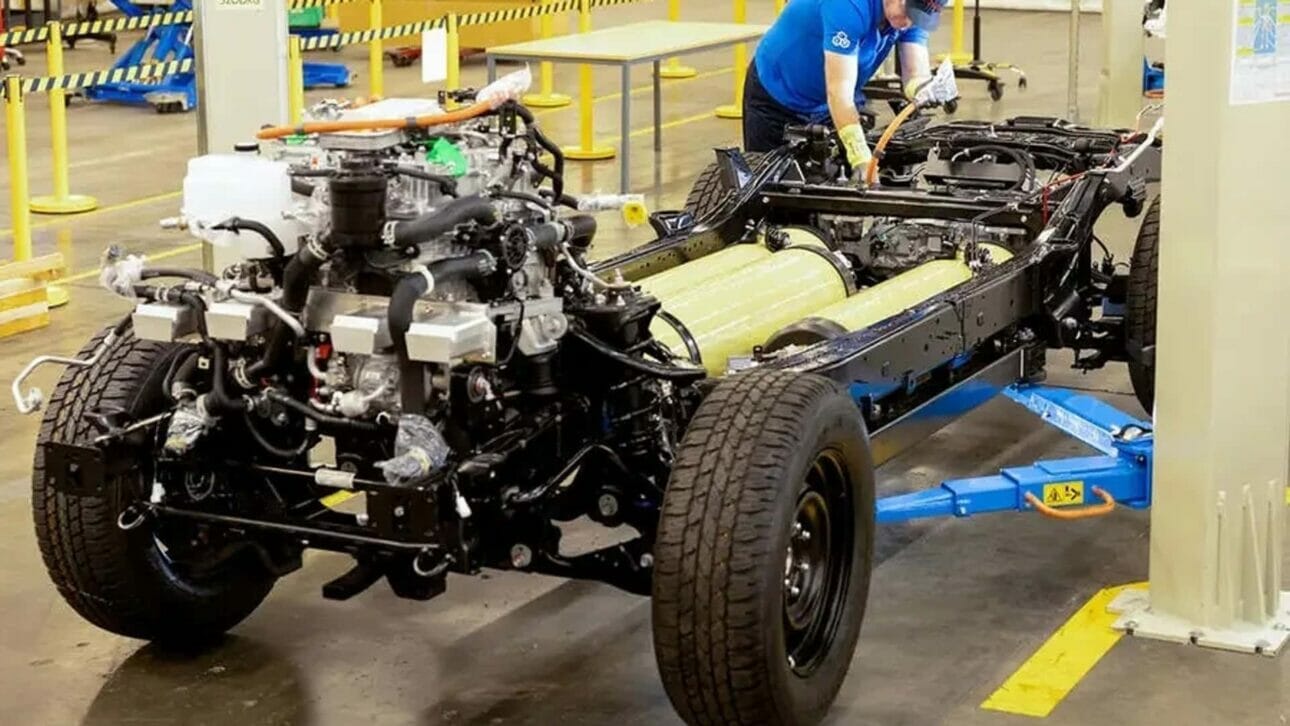
The images released by the Japanese automaker show that the hydrogen tanks are mounted between the rails of the structure, roughly where the cabin fits. The other components of the fuel cell are located under the hood, where the combustion engine typically resides. The battery is located in the rear.
-
Cheaper than Fiat Pulse, Renault Kardian, and Volkswagen Tera: with a 2.0 turbo engine of 190 hp, 30.6 kgfm torque, automatic transmission, and Swedish safety package, this premium hatch delivers sports car performance at the price of a new compact: meet the Volvo V40 T4 Momentum 2017.

-
Cheaper than a new Mobi and a Polo: with a 1.8 engine of up to 139 hp, 6-speed Aisin automatic transmission, 300 liters of trunk space, and a complete equipment package, this hatch stands out for its performance and cost-effectiveness for those seeking sportiness without spending too much. Meet the Fiat Argo HGT 2018.

-
Toyota launches “family hybrid van” with 7 or 8 seats, 1.8 hybrid engine, fuel consumption of up to 23.8 km/l, and a price equivalent to about R$ 104,000 without taxes, below the Tiggo 8 Pro Plug-in Hybrid sold in Brazil: meet the Noah Hybrid 2026 in Japan.
-
With the look of a compact SUV and the price of a rational used car: 1.5 flex engine with 115 hp, automatic transmission, 420-liter trunk, and multimedia make the Caoa Chery Tiggo 2 Look 1.5 AT 2020 an unconventional alternative.


Toyota began the hydrogen Hilux project at the beginning of 2022 with a feasibility study. The project and development began on July 1 of last year. The company started developing a prototype on June 5, 2023.
The automaker plans to put the 10 prototypes of the Toyota Hydrogen Hilux through testing to ensure that the model lives up to the Hilux’s robust legacy. Toyota is planning its performance and safety tests, durability, and functionality for the prototypes.
With this, the manufacturer aims to better understand the opportunities and risks of a fuel cell-powered pickup.
Toyota Also Plans to Manufacture Hydrogen-Powered Land Cruiser
In December of last year, Toyota showcased the electric Hilux Revo BEV Concept. At the time, the automaker did not reveal any details about the pickup, such as battery or engine specifications.
During the presentation, Akio Toyoda stated that BEVs are not the only way to achieve the world’s carbon neutrality goals. Also last year, Toyota announced that it planned to develop a light pickup with a hydrogen fuel cell as a joint project with Isuzu and Hino.
The company did not specify a timeline for bringing this model into production. Toyota is also considering the possibility of producing a version of the Land Cruiser powered by a fuel cell. Plug-in hybrid and fully electric versions are also a possibility. Until now, it is unclear which of these models, if any, will actually enter mass production.
Toyota Completely Focused on Sustainability
In addition to developments with hydrogen and synthetic fuels, a new attempt is emerging, as the automaker from China Guangzhou Automobile (GAC), in partnership with Toyota, revealed in July a prototype of an internal combustion engine powered by liquid ammonia, potentially replacing electric cars in the future.
The project of the fertilizer-powered engine is being created in partnership with the Japanese Toyota and is inspired by the maritime and transportation industries, which actively explore ammonia as an alternative to diesel for use in ships, vessels, and trucks in the transportation of goods, focusing on providing an alternative energy source to hydrogen and electricity.
According to an engineer at GAC’s Research and Development center in Guangzhou, the company has overcome the issue of ammonia being difficult to burn rapidly and putting the fuel to use in the passenger car industry.




Be the first to react!