Portuguese
  Spanish


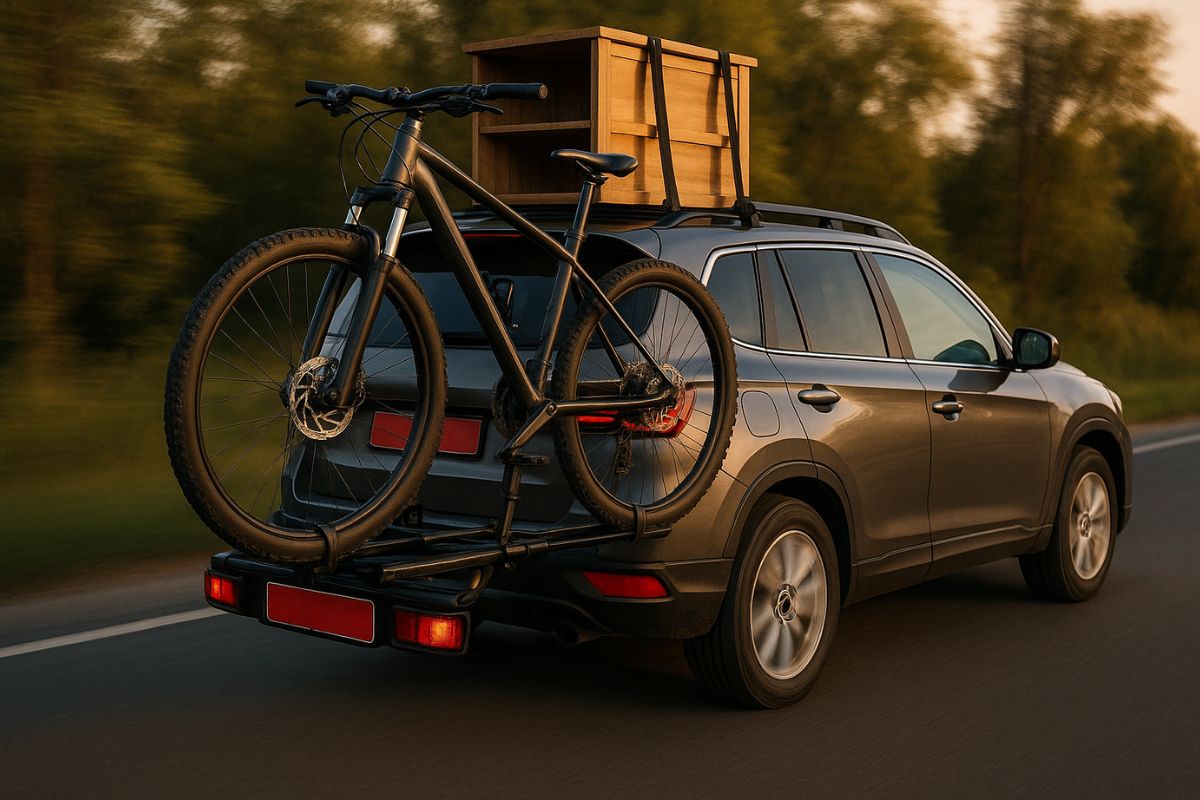

From Proper Bike Support to Load Signaling, Learn the Rules to Avoid Fines When Transporting Large Items and Prevent Points on Your License and Losses.
Transporting a bicycle to the trail or that new piece of furniture in your car requires extra attention to traffic regulations to avoid hefty fines. Common mistakes when securing or positioning the load can lead to penalties, points on your license, and, most importantly, put your safety and the safety of other drivers at risk.
According to the Brazilian Traffic Code (CTB), there are clear guidelines on the subject. Knowing the rules to avoid fines makes all the difference for those who want to save money and avoid headaches. Below, we list the 5 golden rules for safely transporting large items within the law.
Rule #1: Respect the Limits of the Vehicle (Width and Length)
The first and most important rule concerns the dimensions of the load. The Brazilian Traffic Code is clear:
-
Nissan Kicks S Direct 2018: Affordable Used SUV with Over 13 km/l Fuel Efficiency, 432-Liter Trunk, and CVT Automatic Transmission

-
Iconic Orange Double-Decker Bus, a Dutch Fan Favorite for Over 20 Years, Arrives in Texas for the World Cup After Touring Brazil, England, Qatar, and More
-
$100 Million Hypercar Collection, Including Ferrari LaFerrari and McLaren Speedtail, Found Abandoned at Los Angeles Airport
-
Hyundai ix35 2019: A Forgotten SUV with 2.0 Engine and 650 km Range Costs Less Than a New Kwid in Brazil


- Width: The load must not exceed the width of your car. It is prohibited to transport objects that extend “out to the sides”.
- Rear Length: The load may extend beyond the rear of the vehicle by a maximum of 50 centimeters, but with one condition: it must be properly signaled.
Rule #2: Use the Correct and Approved Support for Bicycles

One of the main sources of fines is the inadequate transportation of bicycles. The law requires that bikes be transported in appropriate supports, whether they are roof-mounted or hitch-mounted.
- Approved Support: Always use supports with Inmetro certification. This ensures safety and prevents fines for using non-standard equipment.
- Visible License Plate and Lights: If the support or the bicycle obscures the license plate or the rear lights of the car, it is mandatory to install a second license plate on the support itself and ensure that brake lights and turn signals are visible.
Rule #3: Secure Securing is Essential (Use Straps, Not Ropes)
The way you secure the load is crucial. Poorly secured loads can fall onto the road and cause serious accidents.
- Use Appropriate Straps: The ideal securing method should be done with approved straps or elastic bands designed for this purpose.
- Improvising is Prohibited: Never use clothesline ropes, wires, or other improvised materials. They do not provide the necessary safety, and transporting under these conditions is an infraction.
Rule #4: Signaling is Mandatory (And Saves Lives)

This is one of the most important and overlooked rules to avoid fines. Whenever the load extends beyond the rear of the car (within the 50 cm limit), it needs to be signaled.
- Mandatory Signaling: It is necessary to use reflective signaling, such as the famous “striped plate” (red and white), that is visible both during the day and at night.
Rule #5: Never Obstruct Visibility and the License Plate
The safety of the driver and the identification of the vehicle are priorities.
- Driver Visibility: The load must never obstruct the driver’s view through the rearview mirror or side mirrors.
- License Plate and Lights: As already mentioned, the rear license plate and vehicle lights must be 100% visible. Any obstruction can result in a fine.
Common Errors and the Penalties Provided for in the CTB
- Transporting loose or poorly secured loads: Serious infraction, with a fine and 5 points on the driver’s license.
- Obstructing the license plate or lights: Very serious infraction, with a fine and 7 points on the driver’s license.
- Exceeding dimension limits: Serious infraction, with a fine, 5 points, and vehicle retention for regularization.
- Driving with the trunk open: Serious infraction, with a fine and 5 points on the driver’s license.
Following these rules to avoid fines is simple and ensures that your outing or move does not end with unexpected losses. Remember: planning and attention to details are essential for safe transport.
Have you ever had any doubts when transporting something in your car? Share your experience in the comments!