






 Portuguese
  Spanish


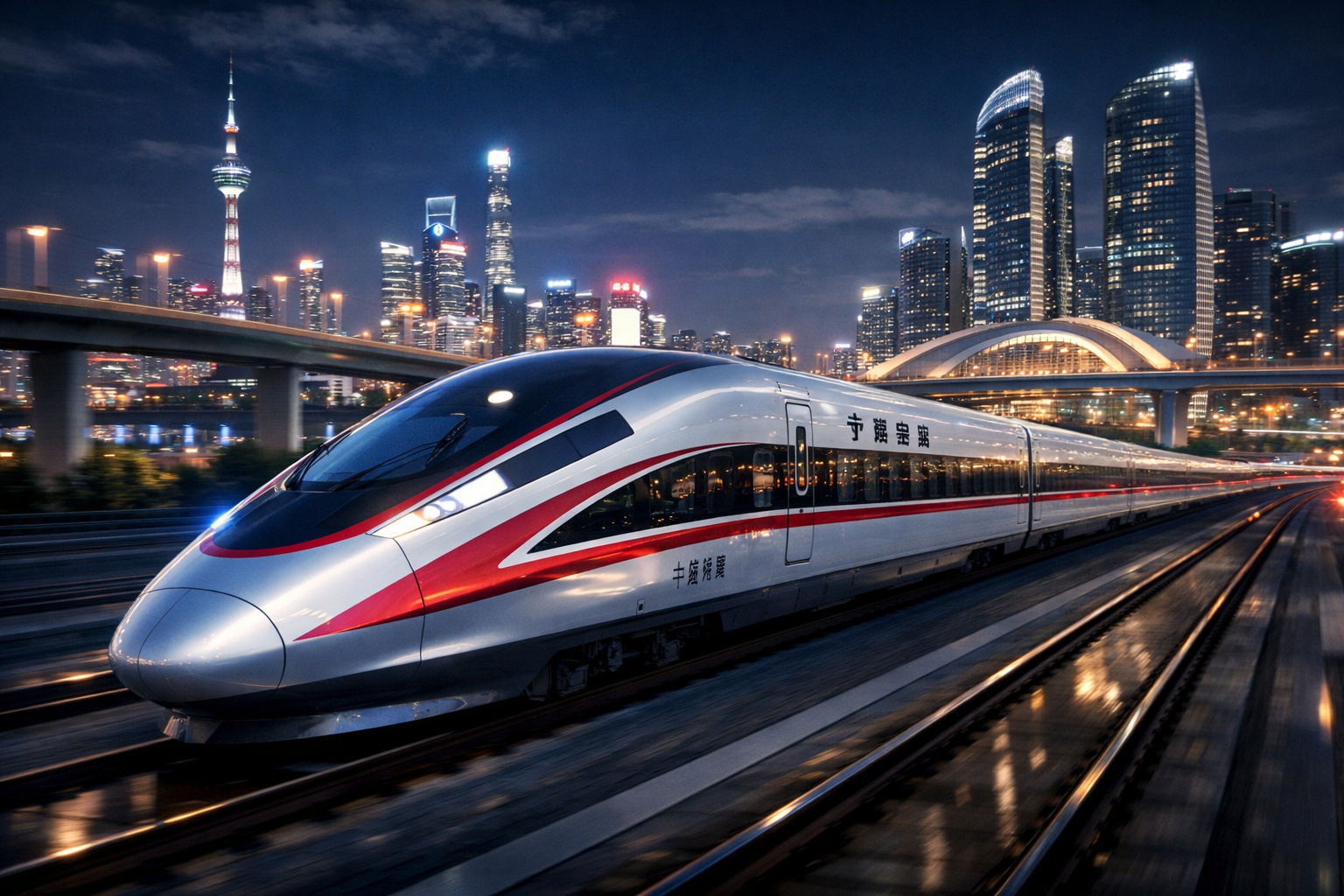


During The Lunar New Year, The Country Organizes The Largest Human Flow Ever Registered, Consolidating Its Railway Network As The Most Advanced, Fast And Efficient In The World
China Has Once Again Taken The Lead In The Largest Organized Movement Of People On The Planet. This Time, There Was No War, Hunger, Or Humanitarian Crisis Involved. On The Contrary: The Engine Of This Displacement Is Cultural. The Lunar New Year, Officially Celebrated On February 17, 2026, Has Triggered A New Edition Of The World’s Largest Annual Human Migration.
With A Population Of Over 1.4 Billion Inhabitants, China Faces, Every Year, A Logistical Challenge That No Other Country Even Comes Close To Managing. During The So-Called Spring Festival, Millions Of Workers Leave The Big Cities And Return To Their Hometowns. The Traditional Period Lasts 15 Days, But In Practice, The Displacements Extend Over 40 Days.
And The Numbers Are Impressive: For 2026, Around 9.5 Billion Trips Are Expected Over This Period.
-
Why can the crane operator only obey the correct signalman on the construction site: among dozens of workers, a hand raised by the wrong person can confuse the maneuver and turn a load of tons into an immediate risk.

-
What changes with the new public transportation rules that can reduce pressure on fares and pave the way for zero fare in Brazil?
-
Argentina confirms Belgian giant to lead strategic Paraná River waterway and promises to reduce logistical costs on one of South America’s most important routes
-
MBRF surprises the logistics sector by demonstrating how Artificial Intelligence can directly influence deliveries throughout Brazil by reorganizing distribution routes in seconds, optimizing fleet usage, reducing logistics costs, and speeding up product arrivals even in the face of unforeseen road incidents.
The Information Was Shared By International Outlets Such As El Mundo And Reiterated By Asian Agencies Such As CNA, Which Highlighted The Central Role Of The Chinese Railway System In This Unprecedented Mobility Phenomenon.
9.5 Billion Displacements And The Train As The Central Axis Of The Operation


Even Before The Official Start Of The Holiday, Train Tickets Became The Most Sought-After Item In The Country. Many Passengers Face Journeys Exceeding 30 Hours, Traveling Over 2,000 Kilometers To Their Places Of Origin.
Although Air Travel Is An Alternative, Prices Tripled During This Period. Consequently, Millions Of Chinese Chose The Rails. And It Is Precisely At This Point That The High-Speed Train In China Shows Its Strategic Strength.
The South Station In Shanghai, For Example, Was Designed With A Fully Circular Design, The First In The World In This Format And It Is Expected To Receive 15 Million Passengers Per Year. However, This Is Still Little Compared To The City’s Central Station, Which Handles Approximately 60 Million People Annually, In Addition To Integrating With The Busiest Subway System On The Planet.
Until Recently, The Busiest Station In The Country Was The South Station In Guangzhou. According To Chinese Media, About 170 Million People Passed Through There Every Year, With An Average Of 600 Trains Daily And Approximately Half A Million Passengers Per Day.
However, This Record Has Been Broken.
A Few Months Ago, Chongqing Inaugurated The Largest Railway Station In The World. It Is Five Times Larger Than New York’s Grand Central Station And Has The Capacity To Transport 16,000 Passengers Per Hour. Furthermore, Its Infrastructure Was Planned To Grow Along With The Urban Development Around It, Something Common In Chinese Cities.
The Largest High-Speed Network On The Planet
At The Beginning Of The 2000s, High-Speed Trains Were Practically Nonexistent In China. However, In Just Over Two Decades, The Country Built The Largest High-Speed Railway Network In The World.
Today, Besides Having The Most Extensive Network, China Also Leads In Technological Innovation. Robots Serve As Flight Attendants On Some Routes. Moreover, The Carriages Offer Stable And Fast Data Connectivity, Becoming More Attractive Than Air Travel On Many Domestic Routes.
Additionally, Chinese Trains Continue To Break Speed Records In Recent Tests. This Constant Evolution Positions The Country At A Nearly Unreachable Level.
Not Even Japan, Which Dominated The Sector For Decades With Its Famous Bullet Trains, Can Keep Up With The Current Pace Of Chinese Railway Engineering.
The International Impact Is Already Evident. Óscar Puente, Spain’s Minister Of Transport, Cited Chinese Trains As A Technological Benchmark And Model For Operating The Line Between Madrid And Barcelona At 350 Km/h.
Therefore, More Than Just A Means Of Transportation, The High-Speed Train In China Has Become A Symbol Of Logistical Power, Urban Planning, And Technological Dominance.
While The West Debates Subsidies And Infrastructure Bottlenecks, China Demonstrates, In Practice, What High-Speed Trains Are For: To Move Billions Of People With Nearly Mathematical Precision.
Do You Believe Any Country Will Be Able To Reach The Logistical Level That China Has Already Achieved On The Rails?









16 passengers per hour or is it 16 passanger trains per hour
Morrel
Revisar lo de 16 pasajeros por hora. Faltan ceros.