Portuguese
  Spanish


With Trump’s order, the US Navy intensifies mine-hunting in the Strait of Hormuz against naval mines, while the Pentagon estimates that cleanup could last up to six months.
United States President Donald Trump announced this Thursday (23) that he had ordered the US Navy to “shoot and destroy” any vessel that is laying mines in the waters of the Strait of Hormuz. According to him, the determination applies to “any vessel, no matter how small,” and there should be “no hesitation” in the action.
Trump also stated that US Navy “mine-hunter” ships are already “clearing” the strait “right now” and said he had ordered this activity to continue “on a tripled scale.” The statement comes on the same day that The Washington Post reported that the Pentagon estimates that the removal of naval mines in the maritime passage could take up to six months.
What Trump said about the US Navy’s operation in Hormuz

In a post on the Truth Social network, Trump stated that he had given an order for the US Navy to attack any vessel that is placing mines in Hormuz. He also declared that American mine-hunters were already working to remove the explosives from the site.
-
U.S. Women’s History Museum Stalled in Congress Amid Gender Identity and Diversity Debate

-
European Parliament Approves Digital Euro, Aiming to Challenge Visa and Mastercard’s Dominance and Transform Payments Across Europe by 2029
-
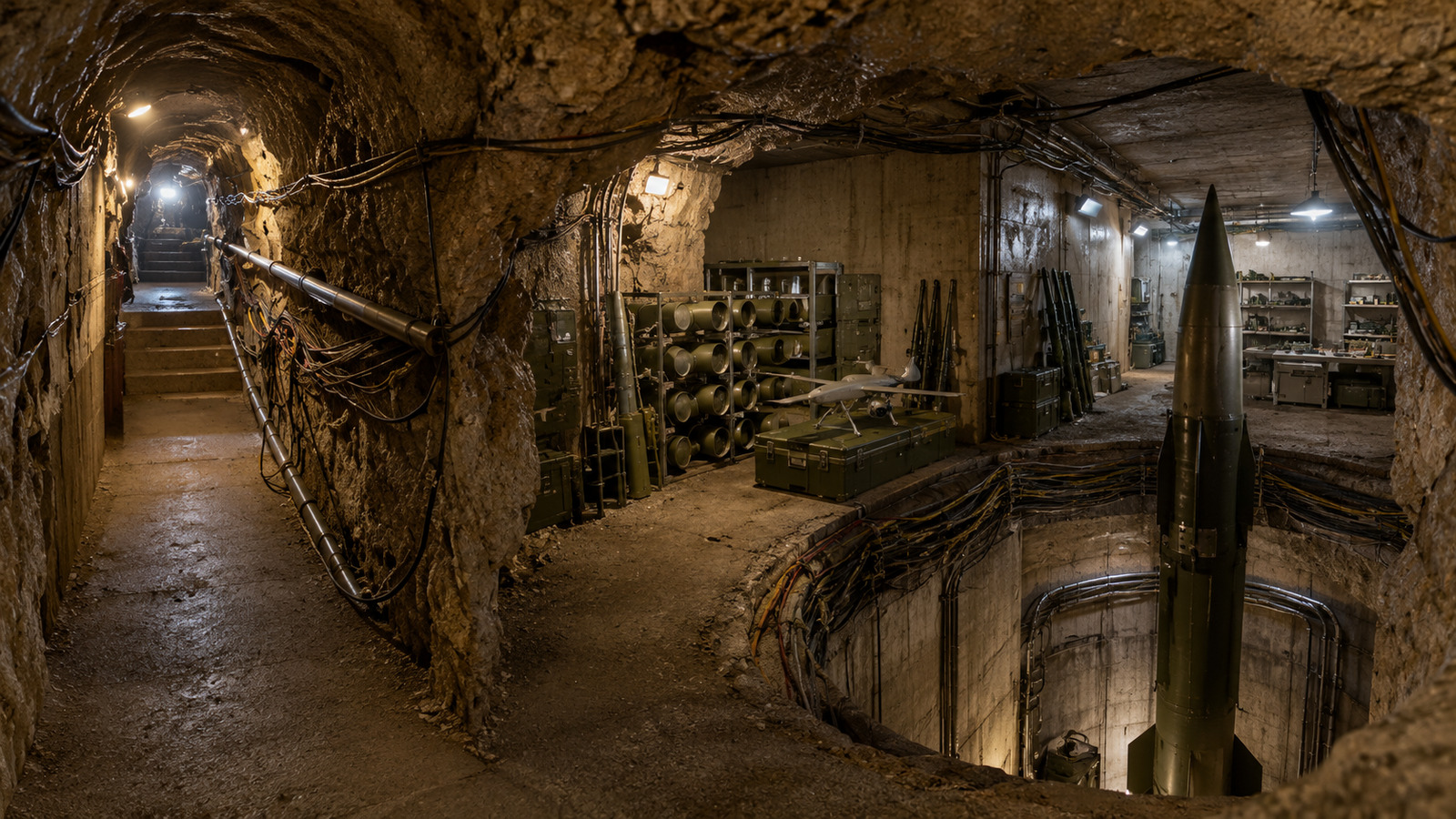
Israel finds Hezbollah militarized tunnel over 200 meters long under village, with 4 missile launch shafts, 12 chambers, anti-tank missiles, drones, and weapons depots at a depth of 25 meters.

-
Ukraine launches largest drone attack on Moscow since 2022, Russia claims to have intercepted nearly 200 aircraft near the capital, Kapotnya refinery targeted again, and offensive reignites alert about war reaching the Russian energy heart just a few kilometers from the Kremlin.



In another post, Trump said that Hormuz is “under total control” of the US and stated that “no ship can enter or leave without the approval of the United States Navy,” describing the strait as “completely sealed” until Iran is able to make an “agreement.”
Why the mines in Hormuz became the most sensitive point of the war
The issue of naval mines positioned by Iran in the Strait of Hormuz has gained prominence in recent weeks, amidst negotiations between Washington and Tehran to reopen the maritime passage.
According to the base, commercial ships were prevented from passing through the strait, which was closed by the Iranians at the beginning of the war, and there is fear of navigating the area because of the explosives. Hormuz is described as one of the main maritime routes for world trade, which amplifies the impact of any blockade or threat in the location.
The contrast in timelines: “clearing now” vs. up to six months, according to the Pentagon
While Trump stated that the US Navy is clearing the Strait of Hormuz “right now,” the cited report from The Washington Post points to a Pentagon assessment that the removal of mines could take up to six months.
This difference in outlook helps to gauge the size of the challenge: naval mines require specialized operations, and the removal process can be complex, especially in a strategic area, under military tension, and with sensitive maritime traffic.
What changes in practice for commercial ships and for navigation in the region
With the strait closed by the Iranians at the beginning of the war, the base reports that commercial ships were prevented from passing and that there is fear of transiting due to the risk of explosives.
Trump’s order for the US Navy to attack vessels that lay mines and the assertion that the strait would be “under control” place the issue of maritime security at the center of the crisis. At the same time, the Pentagon’s estimate of up to six months suggests that, even with immediate action, complete normalization may not be quick.
Stalled negotiations, indefinite ceasefire, and the impasse over Hormuz
The US and Iran are in an indefinite ceasefire in the war between them, which has already lasted almost two months, according to the base. Still, negotiations for a definitive end to the conflict are reportedly stalled due to impasses on “various terms,” including Iranian enriched uranium and the Strait of Hormuz.
As of now, there would be no new round of talks in sight. In this scenario, the US Navy appears as a central piece both in the operational mine-hunting action and in Trump’s announced strategy of control and blockade of the strait.
Next steps: clearing the strait and pressure for an agreement
With Trump saying that the U.S. Navy should keep the operation “tripled” and the Pentagon projecting up to six months to remove explosives, the next chapter tends to revolve around two points: the actual pace of mine clearance and whether or not negotiations advance to allow the passage to reopen.
Meanwhile, Hormuz remains one of the main barometers of the conflict, with commercial traffic caught between risk at sea and political uncertainty.
Do you think Trump’s order for the U.S. Navy accelerates the reopening of Hormuz or increases the risk of escalation in the strait?