Portuguese
  Spanish


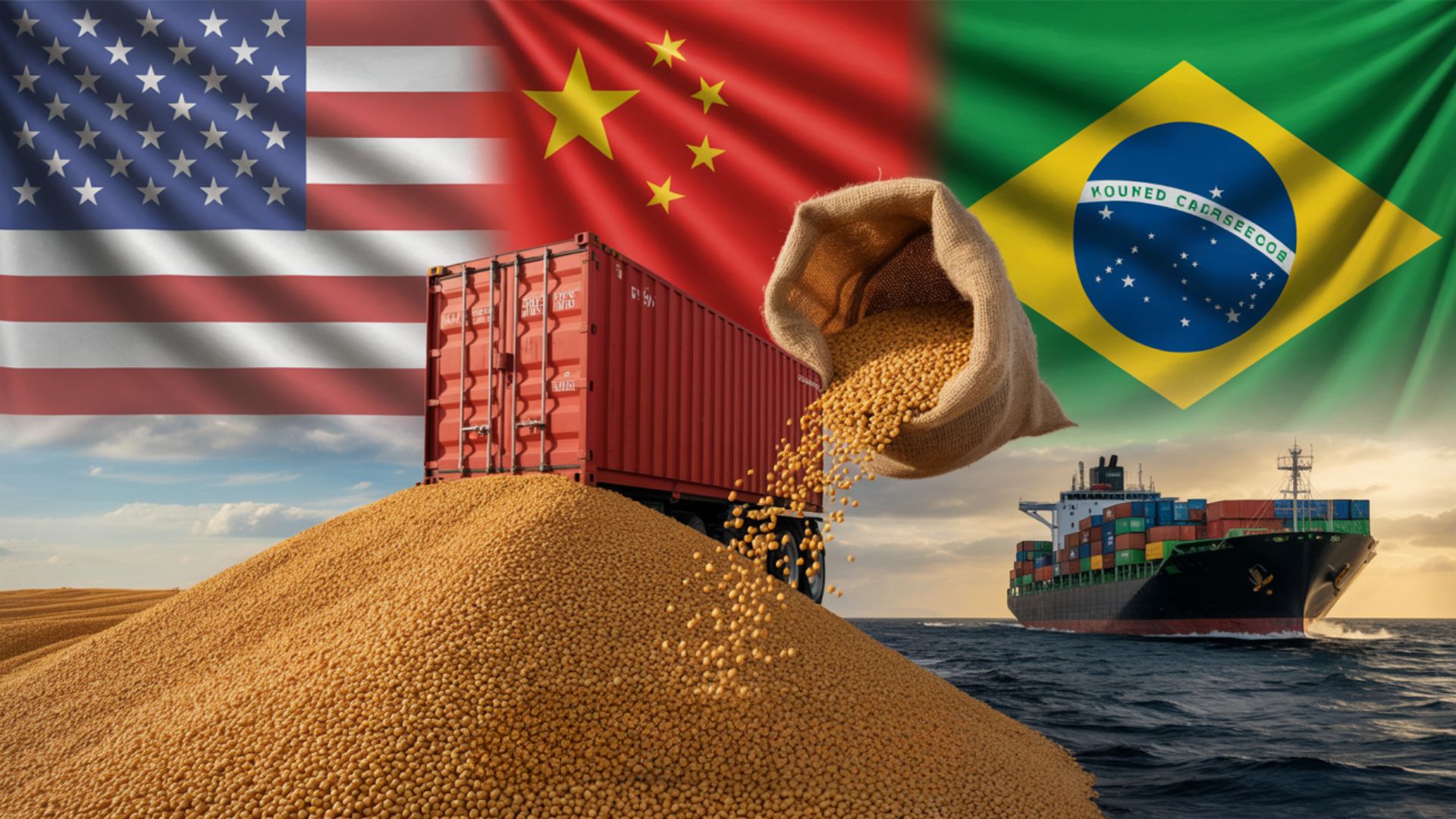

Trade Dispute Over Soybeans Exposes Chinese Dependence, Challenges Brazilian Leadership in Supply, and Expands the Impact of Demand for Meat in a Billion-Dollar Market by 2030.
The White House has upped the ante in the soybean supply dispute with China.
In August, President Donald Trump extended the tariff truce with Beijing for 90 days and simultaneously publicly urged the Chinese to quadruple their purchases of U.S. soybeans, signaling that trade concessions must come with additional volumes of grains.
The move targets an import market of about 105 million tons annually and puts direct pressure on Brazil, currently the main supplier of oilseeds to the Asian country.
-
India’s Sugar Export Cuts and Ethanol Shift Amid El Niño Threat Could Impact Global Prices and Stocks

-
Quarantine Pest Threatening Palm Trees Puts Brazilian Authorities on Alert, Prompts Monitoring at University of Taubaté and Potential Control Measures Across São Paulo
-
Global Alert: Report Finds 159 Pesticides in Coffee Beans Sold in Europe, Posing Serious Risks to Millions of Farm Workers
-
Low-Demand Brazilian Beef Offal Gains Popularity Abroad: Indonesia Purchases $19.5 Million, Boosting Revenue and Reducing Waste



U.S. Pressure and China’s Maneuvering Room
The extension of the truce prevented an immediate tariff spike and kept negotiations alive, but did not resolve the central issue: additional purchases of U.S. agricultural products, with soybeans at the top of the list.
In his messages, Trump linked the temporary relaxation of tariffs to a substantial increase in Chinese orders, attempting to reopen, on a large scale, the U.S. export window.
The reading in Beijing, however, takes into account price, exchange rate, logistics, and geopolitical risk—factors that, since the trade war began in 2018, have favored the diversification of sources and solidified Brazil’s position as a dominant supplier.

Brazil at Advantage in 2025 Shipping
While Washington attempts to regain its position, the year’s data reinforces Brazil’s standing.
Between January and July of 2025, Brazil exported 77.2 million tons of soybeans, a record for the period. July alone accounted for 12.25 million tons, also a record for the month.
Most of this went to China, maintaining the flow that intensified with competitive prices and robust supply from the country. This prominence did not arise by chance.
In 2024, 71% of China’s soybean imports originated from Brazil, according to a report from the U.S. Department of Agriculture (USDA).
The large share gives Brazilian products a reference role in Chinese crushing and feed formulas, even as buyers in Beijing alternate sources to negotiate prices.
Why Does China Need So Much Soy?
The backdrop is the expansion of animal protein consumption. China has been deepening demand for meat and derivatives, supported by urban income and changing habits.
Consultancy projections indicate that the meat market in the country could reach US$ 258.17 billion by 2030, up from US$ 83.68 billion in 2024, in line with a compounded growth rate estimated at 20.72% during the period.
Although market projections vary depending on the methodology, the trend is unmistakable: protein at the center of the Chinese diet and food industry.
The Protein Cog: Pork in Command
In supply, China has resumed and expanded production after the African swine fever crisis.
In 2023, the country recorded 57.94 million tons of pork, and the sum of pork, beef, mutton, and poultry reached 96.41 million tons, according to China’s statistical agency.
The rebuilding of the herd was accompanied by accelerated industrialization, modernization of farms, and scale gains.
Academic studies estimate that the outbreaks of African swine fever represented an economic impact of 0.78% of GDP in 2019, which helps explain the appetite for efficiency and biosecurity in the sector.
This productive cycle pulls soybeans through a specific link in the chain: the meal, the protein base of swine and poultry feed.
As China’s domestic soybean production covers only a fraction of crushing needs, supplementation through imports becomes structural.
This explains Beijing’s sensitivity to international prices, exchange rates, and freight — and the interest of producers in Brazil and the U.S. in each seasonal window.
The Vulnerable Link: Dependency on Imports
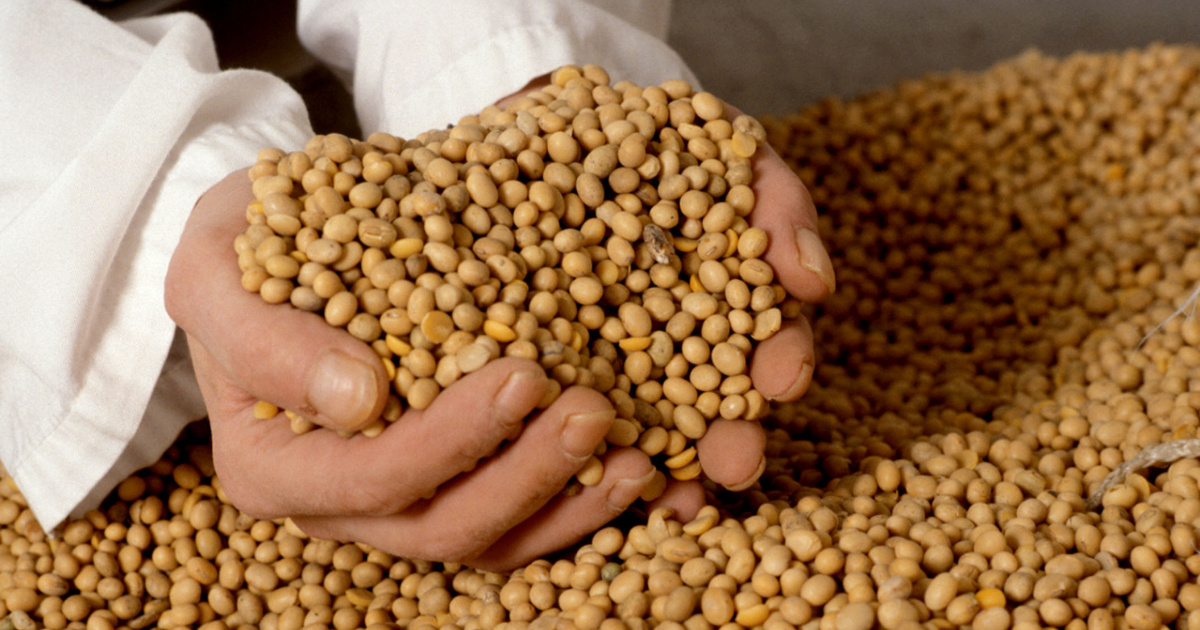
Despite policies to increase planted area and reduce meal content in diets, China continues to import over 100 million tons of soybeans annually.
Overall, the country accounts for the largest share of global grain purchases and dictates the dynamics of premiums, shipping scales, and utilization rates of crushing industries.
The market reading is straightforward: a change in origin or rhythm in Chinese purchases redistributes income among producers and exporters worldwide.
On the other hand, the concentration of origin is also a risk for Beijing.
The Brazilian advance — supported by productivity, exchange rates, and logistics evolving with new terminals and flow corridors — is accompanied by specific bottlenecks and an increasingly present environmental debate among major buyers.
Still, as long as the price and availability advantage lasts, preference is likely to remain.
The Geopolitical Gameboard of Grain
In this scenario, Washington’s push to quadruple Chinese soybean purchases from the U.S. is ambitious.
To succeed, it will depend not only on political decisions but also on commercial variables such as effective tariffs, FOB price differentials, port premiums, quality, and timing of the U.S. harvest.
The extension of the tariff truce opens a window for contracts, but does not neutralize the fact that China has already consolidated Brazil as its preferred supplier in recent years.
In 2025, Chinese buyers even secured South American volumes for months when the U.S. traditionally led sales, putting pressure on U.S. shipments during the so-called “autumn window.”
Meanwhile, Brazil increases shipments and reinforces its position.
For Brazilian producers, the message is pragmatic: staying competitive in cost and logistics maintains Chinese preference.
For the U.S., regaining relevance will require regulatory predictability, favorable exchange rates, and, above all, prices that compensate for potential tariffs.
In the end, those who dictate direction are the Chinese farms and processing plants, seeking cheaper feed to sustain a domestic protein market that continues to expand.