Portuguese
  Spanish


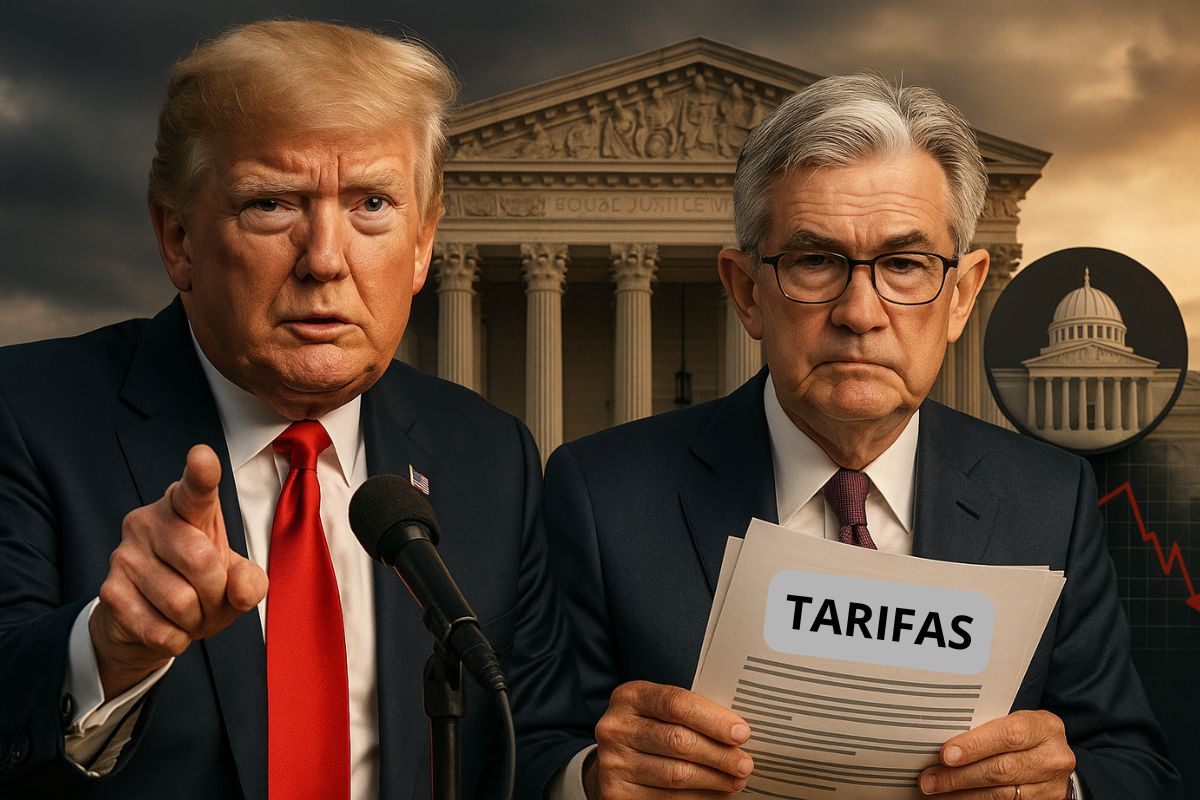

Trump Is Not Just Complaining About Powell; He Is Trying to Tie Up Three Critical Fronts at the Same Time: Forcing Interest Rate Cuts by 2025, Shielding His Tariffs in the Supreme Court (to Avoid Trillion-Dollar Refunds), and Pushing the Federal Budget to 2026 to Escape the Specter of a Shutdown.
According to the portal istoédinheiro, the President of the United States, Donald Trump, increased the pressure on the Federal Reserve and its chairman, Jerome Powell, by stating that interest rate cuts are “a year late.” In an interview with Fox & Friends this Friday (12), Trump said the American economy could be even stronger if monetary loosening had started earlier. He associated Wall Street’s record performance with the trade tariffs he considers vital to protect the national industry.
But interest rates are not the only focus for the Republican. Trump is also going all-in on a battle at the Supreme Court to maintain his tariffs, classified as “the pillar of American prosperity.”
The court is assessing the constitutionality of the measures, and a loss could force the government to refund trillions of dollars to importers.
-
As Brazil Expands Social Welfare, Survey Reveals 40% Blame Poverty on Laziness, While 58% Cite Lack of Opportunities

-
China Tightens Control on Antimony, Driving Prices from $22,000 to Nearly $40,000 per Ton as U.S. Rushes to Bolster Strategic Reserves

-
BlackRock Freezes $1 Billion in Brazilian Renewable Energy, Impacting 1.5 GW of Planned Projects and Highlighting Investor Concerns Over Infrastructure Bottlenecks Cutting Up to 25% of Solar and Wind Generation
-
Labor Shortage: Despite Record Average Salary, 90% of Brazilian Bar and Restaurant Owners Struggle to Hire Key Roles Like Sushi Chefs and Head Cooks


At the same time, the president is negotiating in Congress to extend the budget until January 2026 to avoid the risk of a shutdown.
Pressure on Powell and the Federal Reserve
Trump again criticized Jerome Powell, claiming that the Fed’s reluctance to cut interest rates jeopardizes growth.
For the president, controlled inflation and stock market records are clear signs that cuts should already be underway.
The demand is direct: Trump demands a monetary policy more aligned with his economic stimulus agenda, even in the face of the central bank’s caution.
This stance generates tension between the executive branch and the monetary authority, which historically seeks to maintain independence from the White House. The risk is that political pressure could compromise the Fed’s credibility in the international market.
Tariff as Central Weapon and Billion-Dollar Legal Risk
Trump’s major bet, however, lies in the legal field. The Supreme Court is examining whether tariffs imposed under the justification of national security are constitutional.
The president admitted that a defeat in court would force the government to refund “trillions and trillions of dollars,” something he called “very difficult.”
Even so, Trump reinforced his conviction that he has presidential power to maintain the tariffs. For him, “the U.S. needs tariffs to thrive.”
This strategy is seen as essential to guarantee tax revenue and maintain his narrative of protecting American industry.
Negotiations to Avoid a Shutdown
In addition to the monetary and judicial battles, Trump is trying to shield his administration against an immediate political crisis. He revealed that he is in negotiations with Republican lawmakers to approve a package that will extend federal spending until January 2026.
The goal is to eliminate the risk of a partial government shutdown, a scenario that could create economic instability and damage his image in the election cycle.
Despite Trump’s optimism, analysts remind that Congress remains divided and any clashes with the Democratic side could hinder the progress of the measure.
Risky Strategy on Three Fronts
The speech shows that Trump is orchestrating an offensive on three fronts:
- Monetary: demand immediate interest rate cuts from the Fed.
- Commercial/Legal: defend tariffs in the Supreme Court to avoid billion-dollar refunds.
- Fiscal: ensure an extended budget until 2026 and avoid a shutdown.
However, this tripod involves high risks. If the Fed resists, the Supreme Court decides against the tariffs, or Congress stalls the budget, the prosperity narrative could crumble quickly.
Trump’s remarks reveal an attempt to simultaneously control monetary policy, the fiscal base, and the legality of his tariff agenda.
The strategy is ambitious, but it depends on simultaneous victories in independent arenas.
And you? Do you believe Trump will be able to maintain his strategy until 2026, or do you think the risk of defeat in any of these fronts could jeopardize his administration?
Leave your opinion in the comments; we want to hear your analysis of this scenario.