Portuguese
  Spanish



The Sector Has Not Seen Anything As Radical And Promising As The New Giant Wind Turbine With The Potential To Generate Three Times More Energy Than The Conventional!
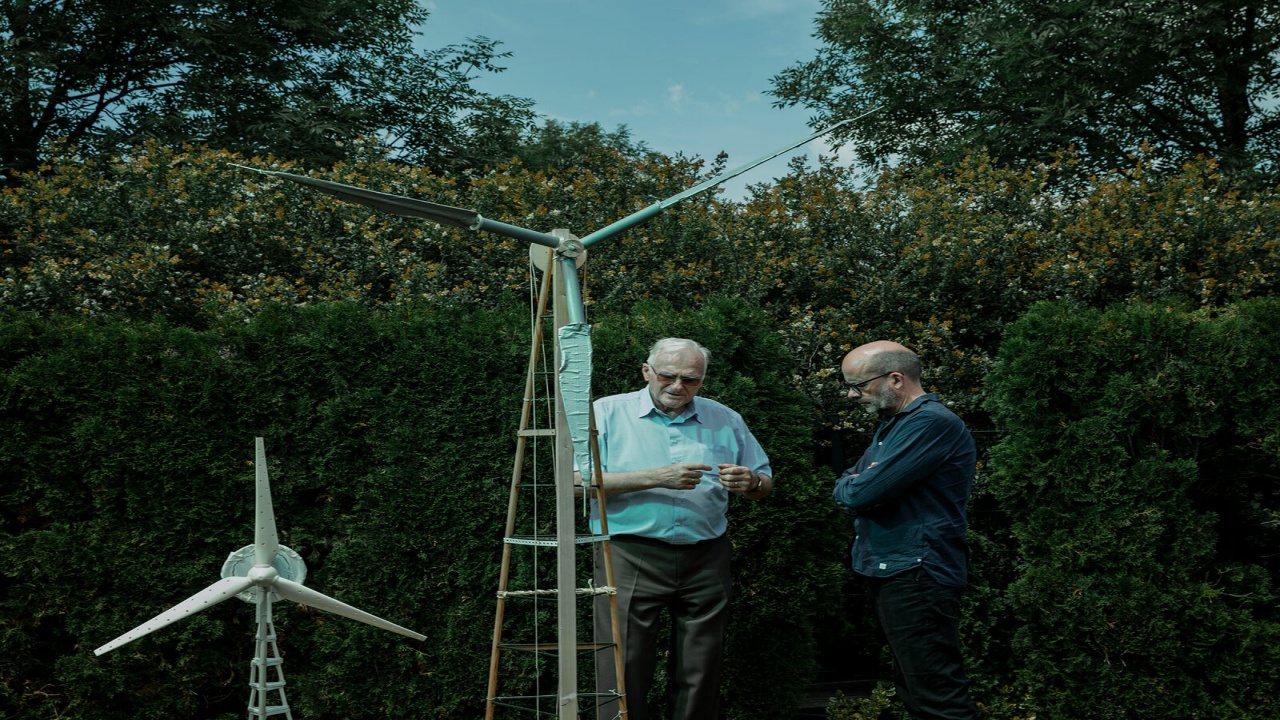
Renewable energies continue to be one of the great hopes for combating climate change. So far, this sector has not seen anything as radical and promising as that proposed by a 92-year-old German engineer, Horst Bendix. His invention, already patented and awaiting a prototype, has the potential to generate three times more electricity than conventional turbines, as well as reducing the tower’s weight by half and allowing significant construction savings.
Retired since 1995, the mechanical engineer and inventor born in Leipzig has developed over 60 patents focused on cranes, excavators, and industrial equipment. The latest of these could transform the landscape of wind energy, a true pillar of the energy transition.
High-Altitude Wind Turbine For Inland Areas With Low Wind Is Larger Than Anything Built So Far!
Bendix, who was for many years the director of technology and research at Kirow, a manufacturer of heavy machinery, had been researching and experimenting for over 10 years until he found the key: a high-altitude wind turbine for inland areas with low wind that, among other things, has a hub height (the connection piece between the blades and the main shaft) much larger than anything built so far, in addition to a tripod structure.
-
Australia deploys poisoned sausages and uses traps, shooting, and fences in a battle against invasive cats that kill over 1.5 billion native animals annually, threatening more than 200 species.

-
NASA Rover Captures “Tired Face” on Mars, Highlighting Human Brain’s Tendency to See Faces in Rock Formations

-
Ancient Stone City in the Desert, Once Home to 30,000, Puzzles Scientists with Nabateans’ Water Mastery 2,000 Years Ago

-
Ancient Creature Thought Extinct Since Dinosaur Era Reappears, Baffling Scientists




One of the major problems faced by wind turbines is bending, which tends to bend objects subjected to perpendicular forces, such as wind in this case. In this sense, rigid components subjected to constant bending can develop cracks and ultimately break. This was the case with the Growian, one of the first large wind turbines (100 meters in rotor diameter), which did not last three weeks of operation before breaking and going out of service.
The wind blows stronger and more steadily at high altitudes. They know this well at Google, which once opted for Kite, a flying electric turbine that did not end up working. In any case, the ideal would be to harness the energy offered by strong winds, but the bending forces also increase and make it nearly impossible to build 300-meter wind turbines. The Haliade-X 14, the largest wind turbine in the world, is already operating in Rotterdam and reaches a height of 260 meters, but experts advise against going any higher due to construction issues and material wear that may occur.
Bendix Wants To Build Wind Turbines Up To 400 Meters!
Bendix’s proposal to reach that size and up to 400 meters involves reinventing the construction of these engineering wonders from the ground up. First, the German engineer proposes to replace the tower, the pillar of wind turbines, with a construction composed of a vertical column and two support columns.
The other major innovation is that the electricity generator is no longer located in the nacelle, the most important part of the turbine, which normally houses all the mechanical and electrical elements. In the Bendix patent, several smaller generators are placed at the bottom, where they receive the energy provided by the rotation of the blades through a belt system, like a large bicycle chain.
The Wind Turbine Has A Much Lower Weight And Structure “Suffers” Less Bending Forces Promises To Revolutionize Renewable Energy In The World
This allows the rotor and blades to be placed at a higher altitude, since by removing the generator from the nacelle, the weight is much lower and the structure “suffers” less bending forces. By reducing the load at the top, the turbine also becomes much more stable. In addition, the mass does not disproportionately increase with height, because the tower is built with standard, inexpensive, readily available, and transportable steel tubes. Moreover, the entire construction is always aligned with the wind, as the entire tower rests on a base that automatically rotates depending on the wind direction to maximize the currents.
All these innovations imply significant advantages in the construction and use of wind turbines: a 50% weight reduction and a decrease in overall system costs of about 40%, as well as an increased capacity for electricity generation.
Wind energy expert Falk Zeuner is surprised by Bendix’s invention and believes it could mark a before and after. “With such a large system and hub height, you can achieve more than 20 or 30 gigawatts per year. With a conventional one, for instance, only ten,” the German medium MDR reports. In other words, the power of a single wind turbine is doubled or even tripled. Applied to large wind farms, the improvement would be crucial, as it would generate much more energy and reduce the number of turbines needed.
In a global context of a general increase in energy prices and with several European countries looking for alternatives to Russian gas, perhaps it is time to put Horst Bendix’s invention into practice to multiply the generation of clean and cheap energy.
I Would Love To Know What You Think Of This Invention. Let Us Know In The Comments Section If You Are A Professional In The Field. Don’t Forget To Activate Notifications From CPG To Keep Up With All The News In The World Of Renewable Energy. Until Next Time!