Portuguese
  Spanish


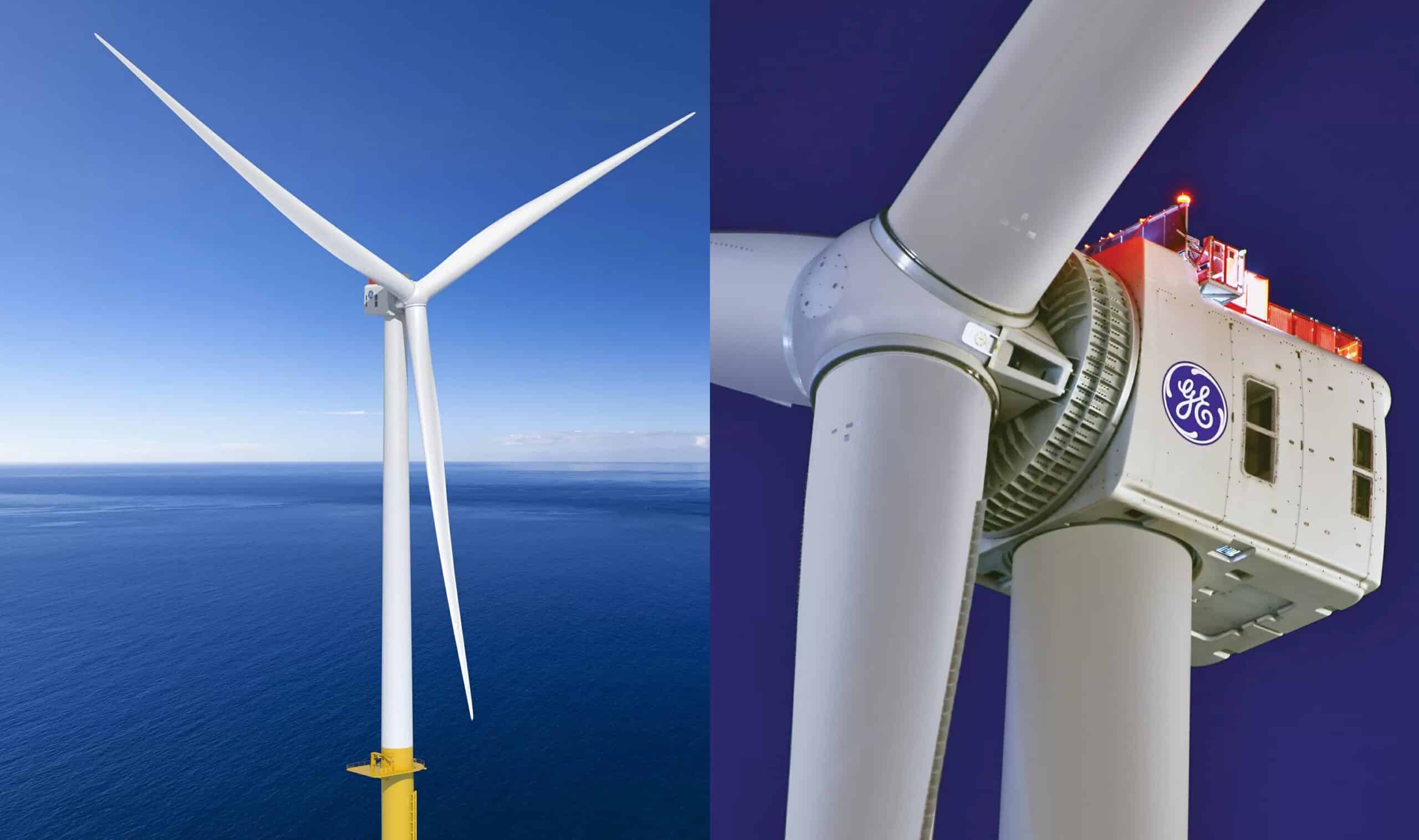

The Most Powerful Offshore Wind Turbine on the Planet Received an Important Certificate Proving Its Efficiency and Safety Even in the Harshest Environments
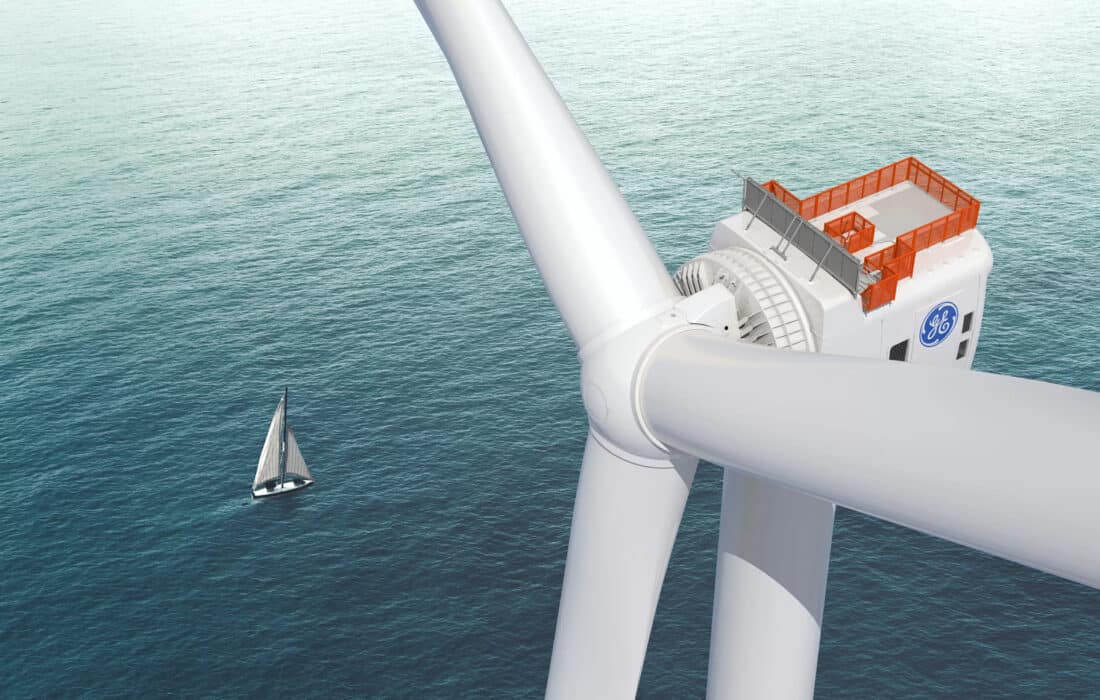
The Haliade-X, the world’s most powerful offshore wind turbine, has captured the media’s attention since the beginning of its project. The turbine is a giant in engineering and technology, enhancing performance and producing much more offshore wind energy than its smaller competitors. The new super product from GE Renewable Energy stands an incredible 243 meters tall and has even undergone typhoon/hurricane testing.
The Haliade-X has a generating capacity of 14 MW, 13 MW, or 12 MW, along with 107-meter blades. The 12 MW and 13 MW models underwent rigorous typhoon and hurricane testing (typhoons/hurricanes are essentially the same thing). The turbines were approved by DNV, a global giant in certification and safety. The company gave a T rating to the Haliade-X. With that, the wind turbine is capable of operating with high efficiency even in very adverse weather conditions.


DNV highlighted that typhoon/hurricane certification is critical for emerging offshore wind energy markets. The company stated that wind turbines need to be able to withstand extreme conditions.
-
Giant Batteries Take Center Stage in Chile Auction as Company Offers 960 GWh of Solar Energy for Nighttime Use, Aiming to Stabilize Solar Power Supply

-
After a Year of Success in Switzerland, Solar Railway Attracts Italy’s Interest for Clean Energy Transformation
-
Robots Clean Solar Panels in Desert Power Plants Without Water, Preventing Energy Losses
-
Brazil’s Offshore Wind Energy Potential Worth $1 Trillion Stalled by Long-Delayed Agreement



Vincent Schellings, the technology director of GE Renewable Energy, celebrated the certification given to the Haliade-X: “With this, our teams will continue building commercial momentum in new locations where the Haliade-X can make a real difference in the energy transition,” he said.
“The tests simulating typhoons on wind turbines are critically important in emerging offshore wind markets like Taiwan, Japan, Korea, as well as parts of the United States,” concluded the director. “Wind turbines need to be designed for these extreme local environmental conditions to support ambitious plans for developing multi-megawatt offshore wind projects,” stated Kim Sandgaard-Mork, vice president of DNV.
Differential in the Solar Energy Market
The size of the Haliade-X makes it much more efficient compared to its competitors. The combination of a larger rotor and longer blades makes it much more sensitive to variations in wind speed. The company claims that the Haliade has the capacity to generate more energy than any other competitor, even in weak wind conditions.
The prototype of the Haliade-X, which operates at 13 MW, set a new record by generating 312 MWh of continuous energy in one day. GE Renewable Energy signed an agreement to supply 190 Haliade-X 13 MW wind turbines, which will be used at Bank A and Dogger Bank B, off the coast of England.
Cost Savings for Its Customers
GE’s offshore wind turbine also promises to deliver significant cost savings for its customers. The much cheaper manufacturing and the cycles of installation and maintenance are the main reasons the turbine is very economical in the medium and long term.