






 Portuguese
  Spanish


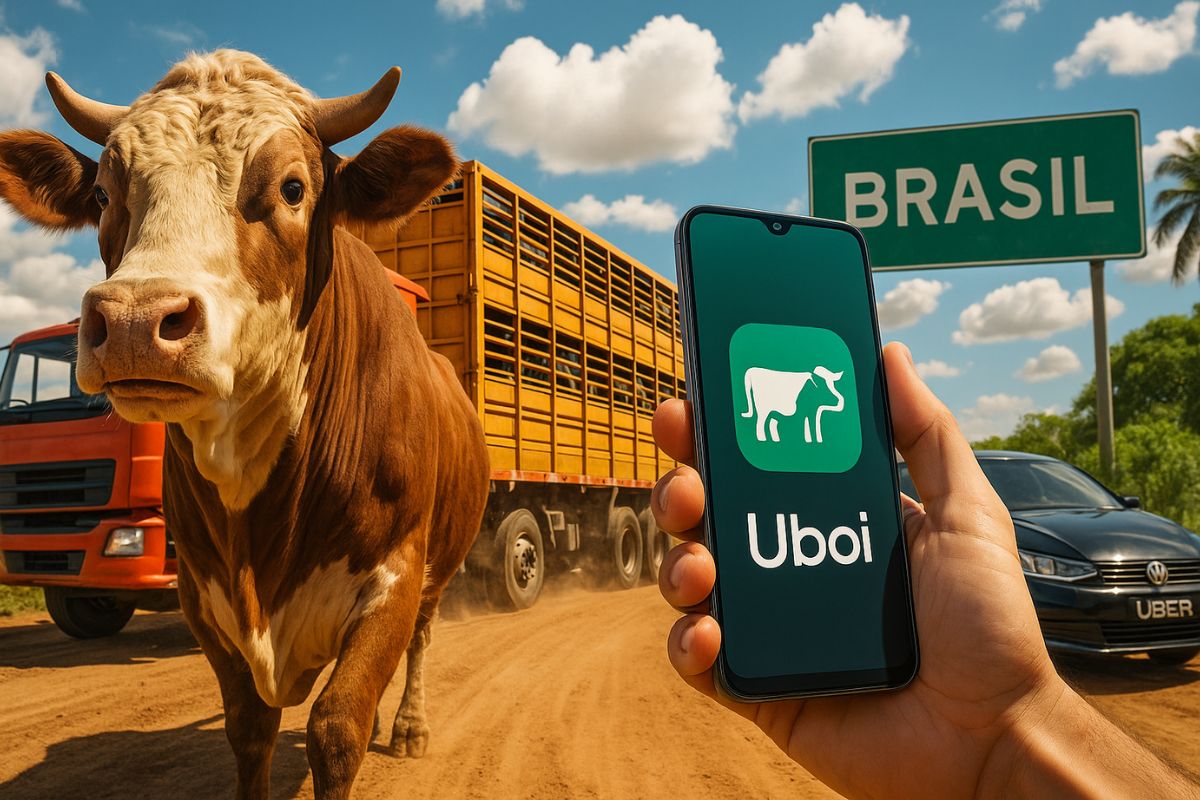

Rural Mobility App Created by TRS, JBS’s Logistics Arm, Expands National Operations and Also Aims for the Transport of Poultry and Swine with Technology and Artificial Intelligence
The Uboi, known as the “Uber for Cattle”, is JBS’s latest bet to transform agricultural logistics on a national scale. The app, developed by TRS, the group’s transportation company, was born in 2020 and has begun to operate beyond the borders of São Paulo and the Midwest. Now, the expansion reaches all regions of the country, allowing cattle ranchers to request herd transportation digitally, with tracking and technological support.
The model follows the logic of urban mobility apps, but adapted for the countryside. Instead of cars or motorcycles, two-story trailers capable of carrying up to 54 animals come into play. The platform already accounts for 40% of TRS’s revenue, establishing itself as one of the pillars of agribusiness digitalization and demonstrating the advancement of artificial intelligence in rural logistics management.
National Expansion and Digitization of Livestock Logistics
With a presence now across Brazil, the Uber for Cattle connects rural producers, transporters, and slaughterhouses on a single platform.
-
The Atlantic Journalist Given $10,000 to Bet on NFL Season Ends Experiment as Compulsive Gambler with Just $109 Left, Family Says

-
Low-income Brazilian families eligible for up to R$ 16,000 subsidy at Casa Paulista Housing Fair, offering 1,450 home purchase vouchers

-
Brazil’s Imigrantes Highway Celebrates 50 Years with Plans for Major Expansion, Including a 6 km Tunnel and Third Lane to Ease Traffic to São Paulo’s Coast

-
Brazilian Job Market Surprises: Unemployment Falls to 5.6%, Hits Record Low for May, Brazilian Incomes Rise, and Underemployment Reaches Lowest Level Ever Recorded by IBGE


The system allows users to schedule trips, set destinations, and track each stage of the journey through the app, ensuring more predictability and transparency.
According to TRS executives, the technology solves a historic bottleneck for cattle ranchers: the lack of standardized and reliable services for cattle transportation.
The operation is not limited to JBS customers.
Other companies in the sector can use Uboi, provided they meet the safety and animal welfare requirements established by the platform.
High-Performance Fleet and Focus on Animal Welfare
The fleet of the Uber for Cattle consists of around 800 trailers equipped with embedded technology, remote monitoring, and internal divisions that adjust the number of animals based on weight, age, and size.
Every detail is designed to reduce stress on the animals and preserve their physical integrity during transport.
On long trips, the route includes stops at “boitéis”, structured areas along the highways where animals rest, feed, and hydrate.
This controlled routine is part of a technical protocol aimed at animal health and welfare, which has been refined using sensors and intelligent systems.
Artificial Intelligence and Real-Time Monitoring
The operation of Uboi utilizes artificial intelligence tools capable of detecting sudden braking, improper acceleration, and other maneuvers that may compromise the safety of the live cargo.
Alerts are displayed on the vehicle’s panel, guiding the driver to adjust their driving.
Additionally, TRS conducts semiannual training with drivers and analyzes data from each trip to improve routes and reduce physical and logistic impacts.
This technological approach positions the app as a milestone in the professionalization of animal transport, a segment historically reliant on informal solutions.
Sustainability and Source Control
Another central axis of the Uber for Cattle is environmental control.
Before each boarding, farms are evaluated based on sustainability and land regularity criteria.
If there is evidence of cattle coming from illegal deforestation areas, transportation is automatically blocked.
The process ensures traceability and reinforces JBS’s commitment to production chains free of environmental irregularities.
This practice also elevates the governance standard in the countryside, aligning operations with export demands and international certifications.
Next Steps and Expansion to New Species
With the consolidation of the model in cattle transportation, the Uboi is preparing for its next stage: to also serve poultry and swine.
The project is under study and is expected to use the same technological infrastructure, adapted for smaller species with different ventilation and space needs.
The goal is to transform the app into a multispecies rural logistics platform, integrating data, route intelligence, and welfare control for various segments of the Brazilian agribusiness.
This move expands TRS’s reach and reinforces JBS’s position as one of the global leaders in technology applied to agriculture.
The expansion of the Uber for Cattle demonstrates how digitalization and the use of AI are redefining the way animals are transported in the country.
More than efficiency, the platform represents an advance in transparency, sustainability, and professionalization of the agricultural logistics chain.
And you, do you believe that the use of smart apps in the countryside can really transform Brazilian cattle farming in the coming years?


