Portuguese
  Spanish


System developed at UFG showed how water discarded by air conditioning units can be collected in reservoirs and used for building cleaning, reducing the consumption of treated water in a simple, cheap, and highly visual solution.
What seemed like just a common nuisance in buildings, sidewalks, and canopies turned into a simple savings solution. A system developed at the Federal University of Goiás showed that water discarded by air conditioning units can be collected, stored, and used for cleaning buildings.
The experiment was installed at the headquarters of Crea-GO and was based on the work of Professor Euler Bueno from the School of Electrical, Mechanical, and Computer Engineering at UFG. The most striking data is straightforward: about 400 liters of water per day were prevented from going down the drain.
At a time when public buildings, schools, companies, and condominiums are discussing consumption, waste, and the cost of treated water, the case shows that part of the savings may be dripping every day right in front of everyone.
-
China Builds Underwater Wall After Discovering Technology That Could Shift Military Balance in the Pacific, Study Reveals Why the Asian Power Reacted Now

-
After Over 8 Months in a Simulated Mars Habitat in Houston, 4 NASA Volunteers Communicate Almost Silently and Will Exit in October
-
Natural Phenomenon Turns Black Sea Turquoise Blue Due to Billions of Microscopic Organisms

-
Scientists Develop Innovative Material That Converts Visible Light to Ultraviolet, Unlocking New Possibilities for Optical Equipment and Advanced Communications


UFG transformed air conditioning drip into a reuse system
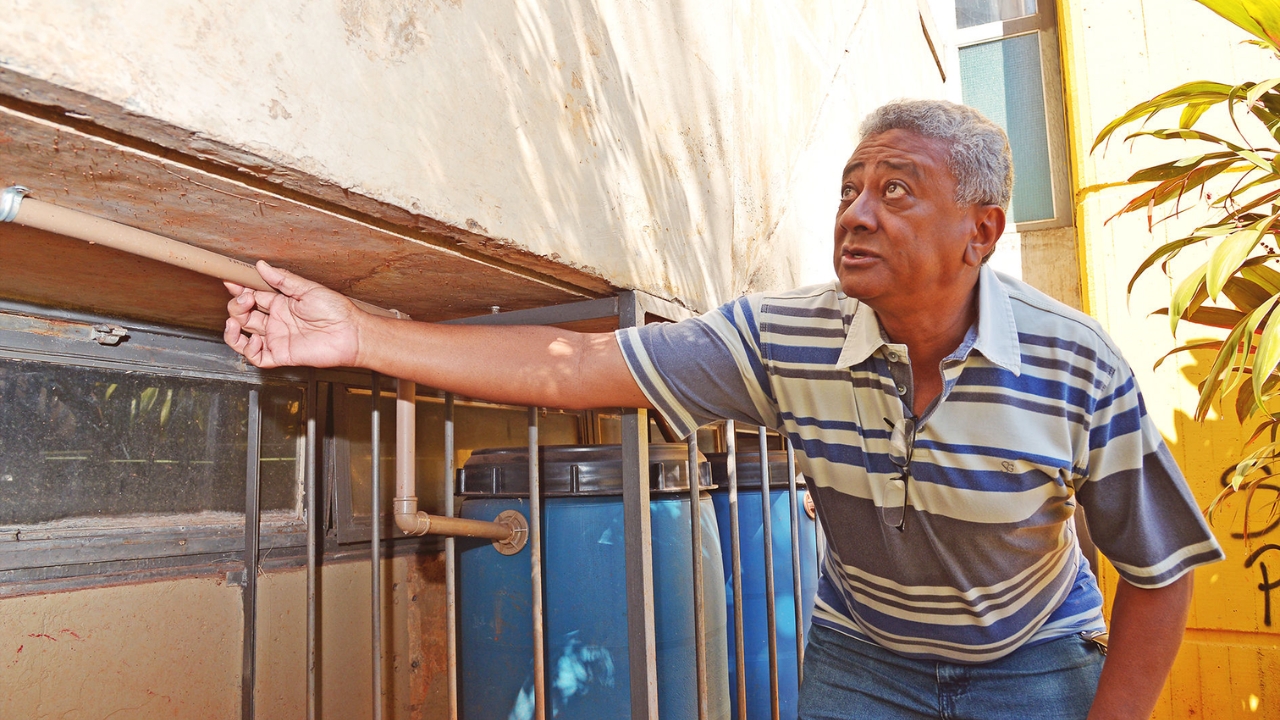
According to the UFG Journal, the proposal stemmed from a problem known to anyone who circulates in urban areas: the water that drips from air conditioning drains. Instead of falling to the ground or going to the sewer, it was channeled through ducts to reservoirs.
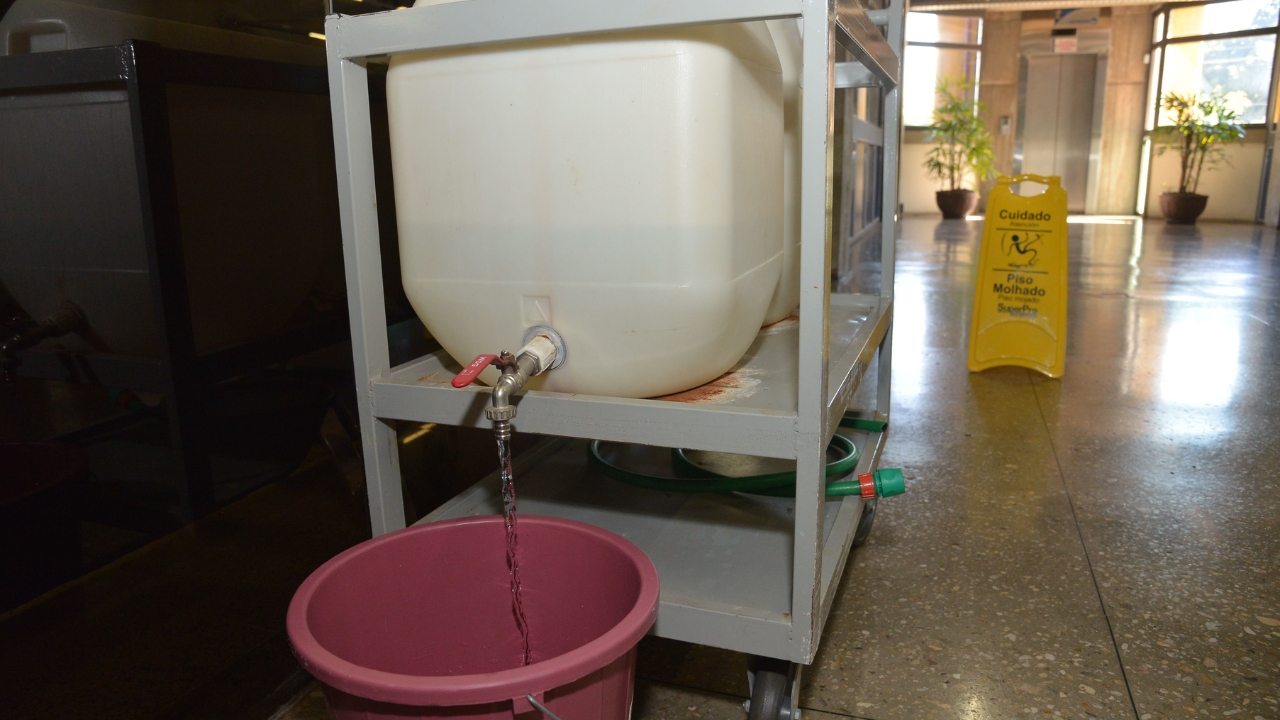
The system was applied to 74 air conditioning units at the Crea-GO headquarters. The captured water was directed to two 200-liter reservoirs each, in addition to mobile 100-liter containers used to facilitate the work of cleaning teams.
The structure had an informed investment of R$ 782.24, a low amount considering the volume of water reused. According to UFG, the collected water was sufficient to assist in cleaning the Crea-GO headquarters, with 4,444.78 m², and an annex building of 235.49 m².
What previously appeared as dispersed dripping became an organized resource within the building itself.
Savings reached about 400 liters per day and exceeded 100,000 liters in one year
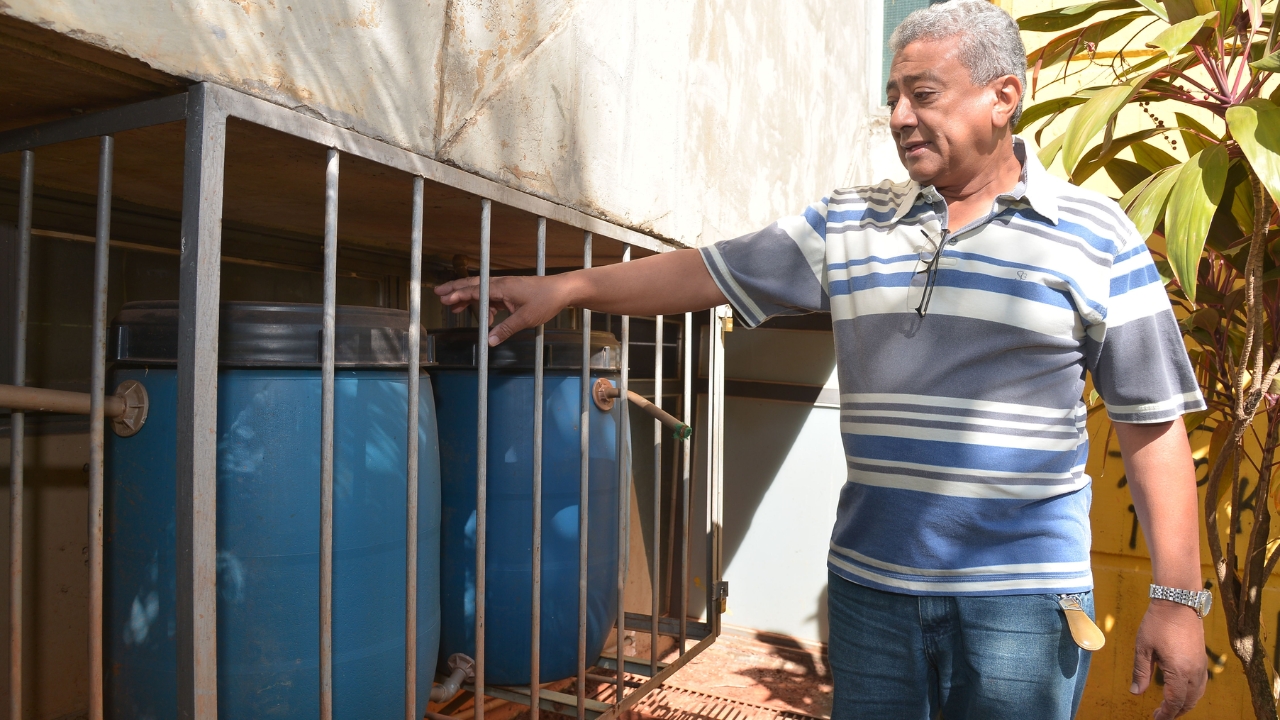
The volume recorded by the experiment varies according to the climate. On drier days, according to UFG, the capture ranged between 310 and 350 liters per day. During the rainy season, when the relative humidity exceeded 60% on average, production could reach 510 liters daily.
In practice, the number most used to measure the system’s impact was the saving of about 400 liters of water per day.
Crea-GO reported that, in one year, the system avoided the use of more than 100,000 liters of treated water. The approximate financial saving was R$ 4,000 during the period.
The central point is not just about money. The case shows that large buildings may be discarding a considerable volume of water daily that could meet simple uses, such as washing floors, common areas, garages, and external environments.
Air conditioning water is not for drinking, but it can reduce waste in non-potable uses
The water formed in the air conditioner comes from the moisture removed from the environment. As it goes through the condensation process inside the equipment, this water runs through the drain and is usually discarded.
In the case of UFG, before use, bacteriological and physicochemical analyses were conducted. According to Professor Euler Bueno, the result indicated that the water could be used for cleaning services. The guidance, however, is clear: it is not water for human consumption.
This caution is important to avoid a misinterpretation of the solution. The reuse does not replace potable water in faucets, drinking fountains, or food preparation. It makes sense for tasks where there is no need for treated water for drinking.
The technical reference of ABNT NBR 16783:2019, cited in the research, deals with the use of alternative sources of non-potable water in buildings. Among the intended uses are washing external areas, landscape irrigation, flushing toilets, vehicle washing, and cooling systems.
Schools and universities also measured hundreds of liters that were previously wasted
The case of UFG is not alone. In Mato Grosso do Sul, a state school in Campo Grande developed a project with air conditioning and drinking fountain water. According to the State Department of Education of Mato Grosso do Sul, the students calculated about 403.20 liters per day, equivalent to 2,016 liters per week.
At the school, the water that previously ran down the sidewalks was channeled into a closed water tank, with a tap and pump, and began to be used for cleaning the sports court.
Another study, published by the Federal University of Santa Maria in 2024, measured the water condensed by a device in the classroom and found an average of 1,662 ml per hour. The volume increased in conditions of higher temperature and humidity, which helps explain why buildings in hot and humid cities may have greater capture potential.
In Pernambuco, a study presented at ABRHidro estimated a production of 3.72 m³ per day and 82 m³ per month on a university campus. This volume could represent about 9.5% of the average monthly water consumption of the location.
In Recife, a study on a hospital building published in an ANAP journal estimated that the condensed water from the equipment could meet a significant part of the non-potable building demand, including irrigation, floor cleaning, and cooling systems.
Simple solution requires closed reservoir, maintenance, and separation of potable water
Despite its simple appearance, the system needs to be done carefully. The water must be collected in closed reservoirs, with protection against dirt, insects, and mosquito access.
It is also necessary to completely separate the potable water network from the non-potable water network. ABNT NBR 16783:2019 reinforces the need for visual identification, proper design, correct operation, and periodic maintenance.
The UFG case itself highlighted this point by using protection in the reservoirs to prevent mosquito access. In public buildings, schools, hospitals, and companies, adopting the system also requires water quality analysis and clear usage rules.
Even so, the idea shows an advantage that is hard to ignore: it takes advantage of water that is already being produced every day by the connected devices.
The hidden waste inside buildings
The story of air conditioning water draws attention because it does not depend on major works to be understood. Just look at the dripping that falls from a functioning device.
In many places, this water turns into a puddle, runs down walls, wets sidewalks, and ends up in the drain. In the system tested by UFG, the same volume began to help clean thousands of square meters.
The case goes beyond a technical curiosity. It reveals how urban waste can also be found in the most common details of daily life. In times of pressure on water resources and rising operational costs in buildings, even the water that silently drips from the air conditioner can show that saving starts before the water meter.