






 Portuguese
  Spanish


In the NASA’s CHAPEA 2 mission, four people live isolated in Mars Dune Alpha, a 3D-printed habitat in Houston that recreates life on the red planet. The Mars simulation lasts 378 days and ends on October 31, 2026, testing the crew’s body and mind.
Four people have been locked up for over eight months in a fake Mars without ever leaving Earth. They live inside a habitat of only 158 square meters in Houston, Texas, participating in NASA’s most ambitious Mars simulation, and will only step outside on October 31. After so much time together, the routine has become so rehearsed that many tasks now flow almost automatically, with little conversation, according to reports from the mission released by NASA.
The experiment has a technical name and a strict schedule. Called CHAPEA 2, the Mars simulation began on October 19, 2025, and will last exactly 378 days, the estimated time of a future real mission to the red planet. The crew entered the habitat named Mars Dune Alpha and, since then, have been living as if they were indeed millions of kilometers from home.
A fake Mars of 158 square meters
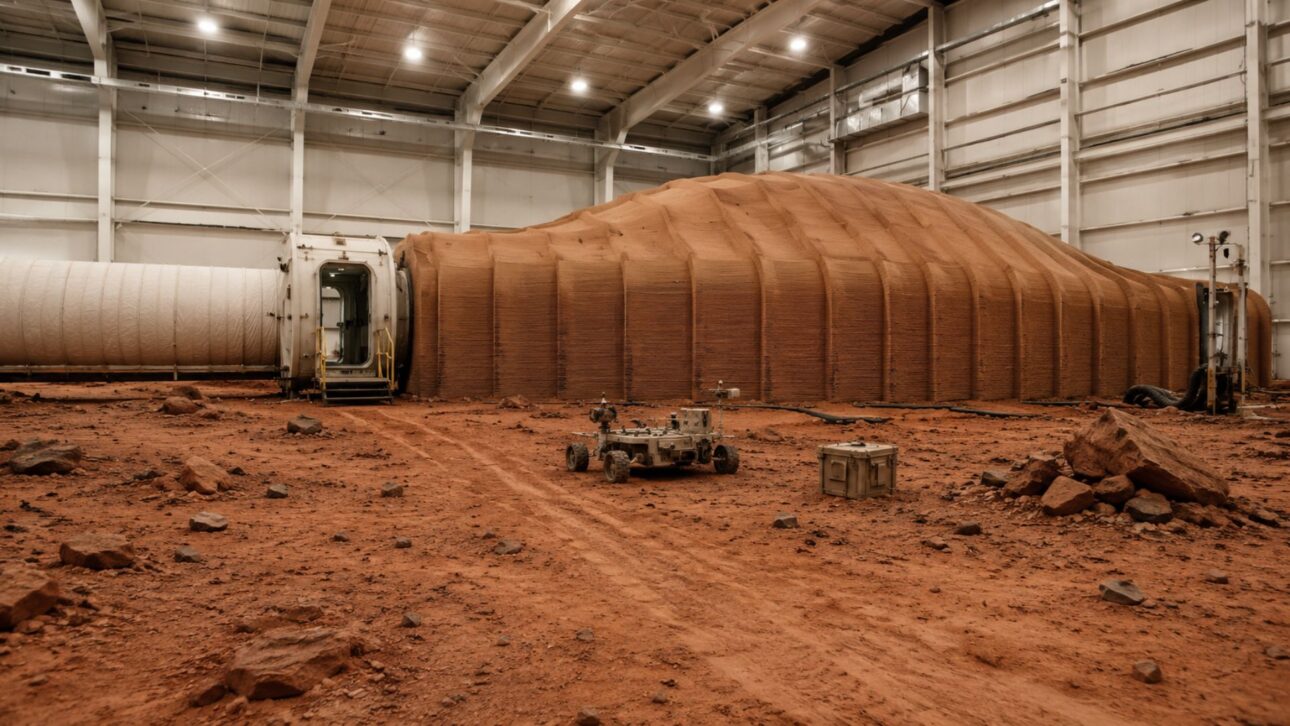
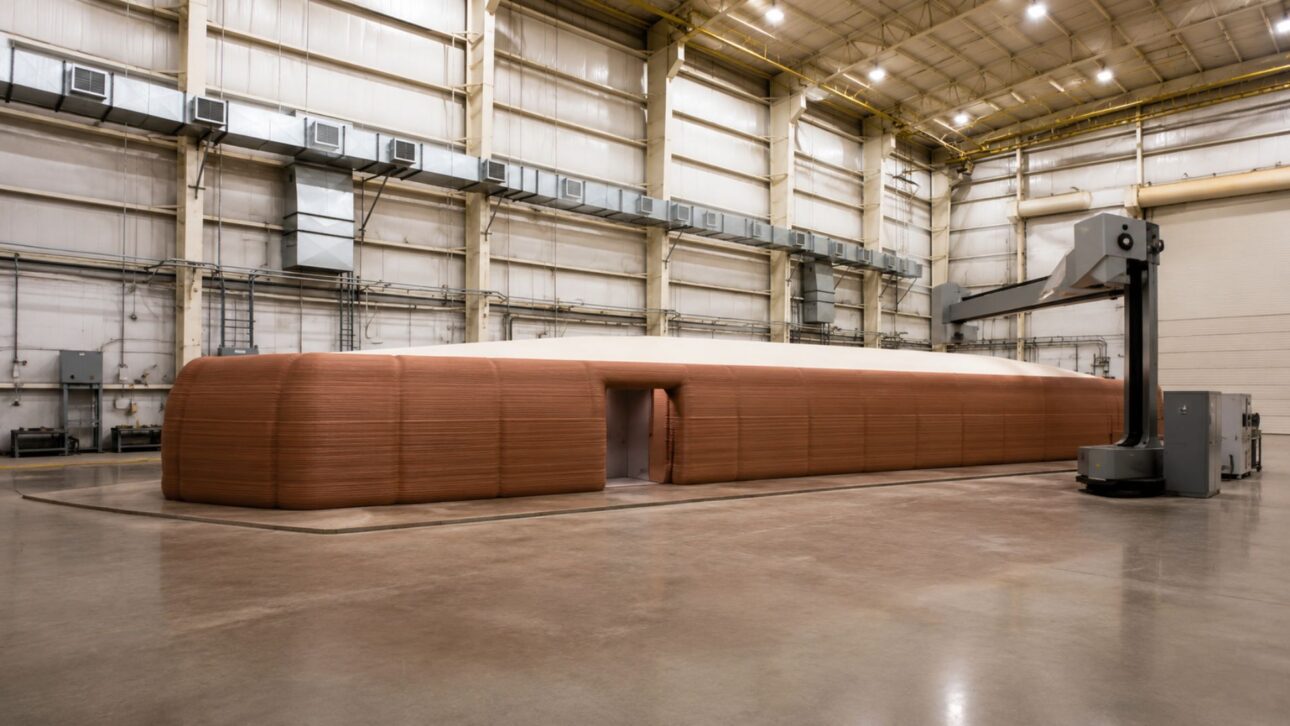
Mars Dune Alpha is a 3D-printed habitat, set up inside a warehouse at NASA’s Johnson Space Center in Houston. In just over 158 square meters, it reproduces what would be a human base on the Martian surface.
-
Natural Phenomenon Turns Black Sea Turquoise Blue Due to Billions of Microscopic Organisms

-
Scientists Develop Innovative Material That Converts Visible Light to Ultraviolet, Unlocking New Possibilities for Optical Equipment and Advanced Communications

-
2011 Japan Earthquake Sent Seismic Waves to Earth’s Core, Returning in 15 Minutes and Shifting Entire Country Simultaneously, Scientists Reveal

-
NASA captures heart-shaped pink lagoon in Argentina’s salt flats


Every detail was designed for realism. Mars Dune Alpha has individual rooms, a medical area, space for food cultivation, workstations, and even an outdoor red sand area that simulates the Martian soil. It is in this enclosed world that the four volunteers of the Mars simulation eat, sleep, work, and exercise, without physical contact with the outside.
378 days isolated: the crew’s routine
Life inside is a marathon of discipline. Over the 378 days, the crew faces resource limitations, scheduled equipment failures, and a communication delay of up to 22 minutes to speak with control, exactly as would happen on a real trip to Mars. Nothing is easy on purpose.
The schedule is demanding and repetitive. The participants of the Mars simulation perform simulated external walks in the spacesuit, tend to crops, operate robots, maintain the habitat, and follow exercise routines to preserve health. On May 7, 2026, they marked 200 days of confinement, and by this point, the coordination of tasks had become almost instinctive within the Mars Dune Alpha.
Who are the 4 NASA volunteers
The crew was handpicked by NASA. The commander is Ross Elder, a major and test pilot of the United States Air Force, accompanied by James Spicer as flight engineer, Ellen Ellis as medical officer, and Matthew Montgomery as science officer. These are four technical profiles prepared to face almost a year of isolation.
As in any serious mission, there are reserves ready. NASA also selected alternate volunteers, ready to step in if something prevented one of the main participants from continuing in the Mars simulation. This care shows that, despite taking place on Earth, the experiment is treated with the same rigor as a real trip to space.
Why does NASA pretend to go to Mars on Earth
NASA wants to send astronauts to Mars in the 2030s, and before that, it needs to understand how the human body and mind react to months of confinement, far from everything. The Mars simulation is the cheapest and safest way to discover this without risking lives in space.
The focus is on people, not the spacecraft. Locking four volunteers in Mars Dune Alpha for 378 days allows for the study of stress, sleep, nutrition, teamwork, and mental health under constant pressure. Every piece of data collected in this fake Mars helps design the real mission, reducing the risk of a crew becoming ill or entering conflict far from Earth.
What is NASA’s CHAPEA mission?
It’s worth understanding the acronym behind it all. CHAPEA stands for Crew Health and Performance Exploration Analog, and it is the NASA program dedicated to this type of ground-based testing. The current one is the second of the planned missions.
The first has already made it into recent history. The inaugural CHAPEA ended on July 6, 2024, after another team spent 378 days confined in the same habitat. Now, with the second Mars simulation nearing its end in October, NASA is accumulating more and more information about what to expect when humans finally set foot on the red planet.
When living on Mars is just the beginning of the journey
In the end, the most impressive thing is that this Mars fits inside a warehouse in Texas. Four NASA volunteers agreed to spend 378 days locked in the Mars Dune Alpha, building a routine so rehearsed that they understand each other almost without speaking, all so that the first real trip to the red planet succeeds. The Mars simulation proves that conquering another world begins long before the rocket takes off.
And you, would you agree to spend more than a year isolated in a closed habitat, without seeing the street or your family, in the name of science? Tell us in the comments if you could handle the routine of these volunteers or if you would give up in the first week.


