Portuguese
  Spanish


Gripen E contracted by Ukraine will have deliveries only at the end of the decade, while Gripen C/D prepares pilots of the Ukrainian Air Force. Amidst missiles and drones, the Swedish agreement aims at western transition, dispersed bases, and long-term modernization.
The Gripen E has become Ukraine’s bet to replace Soviet-origin fighters and expand its integration to western standards. Before the arrival of the new fighters, the Gripen C/D is expected to prepare the Ukrainian Air Force to operate in a scenario marked by missiles and drones.
According to Cavok Brasil, in a publication dated July 2, 2026, the contract was signed between Saab and the Swedish Defense Material Administration, FMV. The package is valued at approximately 24.6 billion Swedish kronor, about US$ 2.5 billion, and includes aircraft, parts, training, logistical support, and technical assistance.
Billion-dollar agreement marks gradual replacement of Soviet fleet
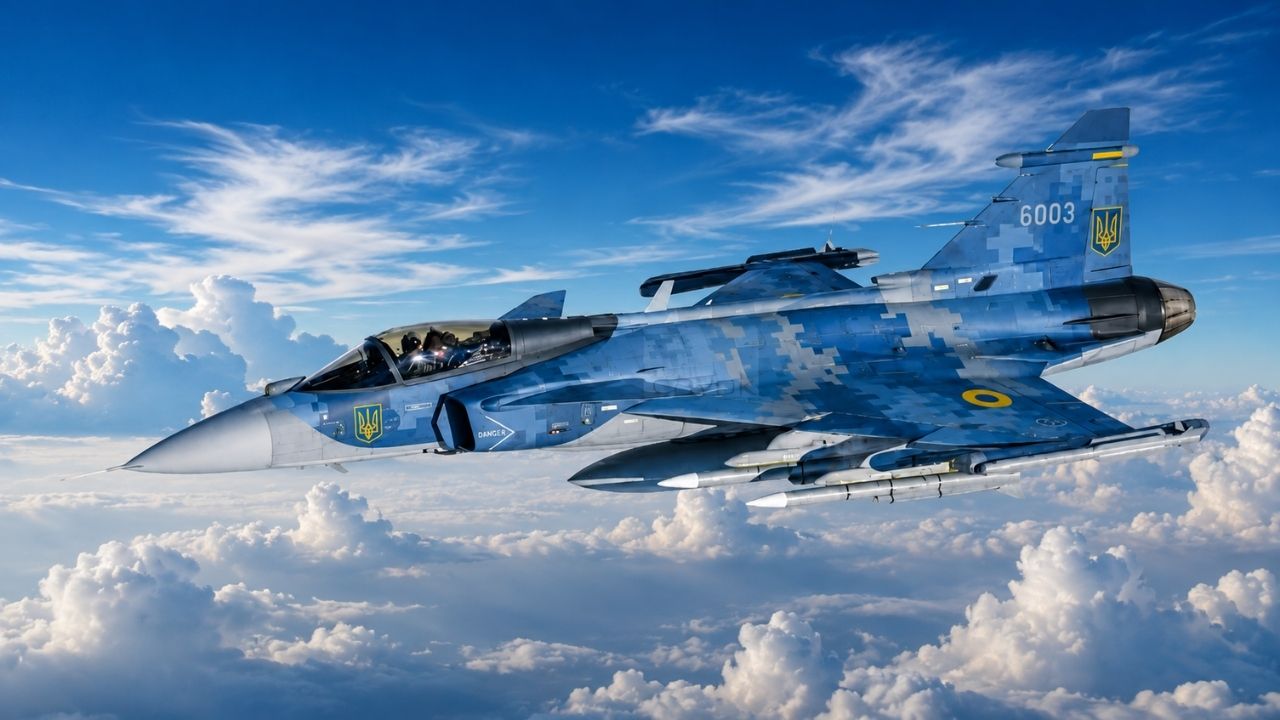
The purchase of the Gripen E represents an important step in Ukraine’s attempt to definitively replace part of the fleet of fighters inherited from the Soviet era. Since the beginning of the large-scale Russian invasion in February 2022, Ukraine has been seeking western aircraft capable of enhancing its air defense capability, while the Ukrainian Air Force tries to preserve response power amidst missiles and drones.
-
End of an Era: US Navy’s C-2A Greyhound Makes Final Catapult Launch Before Retiring to Arizona Desert; Aircraft Supported Carriers in Wars and Humanitarian Missions for Nearly 60 Years

-
Italy’s New Military Helicopter, the Powerful AW249 Fenice, Impresses with AI, Advanced Weaponry, and Drone Integration in Combat
-
Brazil’s 72-meter submarines patrol 4.5 million km² of the South Atlantic, as the country builds its first nuclear-powered submarine capable of staying submerged for months.

-
Brazil’s AV-TM 300 Tactical Cruise Missile, Known as “Matador,” Offers a Cost-Effective Alternative to the American Tomahawk with a 200 kg Warhead and 300 km Range.


The contract does not only involve the delivery of the 16 fighters. The package includes spare parts, support equipment, training, logistical support, and technical assistance. In practice, Ukraine is not just buying aircraft, but a complete structure to operate a new combat system.
Deliveries start only in 2029 and advance until 2030
The point that most draws attention in the agreement is the timeline. The first units of the Gripen E are only expected to arrive in 2029, with deliveries completed throughout 2030. This means that the billion-dollar investment will not have an immediate impact on the battlefield, even amid the ongoing pressure of missiles and drones.
This long schedule reflects industrial and operational factors. Saab already has production aimed at the Swedish Air Force and the Brazilian Air Force, in addition to meeting other international demands. At the same time, Ukraine will need to prepare maintenance centers, simulators, pilots, mechanics, spare parts stocks, and weapons integration.
Gripen C/D serve as a bridge before the E version
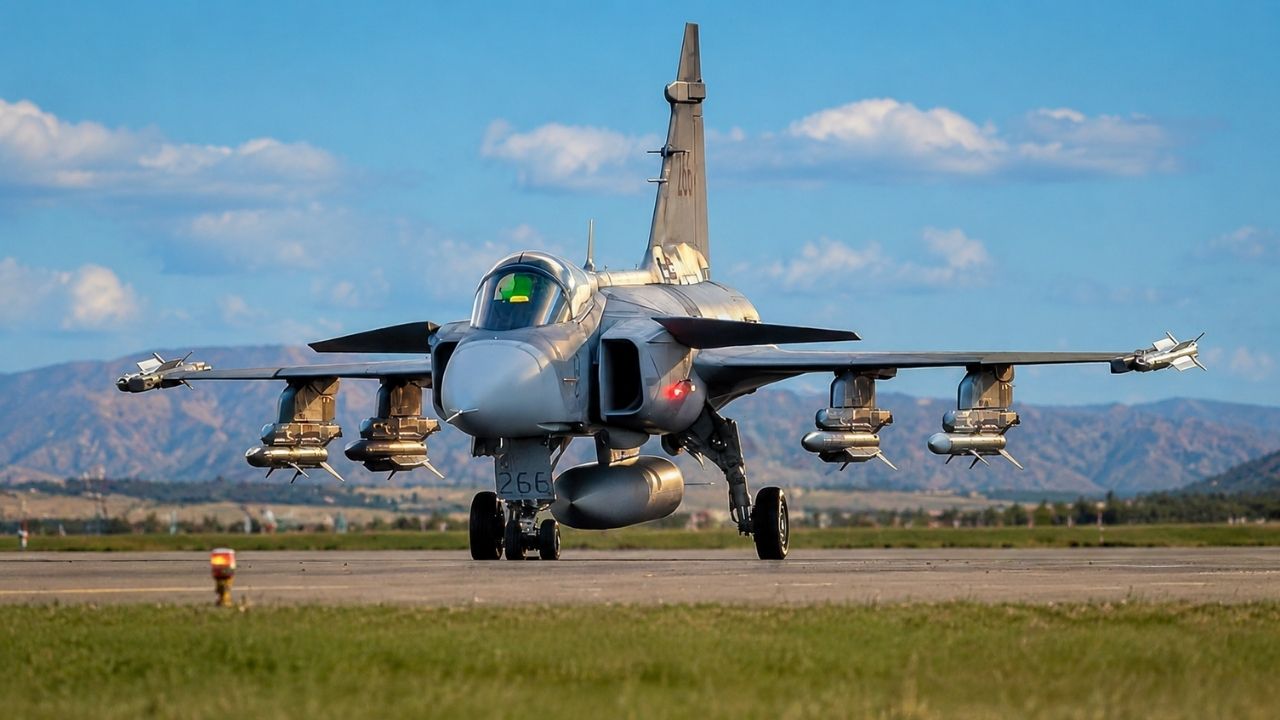
Although the Gripen E will take a few years to enter operation, Kiev should start operating the Gripen family before that. As part of the cooperation between Sweden and Ukraine, the Ukrainian Air Force is expected to receive 16 Gripen C/D fighters starting in 2027.
These aircraft will function as a transition stage. Pilots and maintenance teams will be able to familiarize themselves with the Gripen C/D before the arrival of the more modern version. The strategy reduces risks, anticipates training, and helps the Ukrainian Air Force avoid the direct introduction of a new fighter without prior experience.
Dispersed operation weighs on a country under attack
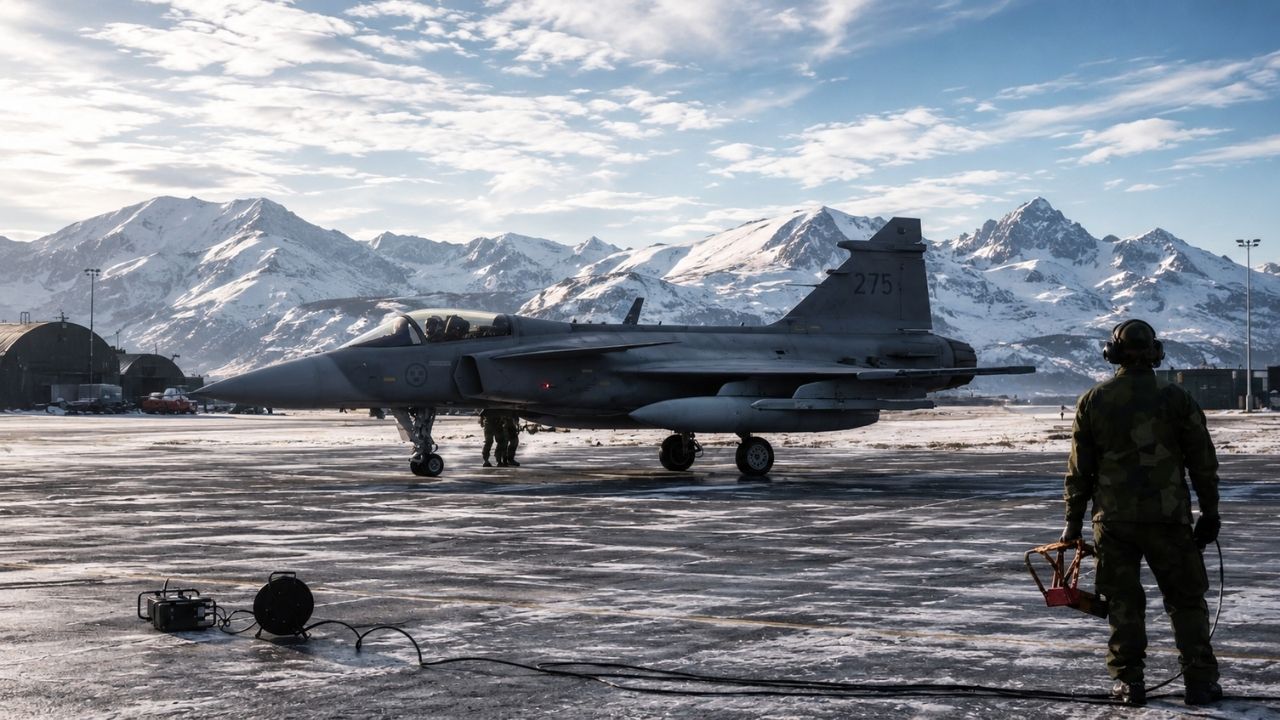
One of the most relevant features of the Gripen E is its ability to operate in high-intensity scenarios. The Swedish fighter was designed to land and take off on short runways, highways, and dispersed bases, reducing dependence on large fixed airfields.
This point is especially important for Ukraine, which faces missile and drone attacks against military and energy infrastructure. The more dispersed the operations, the less exposure aircraft and teams have to concentrated attacks against a single airbase.
Swedish fighter was designed to return quickly to combat
Another differential of the Gripen E is the reduced time between missions. Small ground teams can refuel, rearm, and prepare the aircraft for a new flight in just a few minutes, a characteristic associated with the Swedish doctrine developed during the Cold War.
In a prolonged conflict, operational availability can be as important as flight performance. An aircraft that quickly returns to the mission helps maintain defensive pressure and reduces time on the ground. For an air force under constant threat, every minute spent on an exposed base can increase the risk.
Version E brings AESA radar, IRST, and electronic warfare
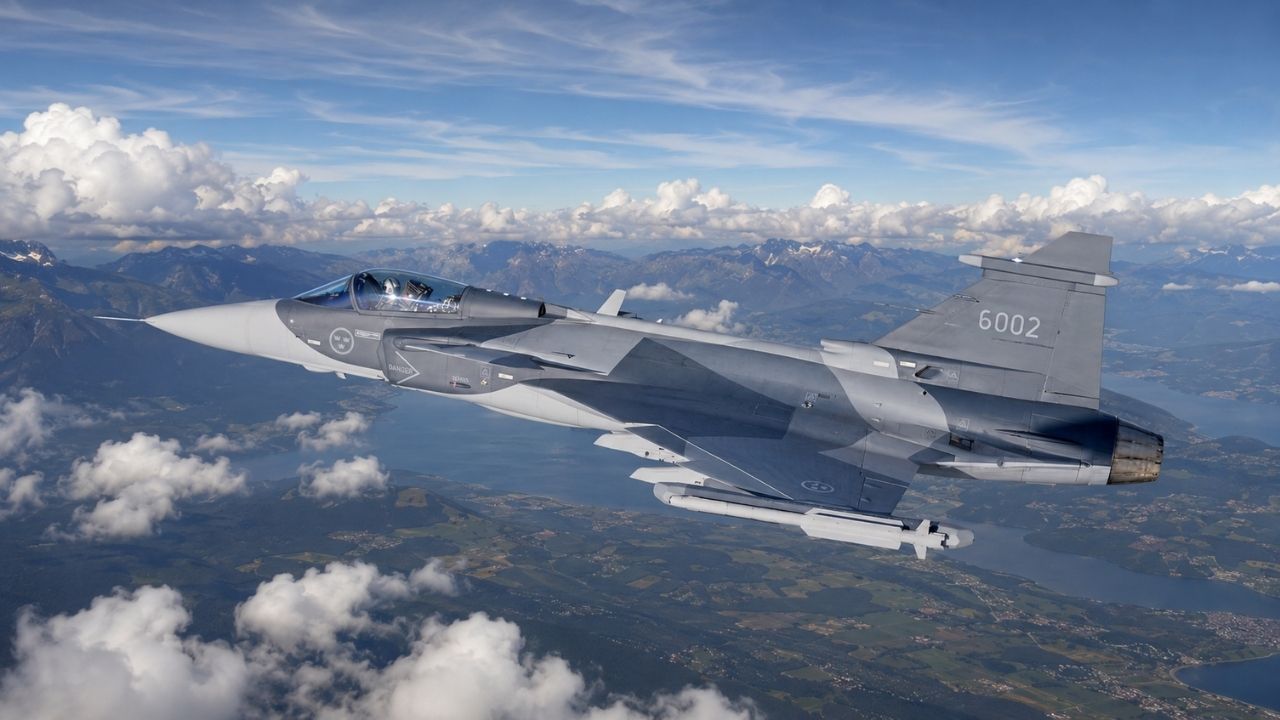
The Gripen E represents a profound evolution compared to the Gripen C/D. The aircraft incorporates the AESA Raven ES-05 radar, capable of tracking multiple targets simultaneously, in addition to the Skyward-G infrared sensor, known as IRST, used to detect threats without relying solely on radar emissions.
The version also includes an advanced electronic warfare suite, open architecture for quick integration of new armaments, and a General Electric F414G engine, with greater thrust and performance. These features make the fighter more adaptable to an environment where threats, sensors, and weapons change rapidly.
More fuel and Western weapons extend the range
The Gripen E carries about 40% more internal fuel than its predecessor, extending the combat radius and reducing dependence on in-flight refueling. This gain can be relevant for a country that needs to defend extensive areas and deal with threats coming from different directions.
The aircraft is also compatible with a wide range of Western armaments, including Meteor and IRIS-T air-to-air missiles, precision-guided bombs, and ground attack and anti-ship missiles. With this, Ukraine can advance in the gradual standardization of its arsenals according to NATO standards.
F-16, Mirage 2000, and Gripen expand diversification
Even before the arrival of the Gripen E, Ukrainian aviation is already undergoing a broad modernization. The country operates F-16 fighters supplied by European allies and has begun receiving French Mirage 2000s adapted for air defense and ground attack missions.
The entry of the Gripen family broadens this diversification. The challenge, however, will be managing different platforms, logistics chains, training, parts, and armaments. The advantage is gaining Western alternatives; the difficulty is maintaining the Ukrainian Air Force varied in the midst of war.
Saab gains showcase in competitive military market
For Saab, the Gripen E contract with Ukraine represents significant commercial progress. The choice reinforces the international presence of the fighter in an increasingly competitive market, where countries seek to renew fleets without assuming all the operating costs of heavier aircraft.
The combination of lower operational cost, high availability, and cutting-edge technology appears as the central argument of the program. The Ukrainian case also serves as a showcase because it places the Swedish fighter in a real high-intensity war scenario.
Purchase changes the future, but does not solve the present
The Gripen E can strengthen Ukraine by the end of the decade, but it does not immediately change the air balance of the conflict. Until 2029, Kyiv will continue to rely on already received fighters, air defense systems, drones, missiles, accelerated training, and external support to sustain its military capability.
The decision shows a long-term bet: preparing a Westernized air force while the war still imposes daily urgencies. The contract targets 2030, but the pressure on Ukraine continues in the present, especially in a scenario where missiles and drones continue testing the country’s defense.
Do you think the Gripen E can change Ukraine’s air force in the long term or does the delivery deadline until 2030 reduce the impact of this agreement too much? Share your opinion.