






 Portuguese
  Spanish


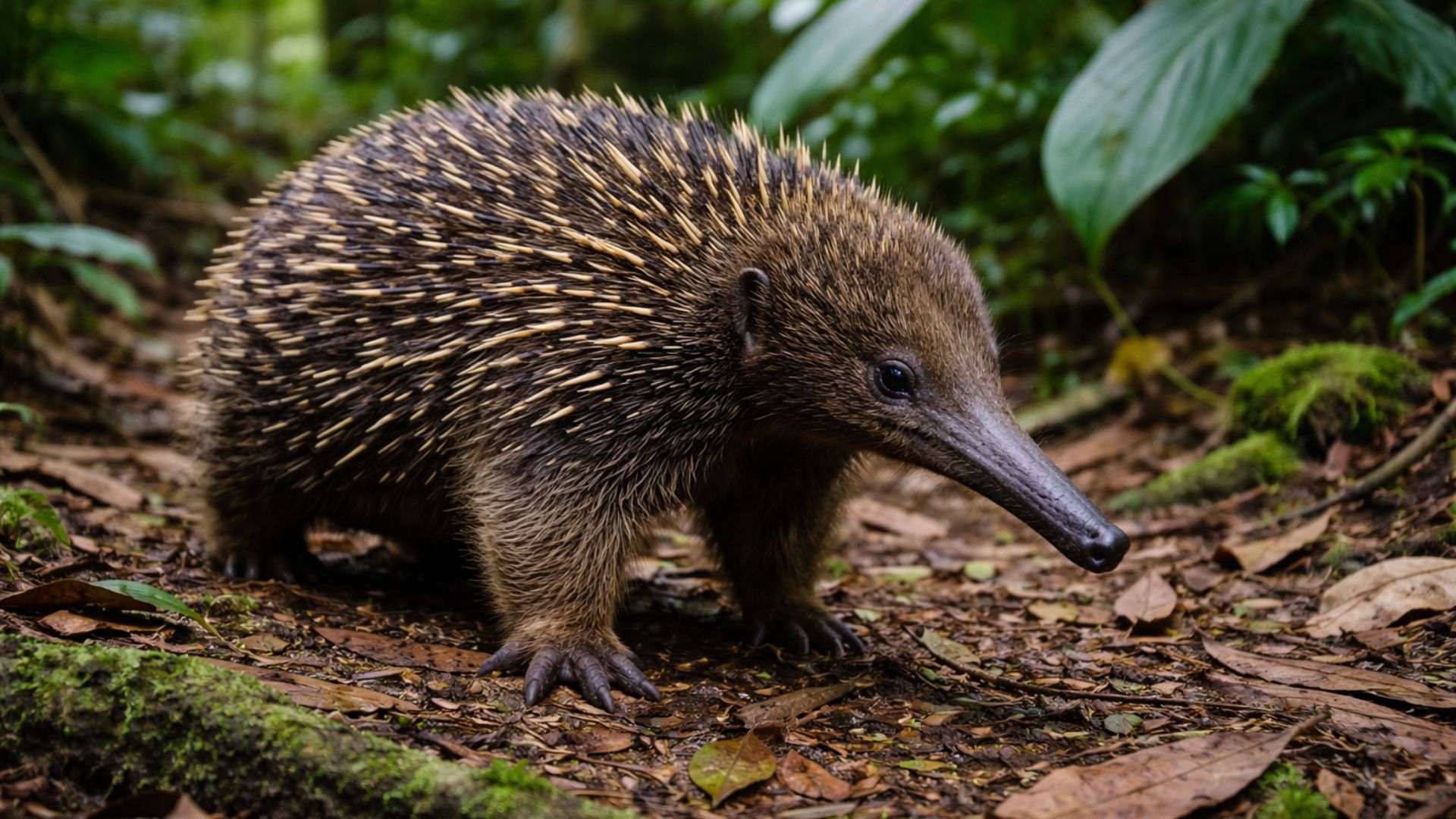


Rare Rediscovery In Remote Forest Confirms Nearly Invisible Monotreme, Reveals Strength Of Monitoring By Cameras And Cooperation With Local Communities, Reignites International Attention For Conservation Of Lost Species And Puts The Attenborough Echidna Back In The Center Of Science And Environmental Protection.
One of the rarest and most enigmatic mammals on the planet has been documented again after decades without scientific confirmation, in a rediscovery that repositions the Attenborough long-beaked echidna at the center of global conservation.
The animal, a monotreme—a group of egg-laying mammals—was documented by camera traps set up in a remote area of the Cyclops Mountains in Papua, Indonesia, in a project that combined monitoring technology with local knowledge and collaboration with communities in the region.
Attenborough Echidna Returns To The Center Of Global Conservation
The species, known by the scientific name Zaglossus attenboroughi, carries an unusual symbolic weight for both science and the public.
-
How to Prevent Brown Recluse Spider Bites: Common Hiding Spots and Free Tips to Reduce Risks

-
Natto: The Unusual Japanese Superfood Gaining Popularity on Social Media and Driving Record Exports
-
Brazilian Mayor Goes Undercover as Homeless for 24 Hours to Assess Public Services

-
15-Year-Old Entrepreneur Malu Lira Publishes 20 Children’s Books on Financial Education, Earns $500,000, and Expands Her Project to the Amazon Rainforest




Besides being associated with a rare evolutionary branch, it has become one of the most cited examples of a “lost” animal by modern research; that is, a species with historical records but without sufficient recent evidence to confirm its continued existence in nature.
The new record, made with automatic cameras in tropical forest, elevated the rediscovery to a milestone for conservation biology by involving a discreetly behaving mammal, difficult to detect and with an extremely limited distribution.

Automatic Cameras Confirm Presence In The Cyclops Mountains
The confirmation occurred during a scientific expedition that sought to record local biodiversity in a region considered underexplored by systematic surveys.
The images and videos obtained by the cameras provided direct evidence of the animal in its natural environment, a type of proof particularly relevant when it comes to nocturnal and timid species that are rarely seen by human observers.
According to the University of Oxford, the team installed dozens of cameras on trails and strategic points to maximize the chances of recording terrestrial fauna, and by the end of the field period, they obtained records of the monotreme.
Egg-Laying Mammal Intrigues Scientists For Decades
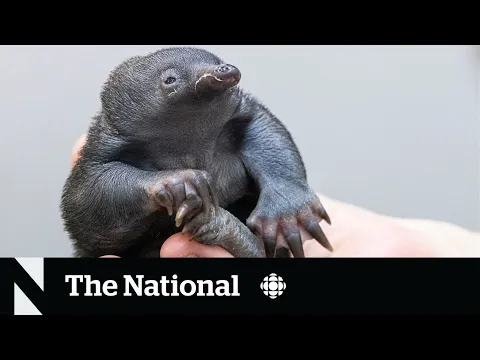
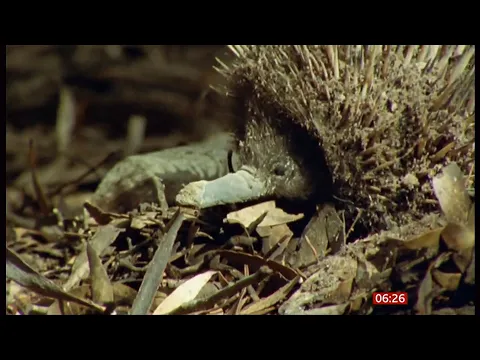
The Attenborough echidna is part of a group that also includes the platypus and other echidnas—all monotremes known for their unique combination of biological characteristics.
Instead of giving birth to offspring like most mammals, monotremes lay eggs, making them a living bridge to understand ancient stages of mammal evolution.
This uniqueness helps explain why a species like Zaglossus attenboroughi draws attention far beyond the academic world: it represents a rare chapter of natural history that, if lost, cannot be replaced by any existing species.
Why The Species Got “Lost” To Science

The prolonged disappearance of the species from the scientific radar does not mean that the echidna has ceased to exist, but rather indicates the size of the challenge to document animals in dense forests, with difficult terrain and low human presence.
In this case, the historical record is especially limited.
The University of Oxford reported that the species had only been recorded by science once, in 1961, and that the new documentation was obtained after extensive planning and field efforts using automatic cameras.
This temporal distance between the historical record and the new evidence has fueled for years the popular classification of the species as “lost,” a term used by conservation initiatives to draw attention and mobilize research and protection for little-known animals.
Indigenous Knowledge And Local Partnership Were Decisive
A central element of the expedition was the collaborative work with local communities and Indonesian organizations, highlighted by the team as crucial to success.
The partnership included researchers, institutions, and groups working in the territory, as well as residents familiar with the landscape, paths, and signs of wildlife in areas where formal scientific research rarely enters.
The University of Oxford emphasized that the relationship built with the community helped the team navigate difficult-to-access regions and conduct fieldwork in traditional territories, with local permission and support, which increased the feasibility and safety of the operation.
What The Rediscovery Changes For Species Conservation
The record of the echidna on camera trap has direct implications for conservation because it confirms the presence of the species in a specific area and reinforces the need for continuous monitoring.
In such cases, the confirmation does not end the matter, but opens a new phase: identifying the real extent of the population, mapping occurrence areas, understanding activity patterns, and assessing threats.
The expedition itself was described as part of a broader inventory effort, and the team stated that it intends to support long-term monitoring of the animal in the region, focusing on drawing attention to the needs for local biodiversity protection.
Biodiversity In Papua And The Challenge Of Protecting Remote Habitats
The Cyclops Mountains region, where the animal was documented, is presented as a mosaic of habitats and as a point of high biodiversity, with potential to harbor little-known and even unknown species to science.
The University of Oxford reported that, in addition to the echidna, the expedition recorded other fauna and invertebrate findings and conducted assessments involving different groups of animals.
This context is important because it places the rediscovery within a larger scenario: when a territory maintains preserved and under-sampled areas, the likelihood of revealing rare species increases, but the same condition can become a risk if public attention does not come accompanied by protective measures and environmental governance.
Monitoring Technology And The Power Of Images In Science
The Attenborough echidna has also become an emblematic case for scientific communication because it brings together three factors that usually mobilize global audience: extreme rarity, prolonged “disappearance” history, and a biologically singular way of life.
Public interest in this type of narrative usually goes hand in hand with a practical question: what happens after a species reappears?
The answer, in the case of critically endangered species restricted to small areas, involves conservation policies and practices ranging from habitat protection to monitoring and control of local pressures, always coordinated with environmental authorities and communities living nearby.
The use of automatic cameras, a method cited by the University of Oxford as the basis for the record, has been consolidating as one of the most effective tools for detecting discreet species in complex environments.
By operating without direct human presence, for long periods and across different altitudes and microenvironments, this type of equipment increases the chance of recording animals that hide during the day, avoid very open trails, or move at specific times.
For species with very few records, each image has disproportionate value because it represents not just a sighting, but a confirmation that guides research and protection priorities.
The rediscovery also reinforces an essential point of modern conservation: species can “disappear” from statistics not only due to extinction but due to lack of recent data, especially in regions where research, logistics, and safety hinder continuous surveys.
This does not diminish the real risk of disappearance but shows why expeditions with planning, technology, and local partnership can reopen chapters considered closed.
In the case of the Attenborough echidna, the evidence obtained puts the species back on the map of active monitoring and increases the pressure for actions that ensure the animal does not disappear again—this time, definitively.
To what extent can the combination of monitoring technology and indigenous knowledge transform other “lost species” into rediscoveries capable of changing global conservation priorities?







“Last egg laying mammal” are we just going to ignore the existence of the platypus now?
Please make this area a prohibited area so poachers can not harm these special rare mammals they deserve to be protected and unharmed as well
Bravo!!!!