Portuguese
  Spanish



After A Year, Survivors Continue Living In Temporary Housing While Awaiting The Delivery Of Permanent Homes. Reconstruction Is Slow, And Deep Emotional Scars Still Impact Those Who Faced The Tragedy
At the time of the extreme floods in Rio Grande do Sul, between April and May of last year, thousands of people were left homeless and were relocated to Humanitarian Reception Centers, known as “temporary cities.”
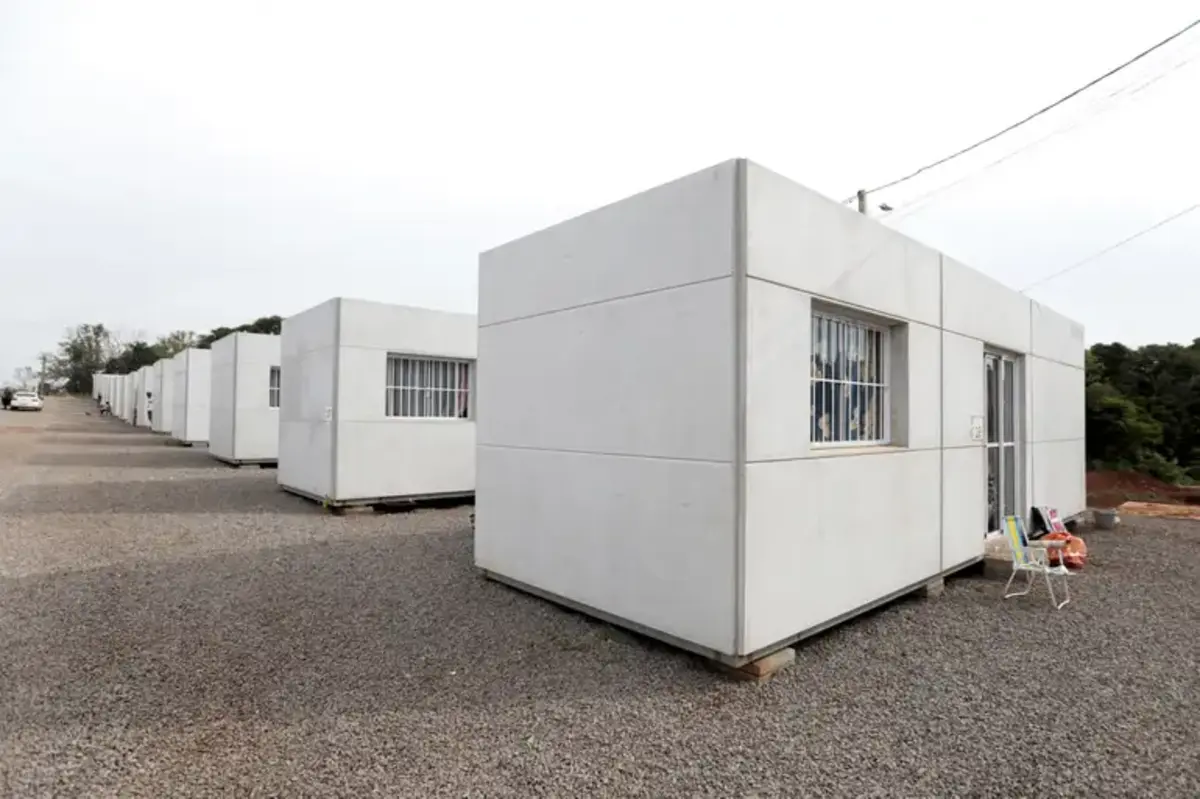
One year later, the state’s vice governor, Gabriel Souza, announced the deactivation of the last two centers and the relocation of around 350 homeless individuals to temporary housing of 27 square meters, according to Nexo.
Temporary Housing Houses People Who Are Still Awaiting Permanent Solution
The temporary houses emerged as an interim alternative, as hundreds of the promised permanent homes have still not been delivered, as reported by Agência Brasil.
-
Brazilian City Makes Remarkable Leap, Becomes 4th Wealthiest in the Country with GDP of R$ 134.1 Billion

-
Controversial 6-day Workweek Elimination in Brazil Faces Economic Criticism Over Productivity Claims

-
Itaú to Refund Customers After 14 Years of Unauthorized Credit Card Charges; Agreement Includes No Interest or Adjustments, Deadline by 2028, with Potential Impact of Up to $6.5 Billion

-
Brazilian Company Grows from Bartering Soap for Food to Producing 30 Million Units Monthly, Challenges Global Giants with $100 Million Revenue and Expands into Premium Cosmetics



About two months ago, Danilo Hiedt and Liana Maria de Quadros moved into one of these temporary homes, a concrete container installed on the plot where a new residential neighborhood will be built in Cruzeiro do Sul, in the Vale do Taquari. Before this, the couple stayed in shelters and lived with relatives.
The new subdivision, named Novo Passo da Estrela, references the neighborhood destroyed by the flood. The project is being carried out in partnership between the state government and the city hall of Cruzeiro do Sul.
The forecast is that the first permanent houses, out of the 480 planned, will be delivered by the end of this year, approximately a year and a half after the tragedy.
Reconstruction Progresses Slowly In Affected Cities
In Roca Sales, one of the hardest-hit cities in the Vale do Taquari, the situation remains difficult. Resident Mário Jora recalls the destruction of his own house. “This house I lived in had double walls, very strong,” he says.
In addition to material loss, the resident mourns the death of three neighbors and is still awaiting support to rebuild his home. According to Fantástico, 150 families in the city are still waiting for the construction of new homes, pending the signing of contracts between the city hall and the federal and state governments.
Changes And Emotional Scars Mark The Lives Of Survivors
In Montenegro, in Vale do Caí, Carla Martins and her husband, retired teachers, lost their home to the waters and were rescued by firefighters.
A year later, the couple is moving again. First, they swapped houses with their daughter. Now, they have rented a larger residence, with space for pets, according to ((o))eco.
Carla reports physical and emotional scars from the tragedy. “This [new house] is far from the river. I don’t even like to pass nearby. After the flood, I could no longer stay in the house because it reminded me of everything we went through. I still have anxiety today, ” she says.
In addition to anxiety, she has problems with her arms after cleaning walls covered in mud. “Furniture and appliances can be bought again, but photos of the children and other memories were lost,” she laments.
With information from Clima Info.