Portuguese
  Spanish


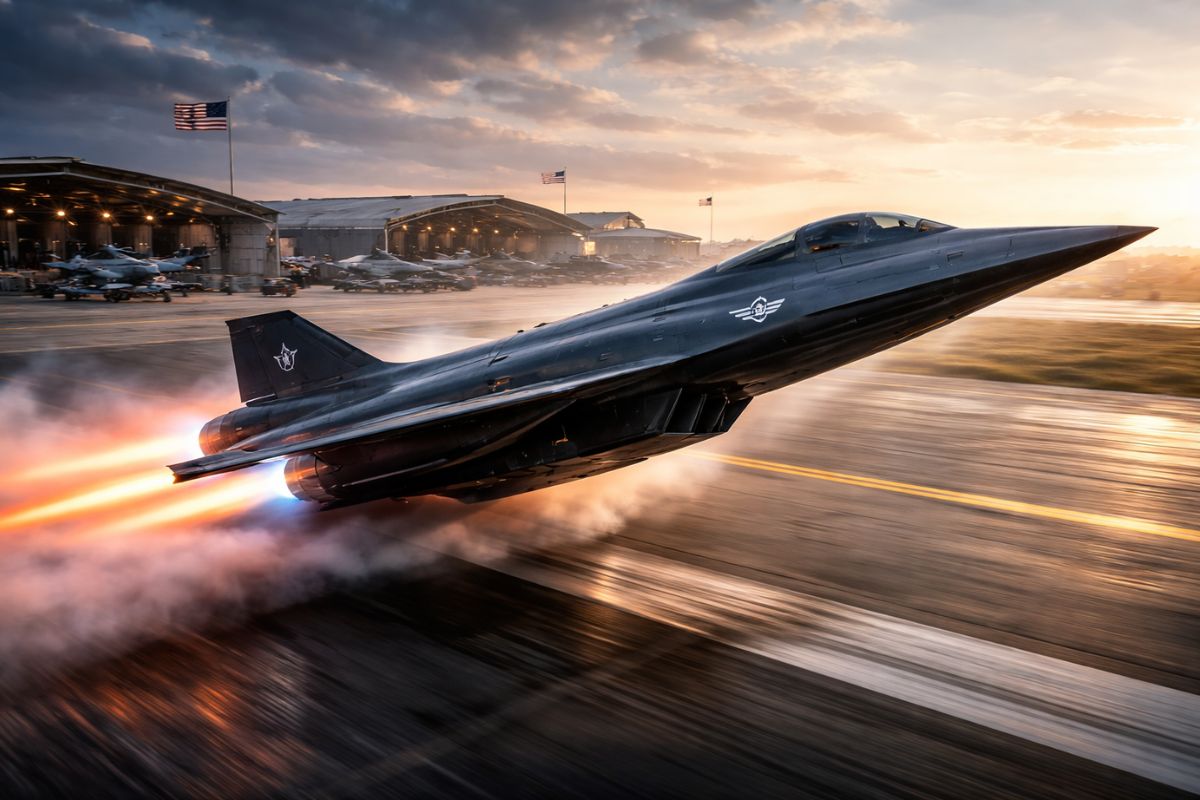


US$ 60 Million U.S. Air Force Contract Pushes Hermeus Quarterhorse Into Hypersonic Autonomous Testing, Promising Mach 5.5 and a Speed Leap That Shortens the Atlantic. Behind the Aircraft, There Is a Competition for Data, Engines, and Rapid Prototype Cycles, Focusing on Military Applications in the Air.
The announcement of a US$ 60 million contract has placed the Hermeus Quarterhorse aircraft at the center of a discussion that goes beyond the promise of crossing the Atlantic in about 60 minutes. The figure is attributed to the U.S. Air Force and has a specific target: to accelerate development and testing.
The less visible point is that the aircraft is not being treated as a finished product, but rather as an experimentation platform. What is at stake is the cadence of unmanned hypersonic tests, as this shortens the gap between engineering hypothesis and operational capability.
What the US$ 60 Million Contract Actually Purchases

The US$ 60 million contract is described as a direct push to take the Hermeus Quarterhorse from concept to reality faster, reducing friction between design, construction, and testing.
-
AI Security System in Brazil Aims to Cut False Alarms by Differentiating Pets from Intruders, Enhancing 24/7 Monitoring for Homes and Businesses

-
Archaeologists Discover 1,500-Year-Old Byzantine Mosaic with Greek Biblical Inscription in Israel, Uncover Ruins of 10 Buildings Near Kiryat Gat
-
Ohio Carpenter Finds 308-Gram Meteorite the Size of a Baseball After Dreaming of Its Location

-
Chinese Student Builds Humanoid Robot for $2,100 at Age 20, Now Leads Robotics Startup in China



In practice, the Air Force uses the money to buy time, access to data, and learning both on the ground and in the air, even before any regular operation.
The logic is simple and harsh: programs that depend on few manned prototypes tend to advance slowly because human risk limits the aggressiveness of trials.
An unmanned aircraft changes that equation by allowing repetition, controlled failure, and successive corrections without placing a pilot in the cockpit.
Quarterhorse, Mach 5.5, and the Next-Generation Engine

Hermeus describes the Quarterhorse as an aircraft designed for extreme speeds of up to Mach 5.5, citing an order of magnitude above 4,200 kilometers per hour.
Practically speaking, it’s the type of level that transforms the debate: it shifts from “gaining minutes” to “changing the flight envelope.”
Behind that limit lies the bet on the engine.
The project mentions a base on the GE J85 model, historically used in military aircraft, and also states the internal development of a next-generation engine to support the plan.
When Mach becomes a central parameter, every choice of materials, geometry, and system integration factors into heat, pressure, and stability calculations.
Unmanned Testing and the Short Development Cycle
Hermeus states that design, construction, and testing have occurred in less than a year, an unusual pace for an aircraft targeting the hypersonic regime.
This shortening does not mean immediate maturity, but exposes a strategy: to learn quickly from prototypes rather than waiting years for a single big leap.
Here comes the unmanned element. By classifying the Quarterhorse as fully autonomous for testing, the program reduces human risk and increases repetition.
The Air Force tends to value this type of cycle because it allows them to adjust instrumentation, mission profiles, and safety parameters with more data per month.
Between New York and London: The Promise of Time and Limitations
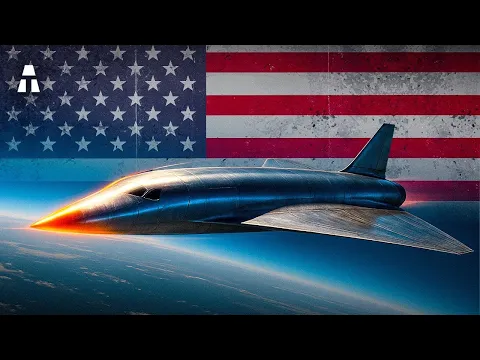

The aerial distance between New York and London is cited as approximately 5,500 to 5,600 km, with current direct flights taking between 6 hours and 40 minutes to 8 hours.
In this context, claiming that an aircraft can make the journey in under 60 minutes is the most direct way to translate Mach 5.5 into everyday terms.
But transforming equivalence into routine is another level.
What is currently on the table is a testing path, with an aircraft that is not yet operational.
The Quarterhorse serves as an indicator of ambition, not as a guaranteed ticket for the shuttle service, and the emphasis on testing suggests that the actual timeline depends on gradual validation.
Why This Changes the Military Reaction Standard in the Air
When the Air Force invests money in an aircraft like the Hermeus Quarterhorse, the interest is not limited to speed alone.
In a military environment, speed shortens windows, alters response times, and changes the opponent’s planning, especially when the goal is to decrease the interval between detecting and acting.
The structural change lies in autonomy applied to hypersonic testing.
If a program can learn and iterate without a pilot, it tests more scenarios and reduces the interval between versions.
This can redefine the military reaction standard in the air, because the advantage shifts from merely “having a fast airplane” to “rapidly improving what already flies.”
The US$ 60 million contract acts as an accelerator for a project that promises speed but operates as a race for data.
The Hermeus Quarterhorse, targeting Mach 5.5, highlights a priority: to test unmanned, fail fast, correct, and repeat, until performance goes from a promise to a capability.
In your view, what weighs more in this type of bet: the unmanned autonomy, the Mach leap, or the development pace of less than a year? If you had to choose one indicator to follow, which would it be and why?