





 Portuguese
  English
  Spanish
  3 min of reading
  0 comments


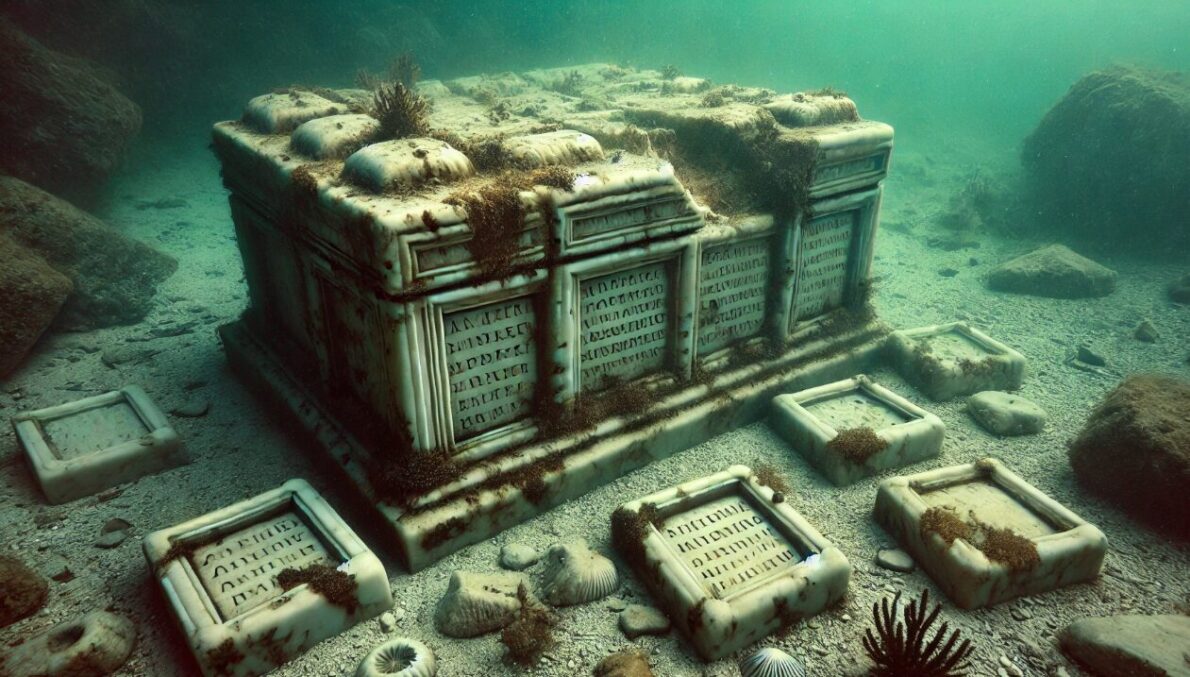
Archeologists Discover 2,000-Year-Old Submerged Temple Belonging to the “Indiana Jones Civilization” on the Italian Coast. This Relic, Made by Arab Immigrants, Reveals Details of Ancient Nabatean Culture. Check It Out!
Archeologists discovered submerged structures off the coast of Pozzuoli, near Naples, indicating the presence of an ancient Nabatean temple, dated to over 2,000 years ago. The location of the construction, associated with the culture of the Nabateans—popularly known as the “Indiana Jones Civilization” in reference to the famous film—reveals marble altars and inscribed plaques, constituting one of the most impressive findings in maritime archaeology in the region.
This temple, built during the time when the Roman city of Puteoli was one of the busiest ports in Italy, offers new insights into the connection between the Roman world and the ancient Nabatean Kingdom, which prospered in the Arabian Peninsula.
According to Michele Stefanile, a maritime archeologist and lead author of the study, this discovery was unexpected and holds great historical significance.
-
R$ 5,000 scattered on the street, a lost wallet, and an honest decision: the case in Goiás that moved even those who only read the story

-
Dissatisfied with seeing people sleeping on the street, a man named Ryan Donais started building small mobile homes so that homeless people can escape the cold, each equipped with a bed, running water, electricity, and heating.

-
ET in Paraná? After intriguing videos, mysterious sounds in the forest, and theories that dominated social media, the Brazilian Air Force reveals what its radars recorded and increases the mystery about the alleged UFO seen in Campo Largo.
-
In North Korea, residents take bottles, plastic, fabric, paper, and metal to recycling shops and exchange waste for products as sanctions, closed borders, and a more than 80% drop in trade with China pressure the country to replace imports.




A Window to Nabatean Trade and Culture
In the historical context, Puteoli was a trade center where goods such as grains and luxury items were exchanged. It was in this environment that the Nabatean community found a space to thrive, bringing with them their religious practices and customs. “It is natural that the Nabateans, influential traders from the ancient East, would have established their presence in Puteoli“, comments historian Steven Tuck from the University of Miami.
The Nabateans are widely known for Petra, their capital in present-day Jordan, where the famous “Treasury” was carved into the rock and immortalized in the film “Indiana Jones and the Last Crusade.” Petra symbolizes the wealth and power amassed by the Nabateans between the 4th century BC and the 2nd century AD as they controlled trade routes delivering luxury products to the Roman Empire.
Temple Structure and Inscriptions
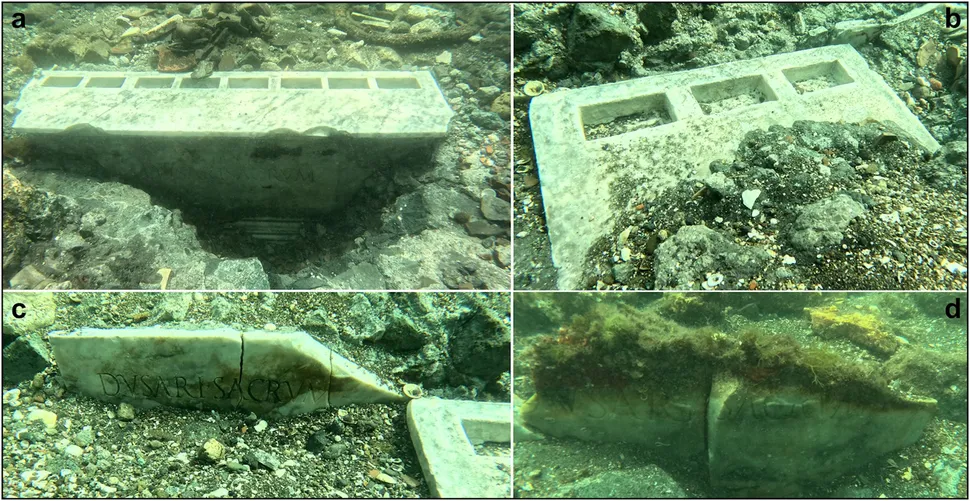
During the underwater investigation conducted in 2023, archeologists identified two large rooms with walls built in a Roman style, measuring approximately 10 meters by 5 meters. Inside one of the rooms, marble altars were discovered against the walls, possibly housing sacred stones, as indicated by the inscriptions found on the marble plaques that dedicate the temple to the god Dushara, the principal Nabatean deity.
This detail highlights a cultural mix, where the Nabateans utilized Roman architecture and the Latin language while maintaining their religious traditions. “It seems we have a building dedicated to the Nabatean gods but with Roman architecture and Latin inscriptions,” emphasizes Michele Stefanile.
Destruction and Burial of the Temple
With the annexation of Nabataea by the Roman Empire in AD 106, the Nabateans lost control of trade routes, culminating in a phase of economic decline. This directly affected the Nabatean community in Puteoli, leading to the abandonment and possibly the burial of the temple, which was intentionally buried in the 2nd century AD with concrete and broken ceramics. According to Stefanile, this may be related to economic and social changes that pressured the Nabateans to leave the region.
Archeologist Laurent Tholbecq from Université libre de Bruxelles suggests that the destruction of the temple reflects the turmoil of the era. “After the Roman expansion in the East, the Nabateans lost the commercial freedom they had and eventually abandoned Puteoli, possibly burying their temple to avoid desecration,” explains Tholbecq.
Impact of the Discovery on Mediterranean History
This discovery reveals a new layer of cultural and commercial interaction in the ancient Mediterranean, highlighting the significance of the Nabatean community in an era dominated by Roman expansion. The presence of the Nabateans in Puteoli confirms that the port was a multicultural meeting point and vital for Roman trade.
The submerged findings open a promising field for new research, which could explore more deeply how different cultures influenced the social and religious dynamics of the Mediterranean.








-

1 person reacted to this.