






 Portuguese
  Spanish


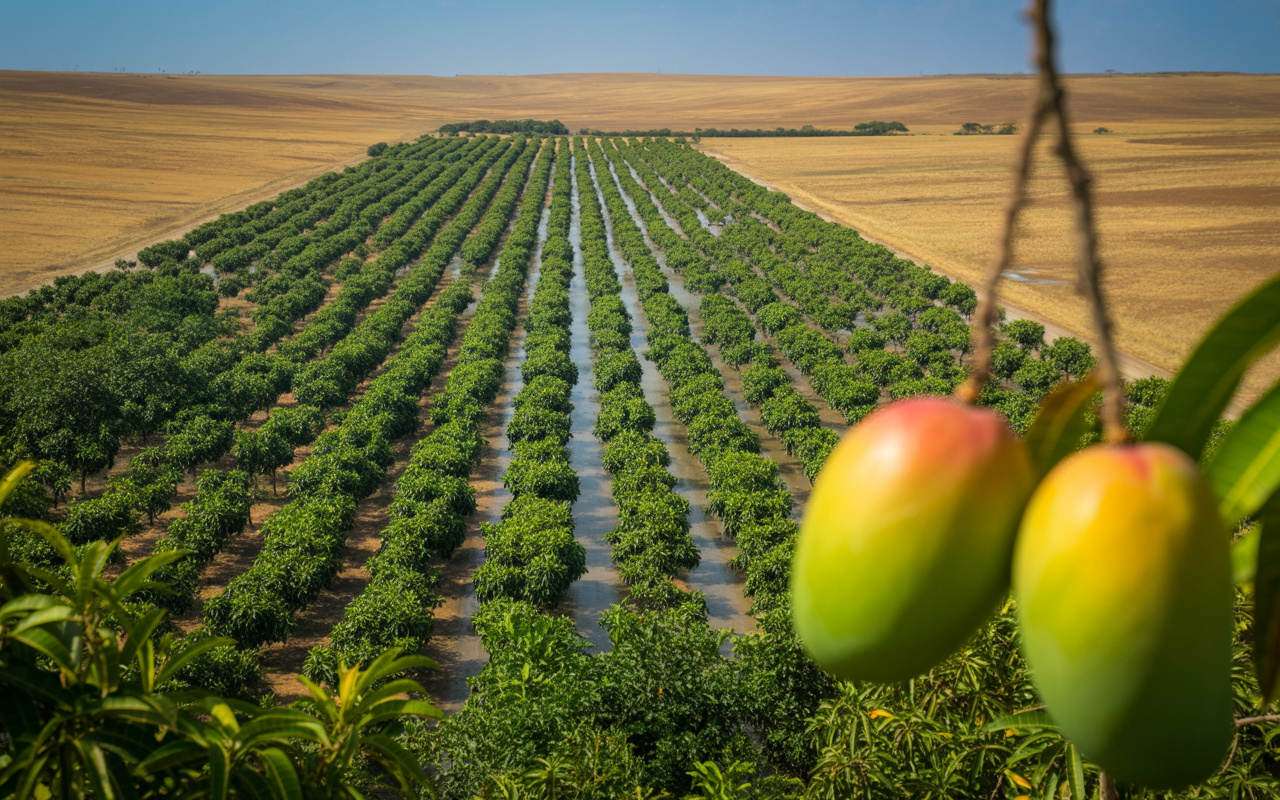


Brazilian Region Accounts for More Than 90% of National Mango Exports, Produces Year-Round with Extreme Irrigation, and Supplies Europe and the USA.
What seems unlikely at first glance is, in practice, one of the biggest success stories of modern agriculture in Brazil. In an area historically marked by drought, high temperatures, and irregular rains, one of the largest mango export hubs on the planet has emerged, capable of producing throughout the entire year and supplying highly demanding markets such as the European Union, the United States, and the Middle East.
This transformation was only possible thanks to the combination of large-scale irrigation, precise climate control, integrated logistics, and technical expertise over the fruit’s production cycle.
Where is the Region that Concentrates Production and Export
The heart of this agricultural system is in the São Francisco Valley, more specifically in the axis formed by Petrolina (PE) and Juazeiro (BA).
-
California’s Almond Industry Consumes Over 4 Trillion Liters of Water Annually Amid Drought, Relies on Trucked-In Bees for Pollination

-
India’s Sugar Export Cuts and Ethanol Shift Amid El Niño Threat Could Impact Global Prices and Stocks

-
Quarantine Pest Threatening Palm Trees Puts Brazilian Authorities on Alert, Prompts Monitoring at University of Taubaté and Potential Control Measures Across São Paulo
-
Global Alert: Report Finds 159 Pesticides in Coffee Beans Sold in Europe, Posing Serious Risks to Millions of Farm Workers


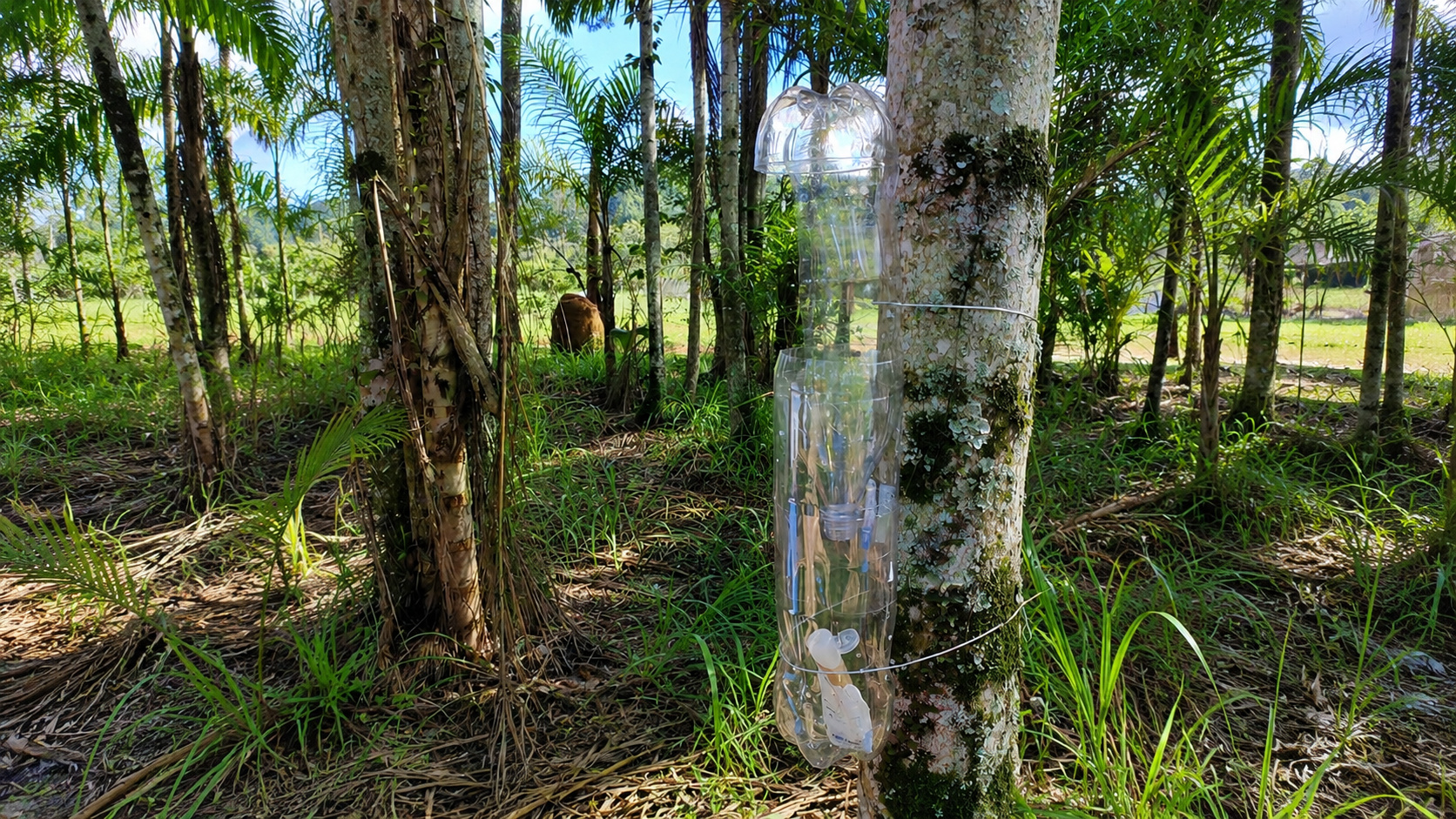

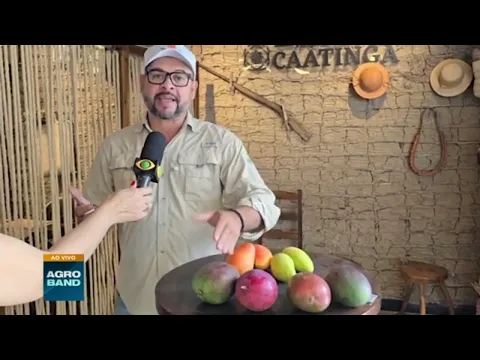

This region is responsible for about 90% of all the mango exported by Brazil, according to data from Embrapa and the Ministry of Agriculture. The production does not only serve the internal market: over 80% of the exported mango comes directly from this area.
Numbers That Explain Global Leadership
The data helps to understand why the hub has become an international reference:
- Irrigated area exceeding 90 thousand hectares
- Annual production above 1 million tons
- More than 40 buying countries
- Continuous harvest throughout the 12 months of the year
- Average productivity above 25 tons per hectare
- Exports concentrated between August and December, a period when international competitors cannot produce
The most exported variety is the Tommy Atkins, followed by Palmer, Kent, and Keitt, chosen for their transport resistance, aesthetic standard, and post-harvest durability.
How the Desert Became an Orchard: Irrigation That Overcomes the Climate
The decisive factor for the region’s success is the intensive use of water from the São Francisco River, combined with modern drip irrigation and micro-sprinkler systems.
The water control is so precise that producers can “trick” the plant, inducing flowering and harvest during strategic periods, something that is practically impossible in rain-dependent regions.
This technical mastery allows Brazilian mango to reach European and North American supermarkets precisely when competing countries such as Mexico, Peru, and India are out of season.
Logistics, Certifications, and International Market
Production does not stop at the farm gate. The hub has developed a highly specialized logistics chain:
- Packing houses with temperature control
- International certifications such as GlobalG.A.P.
- Traceability from batch to batch
- Fast transport to Northeastern ports
- Sanitary standards compatible with the USA and European Union
Thanks to this structure, the region has become a steady supplier for major international retailers, reducing commercial risks and securing long-term contracts.
Direct Economic and Social Impact
The mango hub generates:
- More than 200 thousand direct and indirect jobs
- Strong migration of specialized workers
- Accelerated urban expansion
- Increase in regional GDP
- Transformation of the semi-arid land into a highly productive agricultural zone
Petrolina, for example, has transformed from an average town in the hinterlands to an international agro-export hub, with airports adapted for transporting fresh fruits and dedicated logistics chains.
A Brazilian Model That Became a Global Reference
The case of the São Francisco Valley is now studied by countries in Africa, the Middle East, and Asia as an example of irrigated agriculture in arid regions, combining technology, water planning, and global integration.
More than just producing fruits, the region demonstrates how engineering, agronomic science, and logistics can completely redefine the economic destiny of a territory.








Vale lembrar que os irmãos Nilo e Osvaldo Coelho tiveram participação decisiva para esta realização.