






 Portuguese
  Spanish
  5 min of reading
  0 comments


European Union Demands Total Traceability for Soy, Coffee, Beef, and 4 More Products from Brazil. Check the Explanation Below.
The European Union has taken a historic step in regulating international trade. Starting on December 30, 2024, the EUDR (European Union Deforestation Regulation) officially comes into effect, a law that changes the rules for the importation of seven strategic products: soy, coffee, beef, cocoa, timber, rubber, and palm oil.
What happened was the following: The European Union approved the EUDR (European Union Deforestation Regulation) in 2023, also known as the EU Anti-Deforestation Law. This regulation requires that seven strategic products — soy, coffee, beef, cocoa, timber, rubber, and palm oil — have total traceability back to their origin. In other words, the exporter must prove that the area where the raw material was produced did not experience deforestation or environmental degradation after December 31.
The law officially came into effect on June 30, 2023, but companies were given a transition period. The final deadline for exporters to meet all requirements was set for December 30, 2024.
-
Low-Demand Brazilian Beef Offal Gains Popularity Abroad: Indonesia Purchases $19.5 Million, Boosting Revenue and Reducing Waste

-
Soy Expansion in Former Brazilian Savanna Sparks Water and Land Conflicts in Major Agricultural Frontier
-
Mexican Pest Threatens U.S. Cattle Herds at Historic Lows, Potentially Boosting Brazilian Beef Exports as Burger Prices Soar

-
Avocado Boom for European and U.S. Markets Fuels Water Crisis in Drought-Stricken Chilean Region


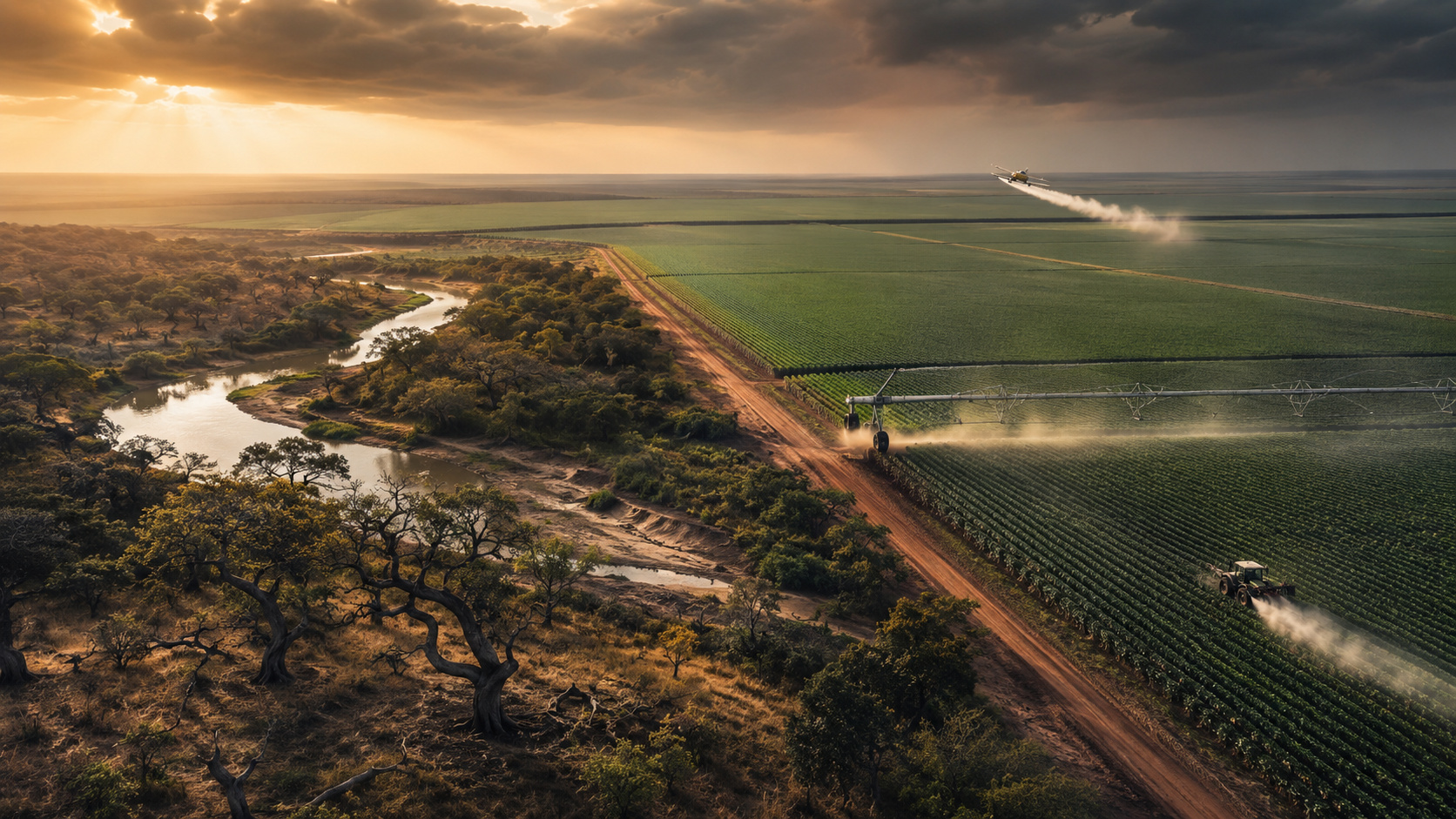


This means that: Until December 2024, companies could prepare by adjusting traceability systems, geolocation of farms, and logistics chains. Now in 2024, we are already in the practical phase: no cargo of these seven products can enter the European Union without digital proof of deforestation-free origin.
This decision puts at risk billion-dollar Brazilian exports, as the European Union ranks among the top buyers of these products.
Soy: The Jewel of Brazilian Agricultural Trade
Brazil is the largest soy exporter in the world, with over 100 million tons shipped in 2024, generating revenues above US$ 50 billion. A large portion goes to China, but the European Union is also a relevant market, especially for soybean meal used in animal feed.
With the new law, each shipment will need to be traced back to the farm of origin, with georeferenced data. For experts, this requirement pressures small and medium producers, who will have to invest in technology to maintain access to the European market.
Coffee: Brazilian Tradition in the Line of Fire
Brazil is the largest producer and exporter of coffee on the planet, responsible for over 30% of the global supply. Just in 2024, exports surpassed US$ 8 billion, with the European Union among the main destinations.
The EUDR requires that every batch of exported coffee have proof of origin and is not linked to deforested areas. Traceability will be a challenge, especially for small producers in traditional regions, such as Minas Gerais and Espírito Santo, who rely on cooperatives to market their production.
Beef: Traceability Requirement All the Way Back to the Origin Pasture
Brazilian beef is also under the watchful eye of the EUDR. Brazil is the world leader in beef exports, with over 2 million tons shipped in 2024. Although China is the largest destination, the European Union remains a premium market, important for high-value cuts.
The new law will require that slaughterhouses trace cattle back to the birth farm, which may expose bottlenecks in indirect supply chains where it is difficult to monitor smaller suppliers. For the sector, the risk is losing strategic contracts if there isn’t a quick adaptation.
Cocoa: Impact on an Expanding Market
Brazil is not the world leader in cocoa (that role belongs to Côte d’Ivoire and Ghana), but it ranks among the 10 largest producers and exports to markets like Spain, the Netherlands, and Germany, major chocolate industry centers.
Total traceability will also apply to Brazilian cocoa, requiring proof that there has been no deforestation in production areas, especially in southern Bahia and Pará, two regions expanding cocoa cultivation.
Timber and Pulp: Forest Sector on the Frontline
Brazil is one of the largest exporters of pulp worldwide, with a strong presence in the European Union and China. In 2024, exports of pulp and timber totaled over US$ 15 billion.
The European requirement includes sawn timber and derived products. Each shipment will have to come with proof of legal and sustainable origin. Major players already have advanced traceability systems, but small producers risk being excluded from the market.
Natural Rubber: Pressure on a Smaller but Strategic Sector
Although Asia dominates the rubber market, Brazil exports regular volumes to the European Union, mainly used by the automotive industry.
The sector, which already faces low competitiveness against Asian suppliers, will have yet another challenge: meeting traceability requirements that could increase costs and cut margins.
Palm Oil: Production Concentrated in Pará Under Surveillance
Brazil is not a global palm oil giant, but production concentrated in Pará supplies niche markets and exports some to Europe. Since palm oil is one of the main targets of the EUDR, the sector will have to prove that there has been no expansion into deforested areas after 2020, which requires satellite monitoring and costly certifications.
Experts Evaluate the Risks


For agricultural economist Marcos Jank, “the EUDR creates a technical barrier disguised as environmental, which can harm exporting countries, even those that already have robust monitoring systems.”
International trade lawyer Tatiana Prazeres emphasizes:
“The traceability required by the European Union is feasible for large companies but represents a huge challenge for small and medium producers, who risk being excluded from international trade.”
Brazil Facing a Dilemma
The European Union accounts for a significant share of Brazilian agricultural commodity exports. If there is no adaptation to the new rules, the country could lose billions in annual revenue and open the door to global competitors.
On the other hand, experts point out that traceability can drive technological advancements in the field, stimulate greater transparency, and enhance the value of Brazilian products in premium markets.
The dilemma is clear: quickly adapt or risk losing one of the largest consumer markets in the world.
A Turning Point for Brazilian Foreign Trade
The entry into force of the EUDR marks a turning point in international trade. Brazil, which has built its strength as an agricultural and forestry giant, will have to prove with data and technology that its production is not linked to deforestation.
With soy, coffee, beef, cocoa, timber, rubber, and palm oil under scrutiny, the country faces an unprecedented challenge: to adapt its entire production chain to the European Union’s requirements in less than a year.
If successful, it can establish itself as a reliable supplier in an increasingly demanding market. If it fails, it risks seeing billion-dollar exports blocked and competitors occupying the space left behind.





-

1 person reacted to this.