






 Portuguese
  Spanish


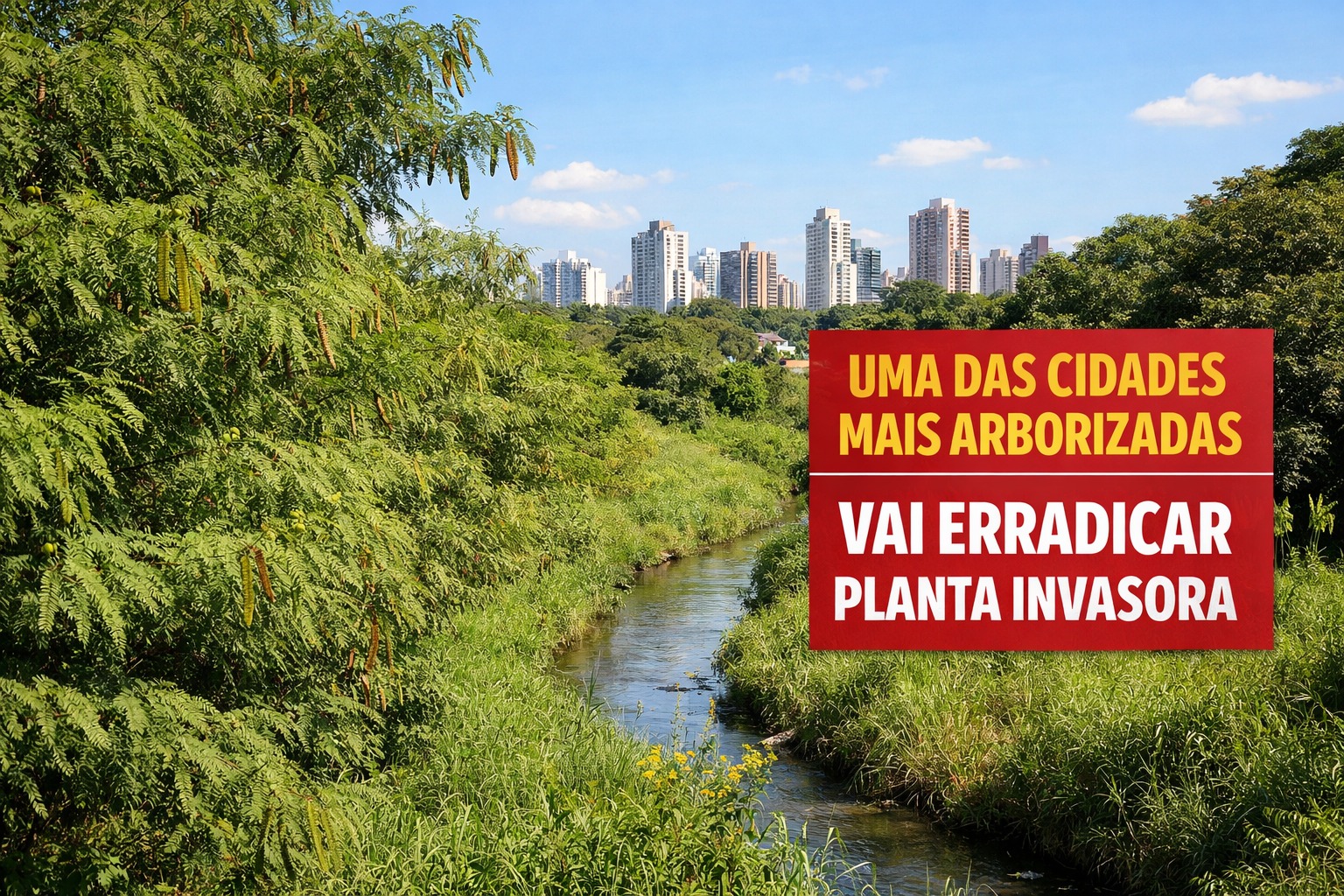


Technical Partnership Valid Until 2031 Establishes Management, Eradication and Replacement of Leucaena to Recover Native Vegetation, Protect the Stream and Reduce Environmental and Health Impacts in the Urban Area
The Federal University of Mato Grosso do Sul and the Municipal Secretary of Infrastructure and Public Services of Campo Grande signed an agreement published this Tuesday (13) to eradicate leucaena and recover the Permanent Preservation Area of Bandeira Stream, with a validity of five years.
The agreement establishes technical cooperation between the university and the municipality to eradicate leucaena and recover the native vegetation of the Permanent Preservation Area of Bandeira Stream.
The publication occurred in the Official Gazette of the Union (DOU) this Tuesday (13), formalizing the partnership with a validity of five years, until January 2031, according to the official document.
-
Kazakhstan’s Torysh Valley Holds Thousands of Giant Stone Spheres, Intriguing Scientists with Ancient Oceanic “Cannonballs”

-
Egypt Discovers 18 Ancient Tombs with Gold Tongues, Unveiling Unusual Funeral Rituals and Amulets Believed to Give Voice to the Dead

-
Nigeria Dumps 120 Million Tons of Sand into Atlantic to Build Massive City with 8.4 km Sea Wall for Protection Against Ocean Waves and Erosion
-
German Engineer Developed Diesel Engine Running on Vegetable Oil Decades Before Electric Cars Became Popular; Can This Forgotten Idea Work in 2026?




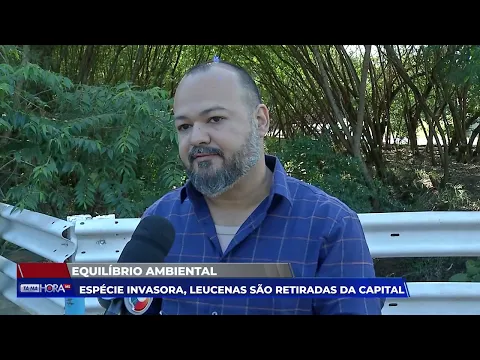
According to the text, leucaena is an invasive exotic plant that spreads rapidly, competes with native species, and compromises the environmental recovery of sensitive areas.

Technical Cooperation and Environmental Planning
The planned actions involve management, eradication and replacement of leucaena, bringing together academic studies, environmental planning and practical work concentrated along Bandeira Stream.
The central objective is to recover native vegetation, protect the watercourse and improve the environmental conditions of the Permanent Preservation Area, considered strategic for the city.
The activities follow a work plan that details intervention stages, gradual recovery of the area, and continuous monitoring of the actions performed on site.
The agreement provides for the university and the municipality to act in an integrated manner, combining scientific knowledge with practical actions aimed at the environmental restoration of the urban environment.
Origin of the Species and Uncontrolled Expansion
The specialist in ecology and trees, Milton Longo, explains that leucaena arrived in Brazil in the 1970s, brought from Mexico as a food alternative for cattle.
Introduced in Mato Grosso do Sul and other states, the species began to spread uncontrollably, dominating natural areas and suffocating native plants.
Longo states that leucaena is aggressive to the ecosystem by releasing mimosine, a chemical compound that inhibits germination and prevents the growth of other species.
In practice, the tree creates environments dominated by a single species, drastically reducing the plant diversity present in the affected areas.
Environmental Impacts and Associated Risks
According to Longo, leucaena grows rapidly and occupies valley bottoms, road edges, and streets, forming mono-dominant forests in Campo Grande.
He emphasizes that these formations disrupt the natural balance, hinder the regeneration of native vegetation, and compromise local ecosystem services.
The biologist Gisseli Giraldelli, director of the Brazilian Society of Urban Arborization, has studied leucaena for 15 years and reinforces the environmental risks.
She states that invaded areas lose biodiversity and become “green deserts,” visually dense, but composed of only one species.

Invasive Plant: Effects on Fauna, Health and City
Giraldelli explains that the homogenization of vegetation threatens fauna and flora, reduces habitats, and interferes with ecological chains essential for urban balance.
The researcher also warns of impacts on human health, as the loss of biodiversity favors diseases associated with ecological imbalance.
According to her, these effects not only affect the environment but also the economy and quality of life in urban areas.
The eradication of leucaena in Bandeira Stream is part of broader efforts for environmental recovery, focusing on protecting sensitive areas and natural services.
This article was based on information published in the Official Gazette of the Union (DOU) and on technical statements included in the released content.
With information from G1.





Aqui na região de BH pra todo lado tem e a prefeitura acha bonito…
Deveria ser uma ação nacional pelos órgãos federais ( Ibama) Sorocaba sp. Tem o mesmo problema.