Portuguese
  Spanish


Starting in July 2025, all federal universities and private institutions within the Federal Education System will issue undergraduate diplomas exclusively in digital format. This change is in accordance with the determination of the Ministry of Education (MEC). The MEC officially published this measure, which took effect on July 1, 2025.
There was a mandatory transition to the new standard. Aiming to increase security, practicality, and transparency, this innovation also seeks to combat fraud. Additionally, it ensures easy access to the document, whether via laptop, mobile phone, or tablet. The format allows for immediate verification of the diploma’s authenticity.
New Format Enhances Security and Accelerates Validation
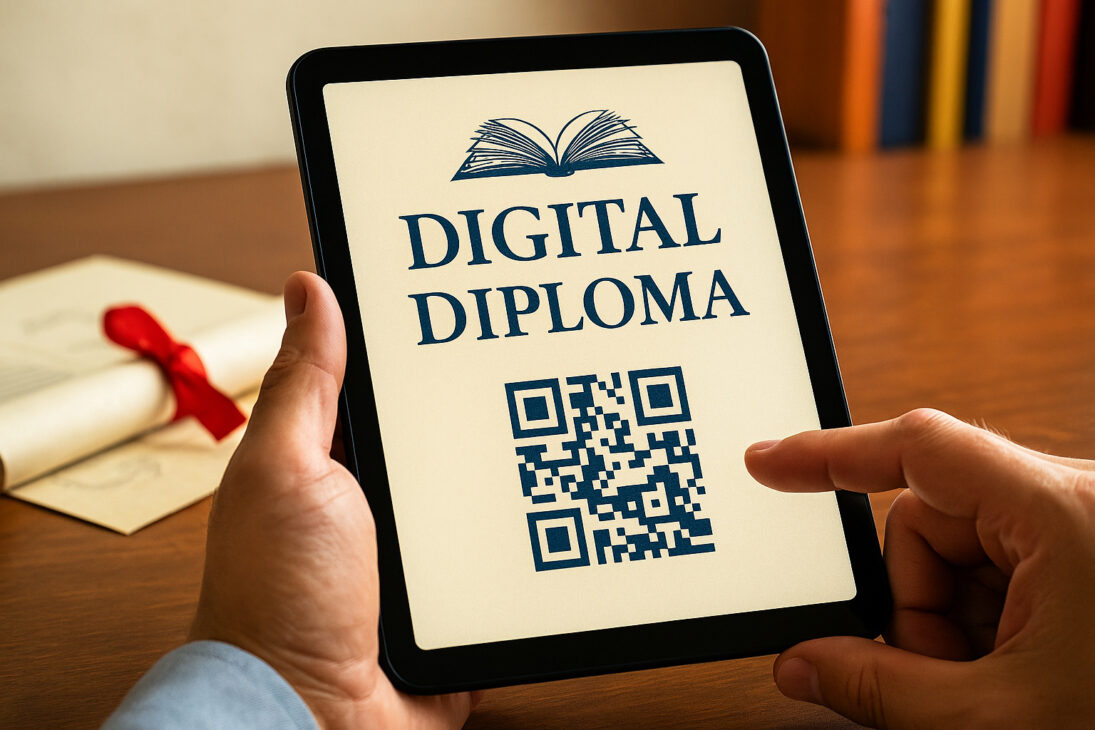
With the implementation of the digital diploma, the issuance process has become faster and more secure throughout Brazil. This statement comes from the Ministry of Education, disclosed in July 2025. The new system uses strict technical standards. It includes digital signatures with A3 certificates or higher and a unique QR Code for instant validation. The diploma also has a time stamp for tracking and storage in XML format. You access the document via an individual link. This makes the consultation process much more practical and efficient. The team developed all these changes to reduce the risks of counterfeiting. Brazil thus aligns itself with international standards for academic validation. Institutions that do not adapt to the ordinance will be subject to sanctions provided by the MEC.
Important Changes for Physical and Digital Diplomas
Since the publication of the new rule, printed diplomas issued starting July 1, 2025, have lost validity. The rule applies to graduates from federal universities and institutions of the Federal Education System. This information is included in an official notice from the MEC. However, paper diplomas issued until June 30, 2025, remain valid. There is no need for reissuance. The MEC made it clear that the exchange of old diplomas for the digital format will not be mandatory. Each interested party can seek guidance directly from the responsible institution. Thus, they can learn about the procedures for updating or obtaining a duplicate.
-
Forgotten Map Leads Diver to Shipwreck with Gold, Rare Jewels, and Secrets Hidden for Nearly 350 Years

-
Furong: The 2,000-Year-Old Chinese City Built on a 60-Meter Waterfall Becomes a Global Tourist Phenomenon

-
YouTube Inventor Dubbed “Real-Life Tony Stark” Builds Robotic Legs for Father’s Day, Creating a Wheelchair That Conquers Stairs and Rough Terrain
-
Brazilian Scrap Dealer Processes 3,000 Tons of Ferrous Scrap Monthly, Paying $0.09 to $0.70 per Pound, Reveals Why a Hidden Cylinder Costs 1,500 kg Discount





New Requirements Affect Postgraduate Programs Starting January 2026
Another relevant change disclosed by the Ministry of Education involves postgraduate education. Starting January 2, 2026, digital diplomas will also be mandatory for stricto sensu courses. This includes master’s degrees, doctoral degrees, and certificates of medical and multiprofessional residency. The same technical standard will be required. The digitization policy will be expanded to all higher education in Brazil. This expansion demonstrates the MEC’s commitment to ensuring modern and secure procedures. The government continues to align with the digital transformation of the country.
Values, Legal Validity, and Guidance for Students
Regarding fees, the MEC has ensured that the issuance of the first copy of the digital diploma will be completely free. Thus, this expands access and guarantees equality for all graduates. If the student wishes to obtain a physical version, they may request it from the institution. However, the printed document will not hold legal value. As such, only the digital diploma possesses official validity in Brazil, according to the new ordinance. Therefore, all questions and guidance regarding issuance must be clarified directly with the responsible university or college. This ensures transparency and efficiency for all parties involved in the process. The above information was published by the Ministry of Education in an ordinance dated July 1, 2025. Furthermore, the federal government reinforces its commitment to innovation and academic security.