






 Portuguese
  Spanish
  6 min of reading
  0 comments



Port of Chancay, built with Chinese investment of US$ 3.5 billion, could reduce transport between South America and Asia by up to two weeks and change global routes.
In 2024, the Chancay port project, led by the Chinese COSCO Shipping Ports in partnership with the Peruvian Volcan Compañía Minera, entered its decisive implementation phase on the coast of Peru, about 80 kilometers north of Lima. In a report published by Reuters on January 18, 2024, the venture was described as a megaport worth US$ 3.5 billion, regarded as one of the most ambitious Chinese infrastructure projects underway in South America.
The proposal goes far beyond the construction of a port terminal. It is a project designed to reconfigure logistics between South America and Asia, creating a direct link between the South American Pacific and Chinese ports, especially Shanghai. In another report published by Reuters on October 18, 2024, executives associated with the operation stated that the initial route would be direct to China, with the potential to significantly reduce cargo transport time.
This logistical shortening is not just an operational advantage. It points to a structural change in global supply chains, with effects on agricultural, mineral, and industrial exports from countries such as Peru, Brazil, Chile, and Bolivia. As a recent fact, a report published by Reuters on April 10, 2026 stated that the port of Chancay has already reduced maritime travel time to Asia and is beginning to operate as a transit hub for goods such as electric vehicles destined for regional markets, showing that the geoeconomic impact of the project has already begun to materialize.
-
Ports without drivers and cabins already move containers like automated factories: robotic cranes, autonomous electric vehicles, and software transform giant terminals into 24-hour logistics machines.

-
About 300 American ports still breathe diesel from trucks, cranes, and locomotives, but they are now trying to electrify heavy machinery to clean the air for 31 million nearby residents.

-
A 220-meter giant powered in part by solar energy and lithium batteries has just unloaded nearly 5,000 Chinese cars at the Port of Itajaí. It is the first of ten Grimaldi super ships and the first in the world prepared to run on ammonia as fuel.

-
The Port of SC has just entered the direct route to the largest hubs in Northern Europe with a new line from Maersk, gains a connection with Manaus in 13 days, and is preparing dredging to receive giant ships of up to 16,000 containers.
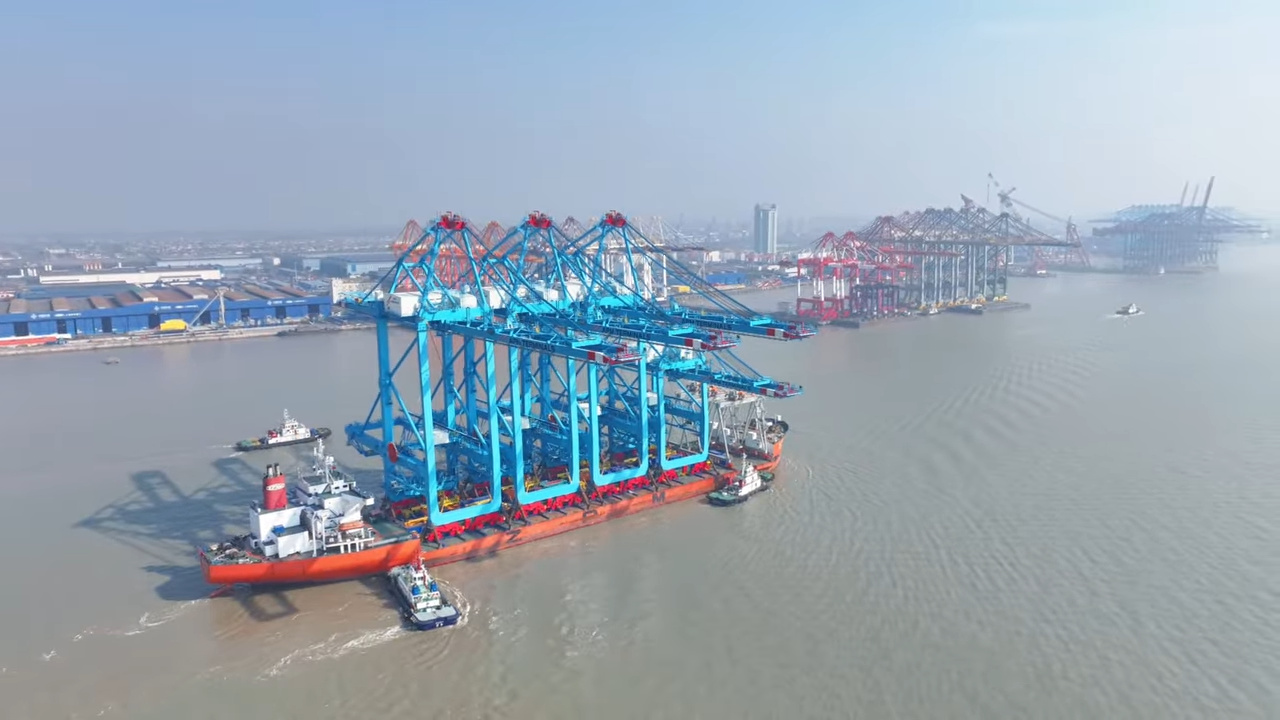


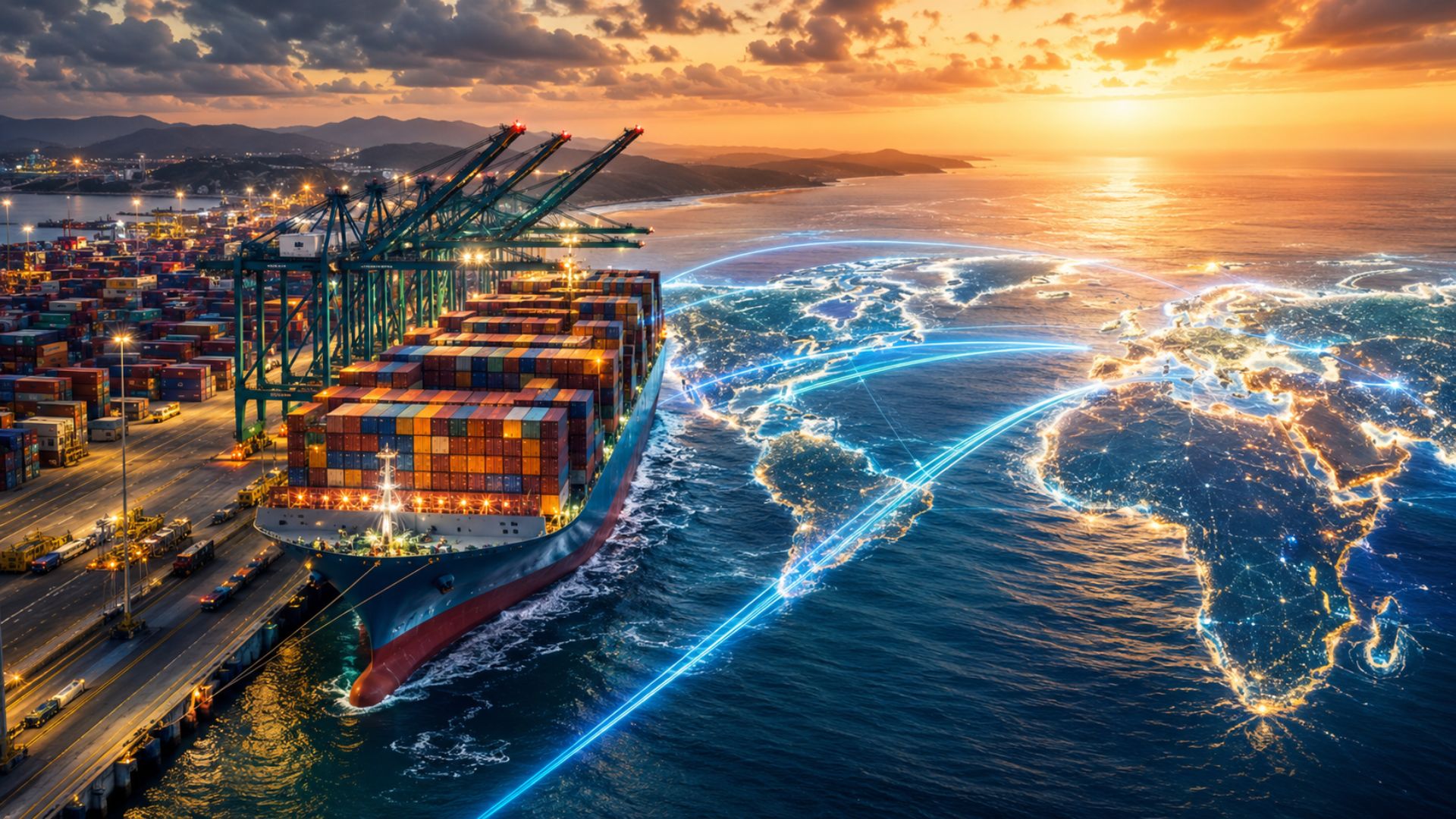
Large-scale infrastructure places Chancay among the largest port projects in Latin America
The port of Chancay was designed to operate as a deep-water port hub, capable of accommodating large vessels that traditionally cannot dock at various ports along the South American west coast. The structure includes:
- Specialized terminals for containers, general cargo, and bulk
- Sufficient depth for deep-draft vessels
- Automated cargo handling systems
- Integration with highways and future rail connection
This configuration places Chancay in a superior category within regional port infrastructure, allowing it to function as a consolidation point for cargo coming from different countries in South America.


The most relevant technical differential is the ability to operate direct routes with Asia, without the need for intermediate stops at ports in Central America or North America, something that is currently common in a large part of South American exports.
Reduction of up to two weeks in transport changes the logic of international trade
One of the most relevant data associated with the port of Chancay is the estimated reduction in transport time between South America and Asia. According to analyses cited by international media, cargo that currently takes about 35 to 40 days to reach China could have this time reduced to something close to 20 to 25 days on certain routes.
This reduction occurs due to two main factors:
First, the elimination of intermediate stops, which are currently necessary at ports such as Manzanillo in Mexico, or even at terminals on the west coast of the United States.
Second, the creation of direct maritime routes between Chancay and Asian ports, especially Shanghai, the largest port in the world in container movement.
This logistical shortening has a direct impact on the final cost of exports, especially for perishable products, agricultural commodities, and minerals with large volumes.
Project connects to China’s global strategy to redesign trade routes
The port of Chancay is not an isolated project. It is part of a broader strategy of China known as the Belt and Road Initiative, which seeks to expand Chinese presence in global infrastructure, including ports, railways, highways, and logistics corridors.
In practice, what is being built in Peru is a new transcontinental logistics axis, connecting:
- South America
- Pacific Ocean
- Asia
This strategy has two clear objectives:
The first is to ensure more efficient routes that are less dependent on intermediaries, reducing costs and increasing logistical predictability.
The second is to expand China’s economic influence in strategic regions, especially in countries with strong export capacity for commodities.
Brazil may be directly impacted by the new logistics corridor
“`htmlAlthough the port is located in Peru, the potential impact on Brazil is significant. One of the analyzed scenarios involves transporting Brazilian cargo overland to Peruvian territory, using highways or future railway corridors, to then be shipped from Chancay to Asia.

This logistical model can be particularly relevant for regions of Brazil’s Midwest, where a large part of the country’s agricultural production is concentrated.
Today, these cargoes travel long distances to ports in Southeast or Northern Brazil, often facing logistical bottlenecks. With Chancay, the possibility of an alternative corridor via the Pacific emerges, potentially faster and more competitive.
This type of regional integration can alter the South American logistical map, creating new trade flows and redistributing the strategic importance of existing ports and routes.
Construction involves large-scale technical and environmental challenges
The construction of the Chancay port is not limited to the installation of port structures. The project involves complex works, including:
- Dredging coastal areas
- Construction of tunnels for cargo access
- Maritime containment systems
- Land transport infrastructure
Additionally, there are relevant environmental challenges, as the region hosts sensitive coastal ecosystems. The project underwent environmental assessments required by the Peruvian government, including impact studies on marine fauna and local communities.
The scale of the work demands high-level engineering, with intensive use of technology and sophisticated logistical planning.
Port can transform Peru into a logistics hub of the South American Pacific
With the operation of the Chancay port, Peru can assume a completely new role in the logistical geopolitics of South America.
Traditionally, countries like Chile and Panama play central roles in regional maritime routes. However, Chancay’s capacity to operate as a large-scale hub may displace part of this prominence.
The country will be able to:
- Attract cargo from neighboring countries
- Consolidate regional exports “`
- To become a redistribution point for goods
This represents a structural change in Peru’s position within international trade, elevating its status from exporter to also a strategic logistics operator.
Geopolitical impacts increase attention on Chinese presence in the region
The construction of the Chancay port has also generated international attention, especially from the United States, due to China’s growing role in strategic infrastructure in Latin America.
Although the project is officially commercial, analysts point out that infrastructures of this scale can have geopolitical implications, especially when they involve:
- Deep-water ports
- Control of logistics routes
- Integration with global supply chains

China’s advance in building infrastructure outside its territory raises debates about economic and strategic influence, especially in regions traditionally considered within the American sphere of influence.
Start of operations marks the beginning of a new phase for South American trade
The expected start of initial operations at the Chancay port points to an important milestone in regional logistics. Even in its initial phase, the terminal is expected to operate with significant capacity, with progressive expansion over the coming years.
The trend is that as new land and rail connections are developed, the volume of cargo will increase significantly.
The port is not just an isolated project, but the starting point of an integrated logistics system, which can grow and expand over time.
What this transformation means for the future of global trade
The creation of a new logistics axis between South America and Asia represents more than an operational improvement. It is a reconfiguration of global trade routes, with the potential to:
- Reduce logistics costs
- Increase export competitiveness
- Create new economic corridors
- Alter the relevance of traditional ports
This type of transformation occurs rarely and is usually associated with large investments in infrastructure and significant geopolitical changes.
The port of Chancay fits exactly into this context, being one of the clearest examples of how infrastructure can redefine trade relations between continents.






Be the first to react!