






 Portuguese
  Spanish


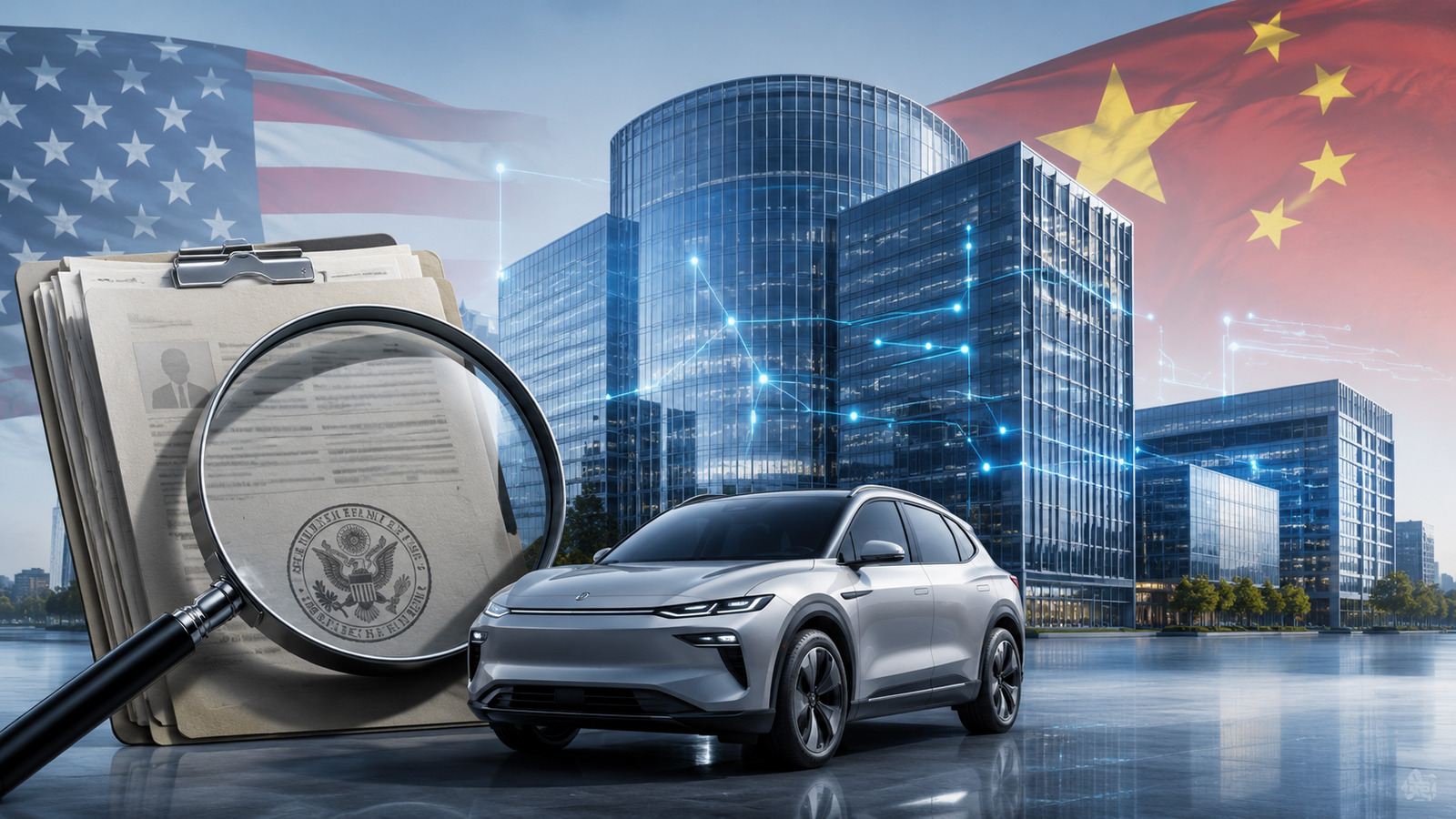

Measure by the United States Department of Defense includes giants like Alibaba, BYD, Tencent, Baidu, and Nio in a list linked to the Chinese Armed Forces, expanding regulatory scrutiny over Chinese companies with international operations
Major Chinese companies have been included by the United States Department of Defense in the list of companies considered linked to the Chinese Armed Forces or the country’s civil-military fusion strategy. The notice, made available on June 8, will be officially published in the Federal Register on June 10.


List includes giants of technology, electric cars, and telecommunications
Among the names with the greatest international reach are Alibaba, Baidu, BYD, Tencent, Nio, and Hesai, a manufacturer of sensors used in autonomous vehicles.
The document also mentions CATL, Huawei, DJI, Hikvision, SenseTime, SMIC, China Mobile, China Telecom, China Unicom, CNOOC, COSCO Shipping, COMAC, AVIC, BGI Group, TP-Link, Trina Solar, WuXi AppTec, and Yangtze Memory Technologies, along with dozens of other Chinese companies.
-
Ayatollah Ali Khamenei’s Funeral Draws 15 to 20 Million in Tehran, Calls for Revenge Against Trump After Joint Israel-U.S. Attack

-
U.S. Establishes Permanent Embassy in Jerusalem, Reigniting International Debate Over Israel’s Capital
-
The world has nearly 12,000 nuclear warheads, with the majority held by the United States and Russia; see the figures for China, France, and the United Kingdom.

-
Venezuela Faces UN Alert for Hunger, Disease, and Service Collapse After Earthquakes Cause Nearly 2,000 Deaths and $6.7 Billion in Damages


The measure is part of the list of Chinese military companies, known by the acronym CMCs, and results from Section 1260H of the United States National Defense Authorization Act.
Pentagon points to direct and indirect links
The list identifies companies that operate directly or indirectly in the United States and maintain links with Chinese government agencies, the People’s Liberation Army, or initiatives integrating commercial and military capabilities.
In the case of Alibaba, the document cites indirect affiliations with Chinese state agencies and the Ministry of Industry and Information Technology. Baidu was categorized under similar criteria.
BYD, Tencent, Nio, and Hesai also appear in the document
BYD, one of the largest global manufacturers of electric vehicles, was described as directly and indirectly affiliated with the State-owned Assets Supervision and Administration Commission of China and indirectly linked to the Ministry of Industry and Information Technology.
Tencent was identified as indirectly affiliated with the People’s Liberation Army. Nio was described as directly and indirectly linked to the State-owned Assets Supervision and Administration Commission of China.
Meanwhile, Hesai was associated with the Ministry of Industry and Information Technology, the state assets commission, and the People’s Liberation Army.
Inclusion does not mean automatic sanction
The entry of these Chinese companies on the list does not, by itself, represent automatic sanction nor immediate prohibition of business in the United States.
Even so, the status increases regulatory scrutiny and can influence decisions of suppliers, business partners, and agents who interact with these companies.
This article was prepared based on information from the United States Department of Defense notice scheduled for publication in the Federal Register, with data, numbers, and statements preserved as per the consulted material.









