






 Portuguese
  Spanish


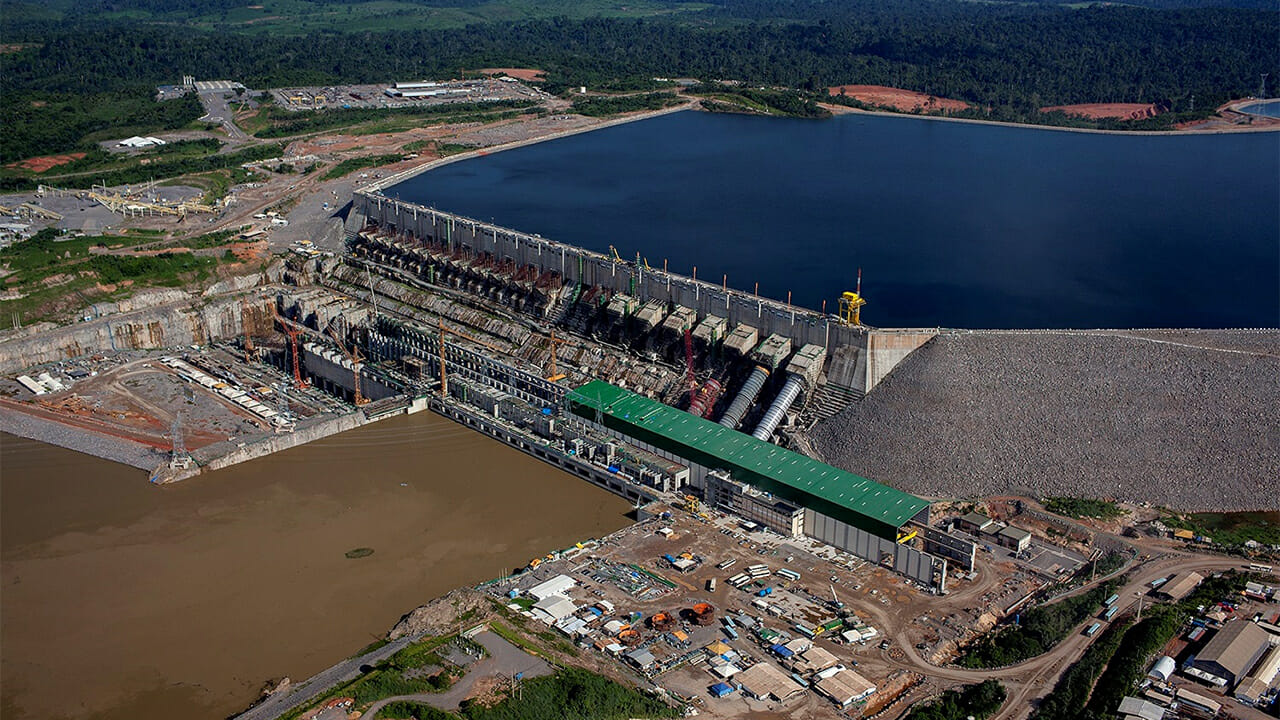

Belo Monte Hydroelectric Plant Has An Installed Capacity Of 11,233.1 MW, Distributed Among 18 Turbines, Which Generated 9.4% Of All Energy Consumed In The Country In The First Half
The Belo Monte Hydroelectric Plant, in the first half of 2023, emerged as the largest producer of clean and renewable energy in Brazil, contributing a significant share of 9.4% of all energy consumed in the country. The amount generated would be enough to supply approximately 30 million households – a number sufficient to meet all the residences in the North, Northeast, and Central-West regions.
A Milestone For Renewable Energy
By reviewing the available data, it is noted that the clean energy generation by Belo Monte during this period would be sufficient to meet the demand of the National Interconnected System (SIN) for about 17 days. This is an impressive milestone for renewable energy in Brazil, as it demonstrates the country’s ability to generate energy efficiently and environmentally responsibly.
Contribution Of UHE Belo Monte To The Brazilian Energy Matrix
To give an overview of the potential of the Belo Monte Hydroelectric Plant, it is important to highlight that the plant has an installed capacity of 11,233.1 MW, distributed among 18 turbines. Each one has a nominal capacity of 611.11 MW, which is comparable to a nuclear plant like Angra I.
-
Giant Batteries Take Center Stage in Chile Auction as Company Offers 960 GWh of Solar Energy for Nighttime Use, Aiming to Stabilize Solar Power Supply

-
After a Year of Success in Switzerland, Solar Railway Attracts Italy’s Interest for Clean Energy Transformation
-
Robots Clean Solar Panels in Desert Power Plants Without Water, Preventing Energy Losses
-
Brazil’s Offshore Wind Energy Potential Worth $1 Trillion Stalled by Long-Delayed Agreement




Furthermore, considering the Pimental plant with 233.1 MW, the Belo Monte Hydroelectric Complex accounts for 5% of the Brazilian electric matrix and 10% of the hydraulic generation capacity of that matrix, establishing itself as the largest 100% Brazilian hydroelectric plant.
The renewable and clean energy generated by Belo Monte is essential for Brazil’s energy security, reinforcing the importance of investments in renewable and sustainable energy sources. In 2022, the average energy generation of Belo Monte was 4,240 MW. It is important to emphasize that this output could have been even greater if it weren’t for the deficiencies in the transmission system.
Challenges And Possibilities For The Future
Despite the notable progress in renewable energy, challenges still remain. In 2022, for example, there was an excess of energy of 718 MW that could not be utilized due to electrical and energy restrictions.
This situation occurs when hydropower plants are capable of generating more energy but are hindered by limitations in the transmission system and the integration of energy from complementary renewable sources.
Although the path forward may present obstacles, the progress already made by the Belo Monte Hydroelectric Plant and the potential for clean and renewable energy that it represents for Brazil are undeniable. The commitment to sustainable energy sources, as evidenced by Belo Monte’s success, reaffirms Brazil’s role as an example in renewable energy on the global stage.







