





 Portuguese
  English
  Spanish
  5 min of reading
  0 comments


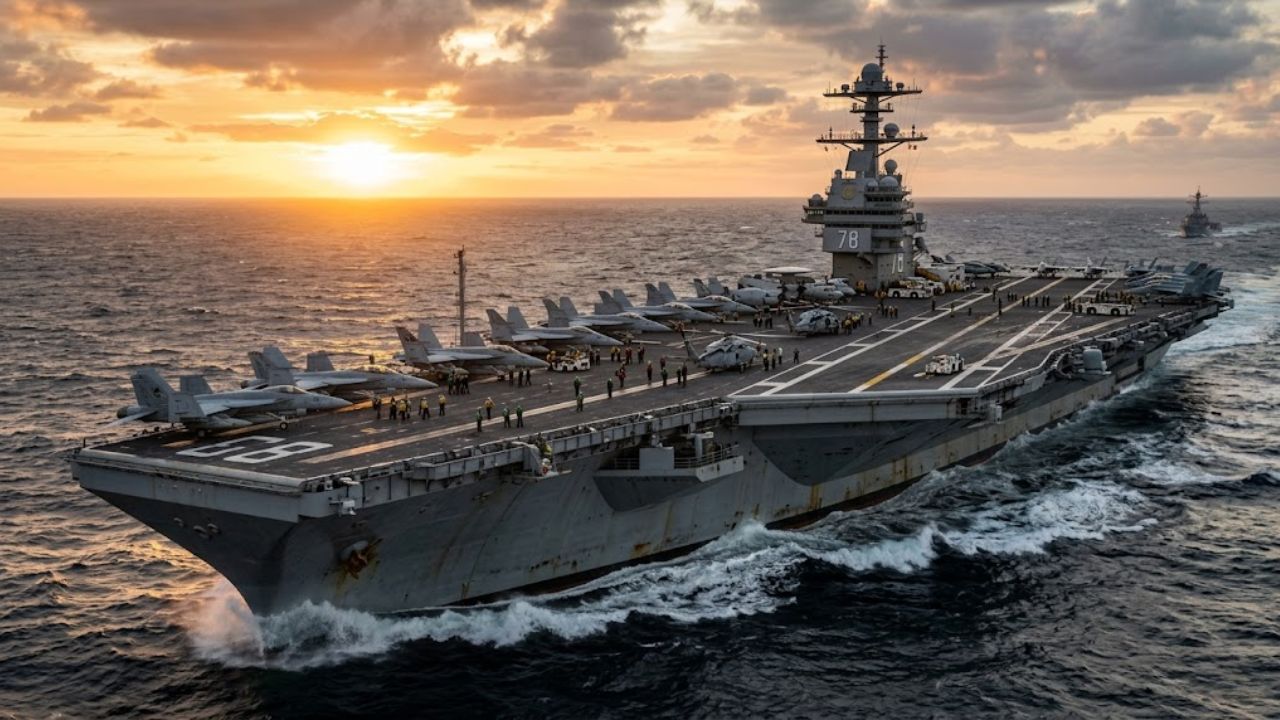
While the British Navy takes up to 6 years to build a single destroyer, the American aircraft carrier USS Gerald R. Ford returned to the port of Norfolk on May 16, 2026.
The return marked 326 consecutive days at sea, a record for the US Navy since 1991.
According to a report by gCaptain, the ship executed 1,700 sorties during Operation Epic Fury in the Red Sea.
-
Yeast used in bread, beer, and pizza becomes biomaterial for architecture and surprises by forming lightweight pieces, molded in 3D printers and dried without high energy consumption heating.

-
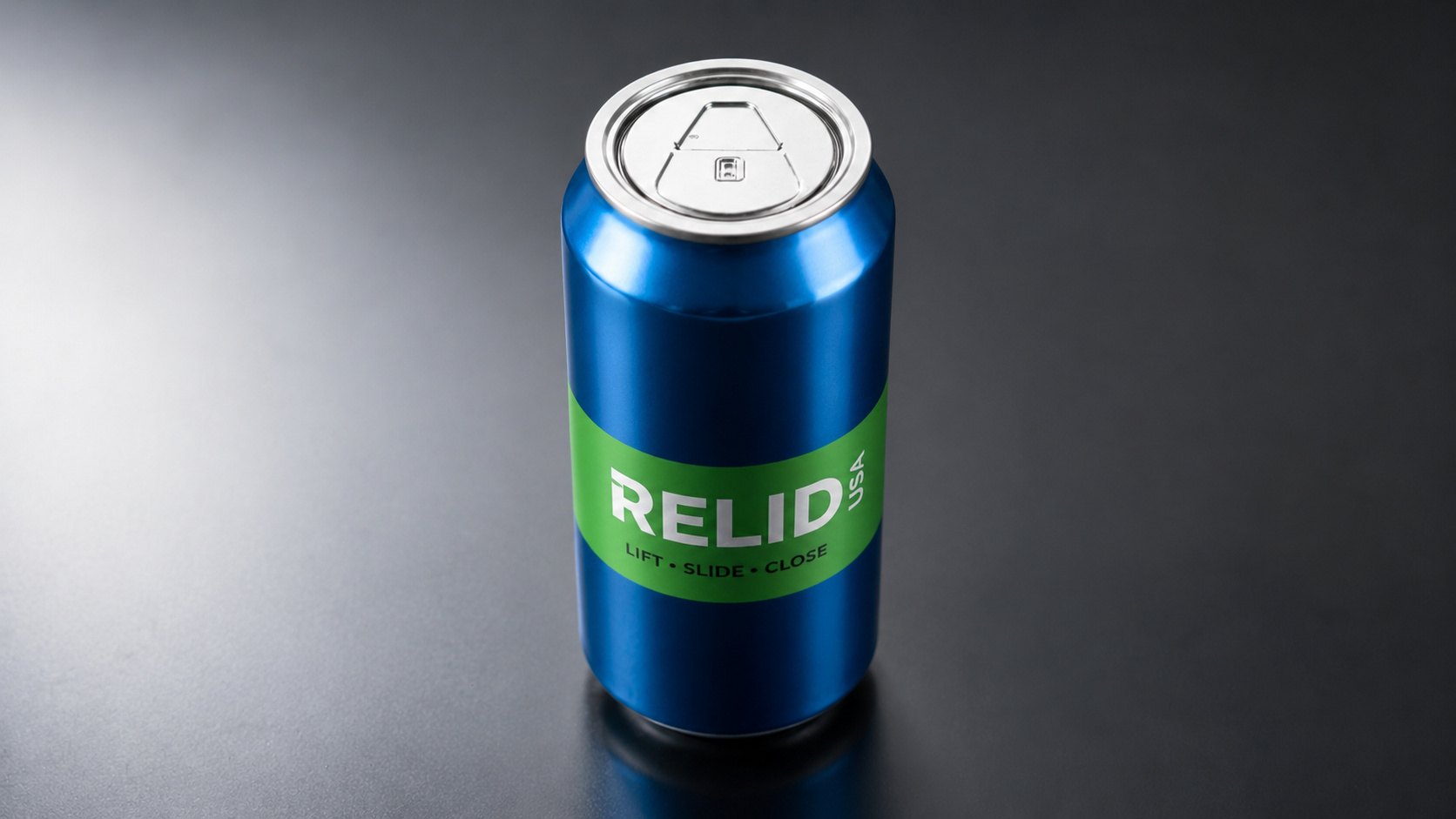
A simple yet impactful innovation can change the global beverage sector: the aluminum can from ReLid USA that opens and closes bets on the circular economy, reduces waste, and offers a sustainable alternative to conventional plastic packaging.

-
Surprising the global technology market, SpaceX closes a $30 billion deal with Google in June 2026 and strengthens the race for advanced digital infrastructure, expanding the integration between space connectivity, artificial intelligence, and strategic services.
-
China tests a 10-megawatt nuclear reactor that fits in a truck and can provide energy for decades to islands, military bases, remote areas, and even artificial intelligence data centers.




Therefore, the nuclear aircraft carrier consolidates itself as the largest in operation in the world, with a displacement of 100,000 tons and a length of 333 meters.

According to the US Navy, the ship carries 4,660 crew members and up to 90 embarked aircraft.
Among the aircraft are F/A-18 Super Hornet, E-2D Hawkeye, and MH-60 helicopters.
Therefore, the ship is the first of the new Ford class, successor to the 10 Nimitz built between 1968 and 2009.
Rear Admiral Gavin Duff commanded the aircraft carrier to Norfolk
The strike group was under the command of Rear Admiral Gavin Duff, an officer born in San Diego, California, and a veteran of four previous deployments.
According to the US Navy, Carrier Strike Group 12 included the ship, two Ticonderoga-class cruisers, and four Arleigh Burke-class destroyers.
The group totaled 7 ships, 70 aircraft, and about 7,500 sailors and marines distributed among the vessels.
The mission began in June 2025 and lasted exactly 326 days until the return on May 16, 2026.
According to the U.S. Naval Institute, it was the longest continuous duration of a carrier strike group deployment since Operation Desert Storm in 1991.
Additionally, according to records from the United States Navy, the deployment surpassed by 80 days the previous record-holder USS Theodore Roosevelt in 2020.
USS Gerald R. Ford and the EMALS: the $13 billion electromagnetic catapult that replaced steam
The ship cost $13.3 billion to the Pentagon and took 12 years from contract to commission.
According to the builder Huntington Ingalls Industries, based in Newport News, Virginia, the ship incorporates 23 new technologies.
Therefore, the main one is the Electromagnetic Aircraft Launch System (EMALS), which replaced the steam catapults of the Nimitz class. The system accelerates aircraft from 0 to 240 km/h in 2 seconds.
According to the Naval Air Systems Command, the EMALS reduces mechanical wear by 30% and allows launching light drones that steam catapults could not.
Besides the EMALS, the ship uses Advanced Arresting Gear (AAG) for landings and Dual Band Radar AN/SPY-3 for simultaneous detection of 800 targets.

Operation Epic Fury: 1,700 sorties and attacks on the Houthis in the Red Sea
The strike group arrived in the Red Sea in October 2025 to participate in Operation Epic Fury against Houthi attacks on commercial ships.
According to the US Central Command (CENTCOM), aircraft from the Ford executed 1,700 sorties in 7 months against targets in Yemen.
According to official data, the group shot down 31 Shahed-136 suicide drones and intercepted 12 anti-ship ballistic missiles en route to commercial ships in the Bab el-Mandeb strait.
Therefore, commercial traffic in the Suez Canal grew by 18% between March and May 2026, according to the Suez Canal Authority.
Before the operation, 67 commercial ships had been hit by Houthi missiles since 2023, with the loss of 4 sailors and 2 ships sunk.
Captain Steve McManus took the Ford to the Caribbean first
Aboard the vessel, the command was with Captain Steve McManus, a US Navy pilot with 24 years of service.
McManus previously commanded the VFA-31 Tomcatters squadron of F/A-18 Super Hornet.
Under McManus, the ship began the mission in the Caribbean with Operation Absolute Resolve, aimed at maritime drug trafficking between Venezuela, Colombia, and the United States.
According to the Joint Interagency Task Force South, the operation intercepted 14 tons of cocaine in 3 months in the Caribbean before the Strike Group was redirected to the Mediterranean in September 2025.
Why the USS Gerald R. Ford cost 3 times more than a Nimitz
The unit cost of the Ford was $13.3 billion.
Therefore, it is 2.5 times the cost of the last Nimitz built, the USS George H.W. Bush, commissioned in 2009 for $5.4 billion.
According to an analysis by the Congressional Research Service, the jump derives from the 23 new technologies of the Ford combined with program delays.
Additionally, the project suffered 11 years of delays between the contract in 2008 and the operational delivery in 2017, with the first combat mission only in 2022.
Therefore, the second ship of the class, USS John F. Kennedy (CVN-79), reduced the unit cost to $11.9 billion and is expected to enter service in 2026 or 2027.

How the aircraft carrier compares to the largest military ships in the world
According to the CTBUH naval, the Ford is the largest aircraft carrier in operation in the world in 2026.
According to US Navy records, the Nimitz class is 332.8 meters long and 97,000 tons.
The British HMS Queen Elizabeth is 280 meters and 65,000 tons, and the Russian Admiral Kuznetsov is 305 meters and 58,500 tons.
- USS Gerald R. Ford (USA): 100,000 t, 333 m, 90 aircraft, commissioned 2017
- USS Nimitz (USA): 97,000 t, 332.8 m, 85 aircraft, commissioned 1975
- Fujian (China): 80,000 t, 320 m, 60 aircraft, in tests 2024
- HMS Queen Elizabeth (UK): 65,000 t, 280 m, 40 aircraft, commissioned 2017
- Admiral Kuznetsov (Russia): 58,500 t, 305 m, 41 aircraft, commissioned 1990
According to the Council on Foreign Relations, the United States operates 11 nuclear aircraft carriers, more than all other countries combined.
For comparison with other ships in Brazilian ports, see the naval coverage of CPG and the SpaceX and Google orbital Suncatcher.
USS John F. Kennedy enters in 2027 and the Doris Miller begins in 2032
The schedule of the US Navy foresees four Ford-class ships by 2050.
Therefore, the second, USS John F. Kennedy (CVN-79), is expected to enter service in 2026 or 2027 according to Huntington Ingalls Industries.
According to the Navy’s schedule, the third USS Enterprise (CVN-80), is expected by 2029 with an estimated cost of $12 billion.
Additionally, the fourth USS Doris Miller (CVN-81), will be the first US Navy aircraft carrier named in honor of an African-American sailor. Delivery is expected in 2032.

The ship returns to Norfolk for a scheduled maintenance period of 60 days before the next deployment.
However, the US Navy is still discussing whether the next deployment will be to the Pacific or again to the Mediterranean.
Additionally, according to a strategic analysis by the RAND Corporation, the average time between the ship’s deployments decreased from 18 months to 12 months between 2022 and 2026.
According to the report, the pressure derives from the naval dispute with China in the Indo-Pacific.
According to the report, the US Navy increased the operational frequency of its 11 aircraft carriers to respond to the growth of the Chinese fleet, which already totals 3 aircraft carriers in operation in 2026.
However, for the 4,660 crew members who spent 326 days away from home, the return on May 16 marks one of the longest deployments in American naval history since World War II.





Be the first to react!