Portuguese
  Spanish


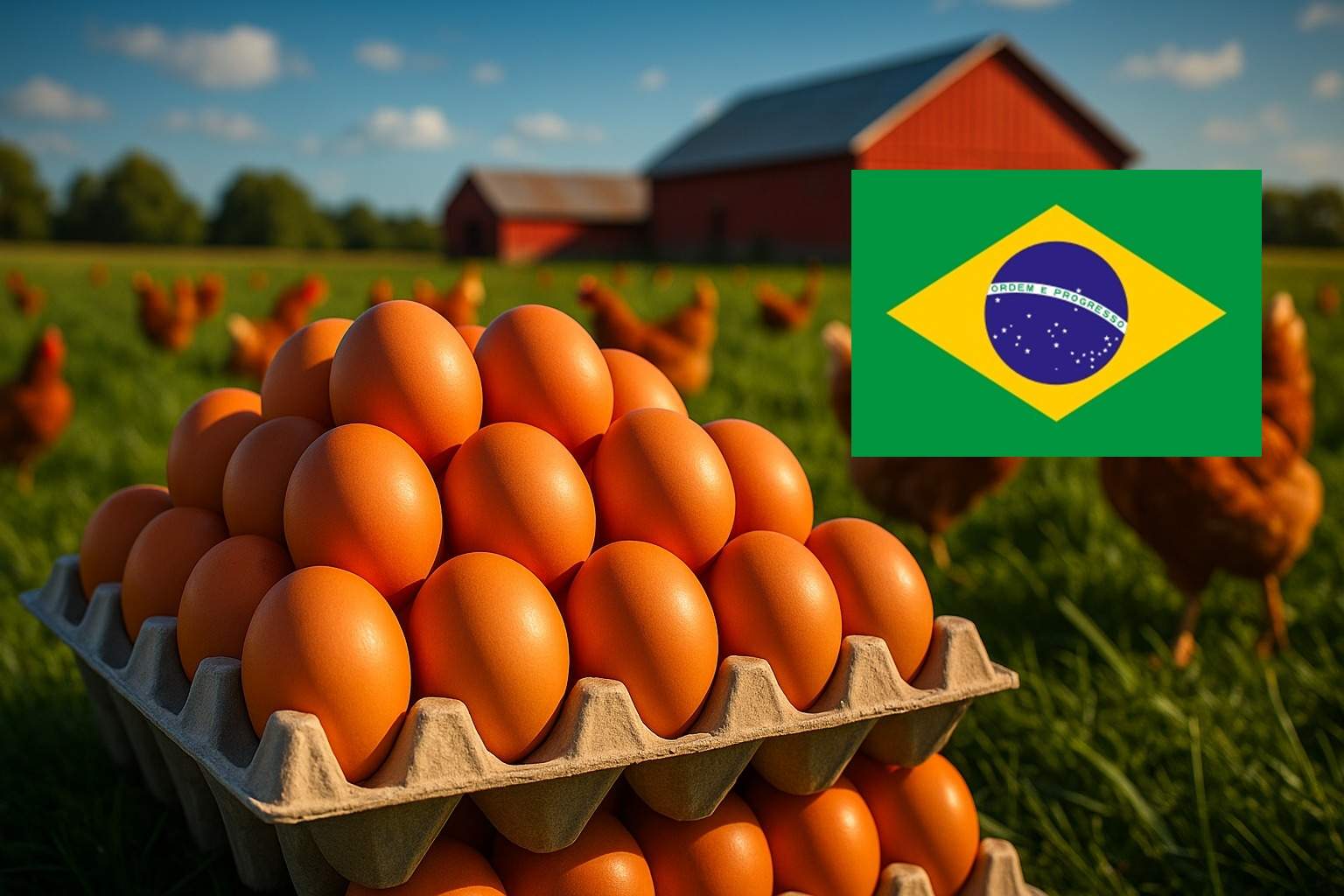


With Growing Production In Almost All States, The Largest Production Poles In The Country Have Reached Historical Numbers And Transformed Brazil Into A Global Reference, With More Than 5.4 Billion Dozen Eggs In 2024
Egg consumption continues to rise in Brazil. According to the Municipal Livestock Survey (PPM), released in September by the Brazilian Institute of Geography and Statistics (IBGE), each Brazilian consumed an average of 305 units in 2024.
The survey shows that the production of animal origin and national herds continue to grow, reaching historical numbers.
Production On The Rise And Successive Records
In the past year, Brazil produced 5.4 billion dozen, which represents 64.8 billion eggs. This result is a new record in the historical series and confirms the continuous increase in production, which has been growing uninterruptedly since 1999. Out of the 27 federative units, 24 reported progress in the sector.
-
Producer receives news and had to cull almost the entire herd, bounced back with the help of compensation, and is now producing 450 liters of milk per day in SC.

-
Quail Eggs Reveal a “Secret Code” on Their Shells Explaining Unique Patterns and Colors

-
Rare Tropical Fruit Canistel, with Egg Yolk Color and Caramel Flavor, Gains Interest from Researchers and Small Producers in Brazil
-
Brazilian Farmers Develop Wheeled Metal Lever to Ease Cassava Harvesting Without Heavy Machinery


The spotlight is on Santa Maria de Jetibá, in Espírito Santo, which has established itself as the largest producer in the country and earned the title of “egg capital.” The city produced 346 million dozen in 2024. Following are Bastos (SP), with 270 million; São Bento do Una (PE), with 151 million; Primavera do Leste (MT), with 112 million; and Beberibe (CE), with 85 million.
Poultry Surpass The Brazilian Population
The growth is also evident in the number of birds. In 2024, Brazil recorded a total of 1.6 billion poultry — almost eight times more than the country’s population. This number represents a 1.7% increase compared to 2023, which means 26.8 million more animals.
Only the number of hens reached 277.5 million, an increase of 6.8% compared to the previous year. Santa Maria de Jetibá also leads this production, reinforcing its central role in Brazilian egg farming.