Portuguese
  Spanish


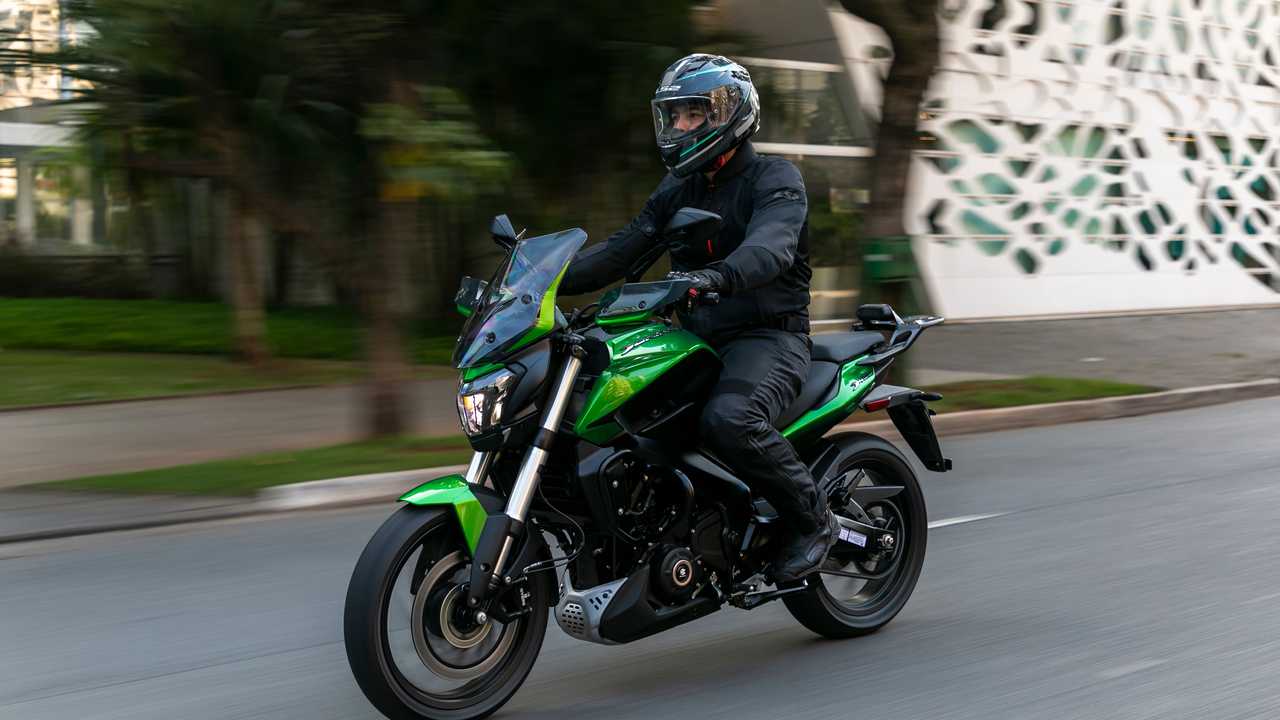

Bajaj Develops Natural Gas-Powered Motorcycle Promising Superior Performance and Greater Sustainability.
The car and motorcycle industry is constantly seeking alternatives to fossil fuels to reduce carbon emissions, and this has driven the popularity of battery or hydrogen-powered cars and motorcycles. Now, Bajaj is exploring new horizons with the launch of the first motorcycle powered by CNG (compressed natural gas), commonly known in Brazil as GNV, aiming to establish a new standard in terms of sustainability and innovation in the sector.
Compressed Natural Gas Motorcycle Registers 75% Reduction in CO2
For those who are not familiar, compressed natural gas (CNG) is, as the name suggests, produced by compressing natural gas to less than 1% of its volume at standard atmospheric pressure.

CNG can be used as a fuel source for internal combustion engines, where a cylindrical tank supplies the gas through a pressure regulator before it reaches a combustion chamber to be mixed with air and ignited by the spark plug.
-
Brazil’s Lula Government Allocates $463 Million Quota for Electric Car Parts, Waives Import Tax Until December, Sparking Competition Among BYD, Automakers, and Unions as Consumers Question Impact on Prices and Local Industry

-
Thinking of Installing LED Headlights? Why Replacing Halogen Bulbs is Still Banned, the Glare Risks Authorities Worry About, and How a New Proposal Could Allow Certified, Safe Installations

-
2027 Toyota Corolla Cross Unveiled: New Design, Enhanced Fuel Efficiency, Reduced Maintenance Costs, Advanced Technology, Connected Services, and Up to 10-Year Warranty
-
Fiat Cronos Precision 2018: Affordable Sedan with Spacious Trunk and Reliable Maintenance




Compressed natural gas or Natural Gas Vehicle – GNV, used in Bajaj’s motorcycle is considered a cleaner and cheaper alternative to gasoline or diesel. Although conversion kits for CNG are already available worldwide, Bajaj Auto’s natural gas motorcycle from India would be the world’s first built specifically for compatibility with this fuel.
Prototypes of Bajaj’s CNG motorcycle have been produced since last year. Rajiv Bajaj, a brand representative, stated in late 2023 that a prototype of the brand achieved a 75% reduction in carbon monoxide (CO) compared to a gasoline-powered motorcycle.
When Will the Natural Gas Vehicle Motorcycle Hit the Market?
Another important point mentioned by Rajiv was that consumers of a CNG motorcycle could experience fuel savings, with Bajaj’s prototype proving to be 50 to 65% cheaper in this aspect.
The brand representative also stated at the time that Bajaj Auto planned to launch this CNG (GNV) motorcycle only in 2025. However, this timeline seems to have changed, and some media outlets in India are already reporting that the launch of this model may occur on June 18 of this year.
The prototypes were reportedly tested on roads, first as regular motorcycles, and then underwent the necessary modification to run on CNG. Bajaj Auto has not revealed much information so far, so we will need to wait longer for official confirmations of its features.
Kawasaki Also Focuses on Sustainability with Its Hydrogen Motorcycle

In addition to Bajaj, which is developing the world’s first GNV motorcycle, Kawasaki is also focusing efforts on decarbonizing motorcycles. After launching the first hybrid street motorcycle in the world, the brand has now created the Ninja H2 SX supercharged, with zero emissions. This is the prototype of the world’s first hydrogen-powered sports motorcycle.
The model is part of the HySE consortium, an association that brings together Kawasaki and other major Japanese motorcycle manufacturers, such as Yamaha, Suzuki, and Honda, to create hydrogen motorcycles. The companies have also developed a hydrogen-powered ATV that will be participating in the Dakar Rally 2024.
Despite electric motors, powered by batteries, being well established in the four-wheeler industry, electric motorcycles still do not deliver what consumers desire, which is good range, quick refueling, and a weight distribution that does not compromise the maneuverability of the motorcycles. Hydrogen was chosen for carrying more energy per weight than batteries, provided that the extra space it occupies can be managed.