Portuguese
  Spanish


A Capital in Piauí Offers Free Light Rail and a National Elevated Transport Technology Gains Worldwide Recognition. Understand How Brazil Became a Showcase of Innovation in Urban Mobility.
The image of a Brazilian city with an aerial Light Rail Vehicle (LRV) that costs nothing for passengers seems like a science fiction script. However, this vision is the sum of real innovations happening in the country. This is not a single city, but two distinct advancements that position Brazil as a true global laboratory for the transport of the future: a pioneering zero-fare policy and genuinely national elevated transport technology.
The LRV That Inspires Brazil Toward Future Transport
The capital of Piauí, Teresina, has taken a bold step in urban mobility. Since January 2025, the city’s LRV operates with zero fare for all passengers. The state government’s decision aims to directly benefit low-income populations. With free travel, the economic barrier to accessing jobs and services has been removed.
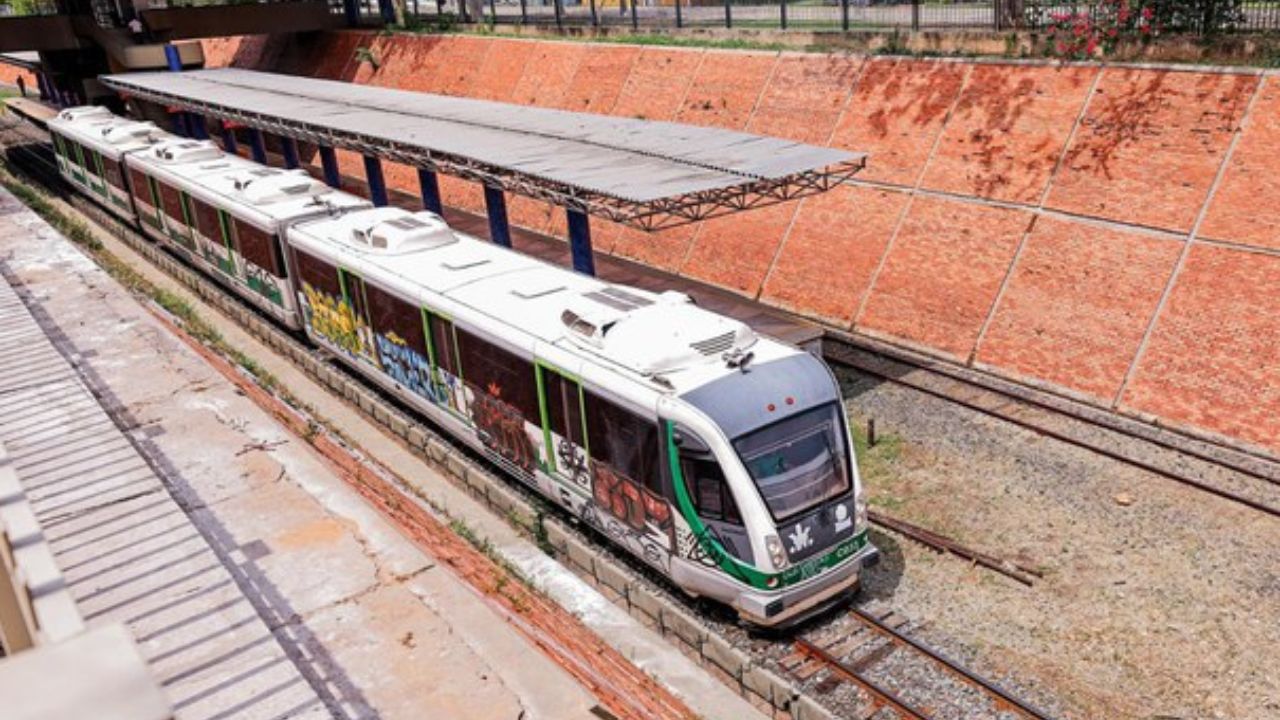
It is important to note that the Teresina system is a surface LRV, commonly referred to as a metro. It operates on a 13.5 km line. The impact of the zero fare was immediate. On the first day, the number of users jumped from 5,000 to 7,000, an increase of 40%. This proves that there was pent-up demand, limited by the cost of fare.
-
New Smart Radar Begins Issuing Fines to Solo Drivers in Carpool Lanes, Uses Cameras to Count Occupants, Changing Traffic Enforcement Rules on Busy European Roads

-
Why can the crane operator only obey the correct signalman on the construction site: among dozens of workers, a hand raised by the wrong person can confuse the maneuver and turn a load of tons into an immediate risk.
-
What changes with the new public transportation rules that can reduce pressure on fares and pave the way for zero fare in Brazil?
-
Argentina confirms Belgian giant to lead strategic Paraná River waterway and promises to reduce logistical costs on one of South America’s most important routes

For the free service to be sustainable, a major investment is underway. More than R$600 million, supported by the New PAC, will be used to modernize the entire system. The plan includes doubling the track, constructing new stations, and purchasing three new trains. The goal is to increase daily capacity to 50,000 passengers.
The Brazilian Technology Behind the “Aerial LRV”
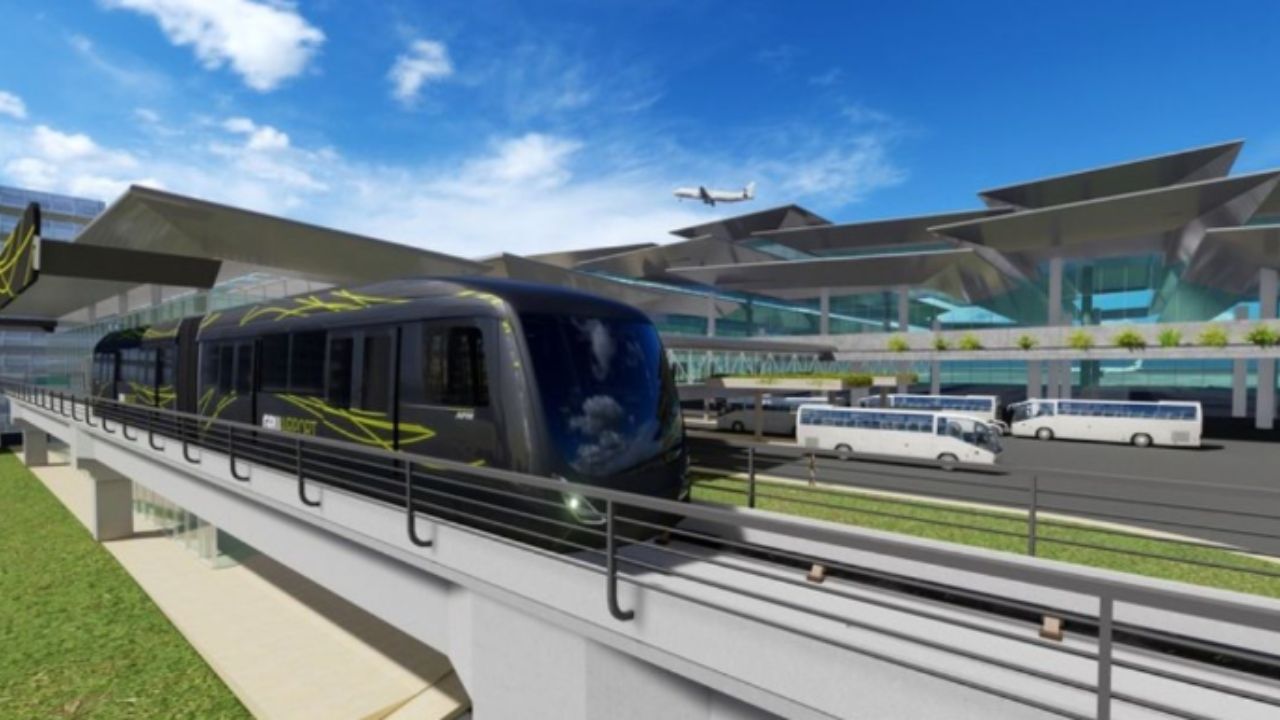
While Teresina innovates in public policy, Brazil is also advancing in technology with the Aeromóvel. This is the true “aerial LRV” of national invention. Its operation is unique. The vehicle has no engine. It is powered by air, blown by powerful fans located at the stations. The air moves a plate under the train, allowing it to glide over the tracks.
This technology is extremely efficient and sustainable. Energy consumption is up to 80% less than that of traditional systems. Because it is electric and does not use tires, pollutant emissions are zero. Moreover, the system is 100% automated and very quiet, causing low impact on cities.
The Aeromóvel has been operating in Porto Alegre, connecting the airport to the train network since 2013. Another, even more modern project is nearing completion in São Paulo. It will connect the CPTM station to the terminals at Guarulhos Airport and will be completely free for all users.
Unveiling the Transport of the Future in Brazil
After all, is there a city with an aerial LRV and zero fare? The answer is no in a single system. The concept that has gone viral is a fusion of two Brazilian success stories.
On one side, we have the political innovation of Teresina, which has eliminated the fare for its surface LRV. On the other, we have the technological innovation of the Aeromóvel, an aerial transport that will be free in specific projects, like the one in Guarulhos. The combination of these two realities creates the powerful image of a futuristic, free, and accessible transport system.
The Zero-Fare Movement Spreads Across the Country
The initiative in Teresina is not an isolated case. Brazil is experiencing a true “Zero Fare” revolution. Currently, over 145 municipalities already offer free public transport, benefiting more than 5.4 million people. Most are small to medium-sized cities, where the cost is easier to absorb by the municipal budget.
The movement gained national traction with the protests of 2013 and was accelerated by the COVID-19 pandemic. The collapse in passenger numbers forced municipalities to subsidize the system, normalizing public funding and making full fare-free service a less radical step.
Brazil as a Global Laboratory for Urban Mobility
The true role of Brazil as a “world model” is not in a mythical city, but in its courage to experiment. The country tests, at the same time, the limits of fare policy and technological innovation.
The proof of this is international recognition. The Aeromóvel technology has attracted interest from countries like Thailand and already has an implementation agreement in Costa Rica, a country known for its environmental policies. This external validation confirms the potential of the Brazilian solution. By combining inclusive social policies with sustainable technology, Brazil offers not a single solution but a portfolio of ideas that are shaping the future of cities worldwide.