Portuguese
  Spanish




Innovative National Tractor, the MÜLLER TM31 Surprised by Uniting High Power, 22-Speed Transmission, and Pioneering Technology in Brazilian Fields. The Model Made History in Agricultural Mechanization and Still Inspires Admiration Among Producers and Experts.
In the early 1990s, Brazil witnessed significant advancements in agricultural mechanization, driven by national manufacturers seeking to develop increasingly robust and efficient solutions for fieldwork.
In this context, the carioca Müller Máquinas Agrícolas introduced the MÜLLER TM31, a large tractor that quickly stood out for its innovative mechanical set and high-performance technical specifications.
The model not only represented the most modern in the sector but also symbolized a new phase of large-scale agriculture in the country.
-
India’s Sugar Export Cuts and Ethanol Shift Amid El Niño Threat Could Impact Global Prices and Stocks

-
Quarantine Pest Threatening Palm Trees Puts Brazilian Authorities on Alert, Prompts Monitoring at University of Taubaté and Potential Control Measures Across São Paulo
-
Global Alert: Report Finds 159 Pesticides in Coffee Beans Sold in Europe, Posing Serious Risks to Millions of Farm Workers
-
Low-Demand Brazilian Beef Offal Gains Popularity Abroad: Indonesia Purchases $19.5 Million, Boosting Revenue and Reducing Waste



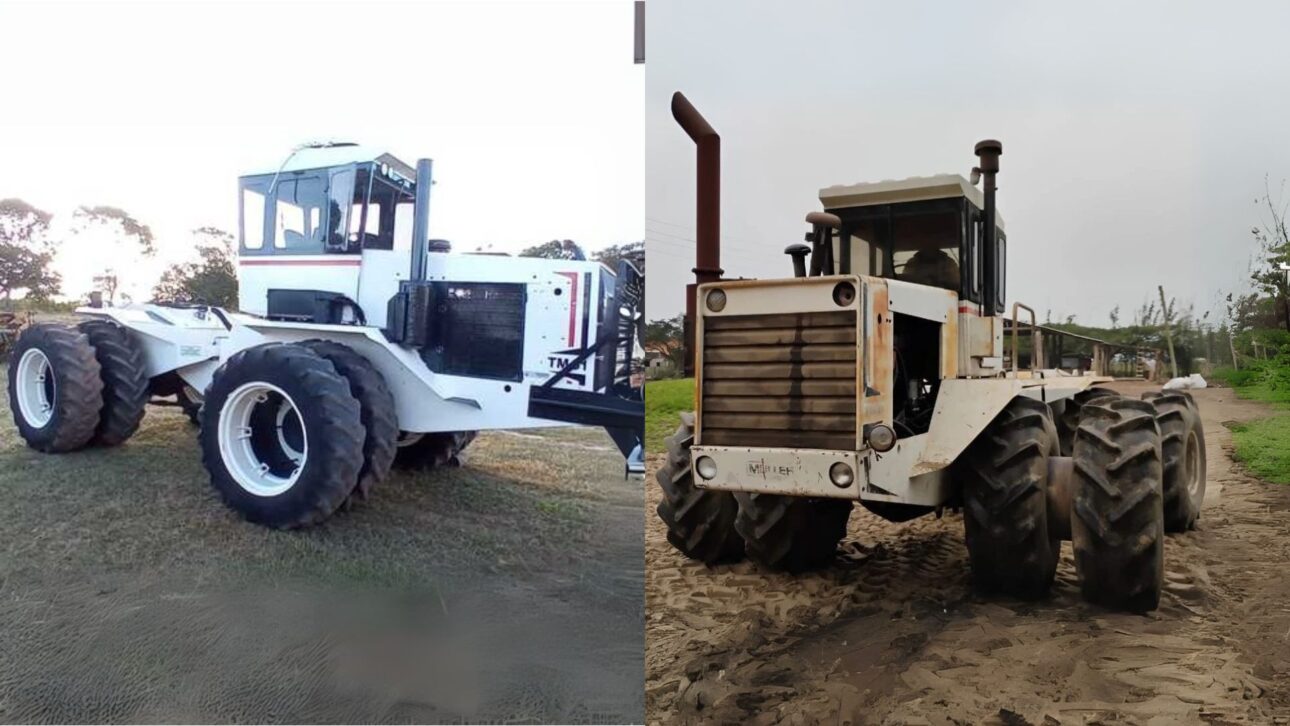
Large-Scale Agricultural Mechanization: The Era of the TM31
Designed for large-scale operations, the MÜLLER TM31 was part of the TM series, dedicated to serving farmers who needed equipment capable of handling large areas and heavy implements.
One of the main differentiators of the TM31 was under the hood: a national Camin Series N engine, with six inline cylinders, boasting a generous 14 liters of capacity.
Initially available in naturally aspirated and turbocharged versions, the engine developed up to 290 horsepower in the early configurations.
However, subsequent evolutions of the model would elevate this level to an impressive 310 hp, establishing a new standard of power in the Brazilian agricultural tractor segment.
22-Speed Transmission: Unprecedented Versatility in Brazilian Fields
Besides engine performance, the TM31 attracted attention for its mechanical transmission with no less than 22 speeds — 18 forward and 4 reverse.
This system allowed precise adjustment of speed and force, adapting the tractor to different types of implements and working conditions in the field.
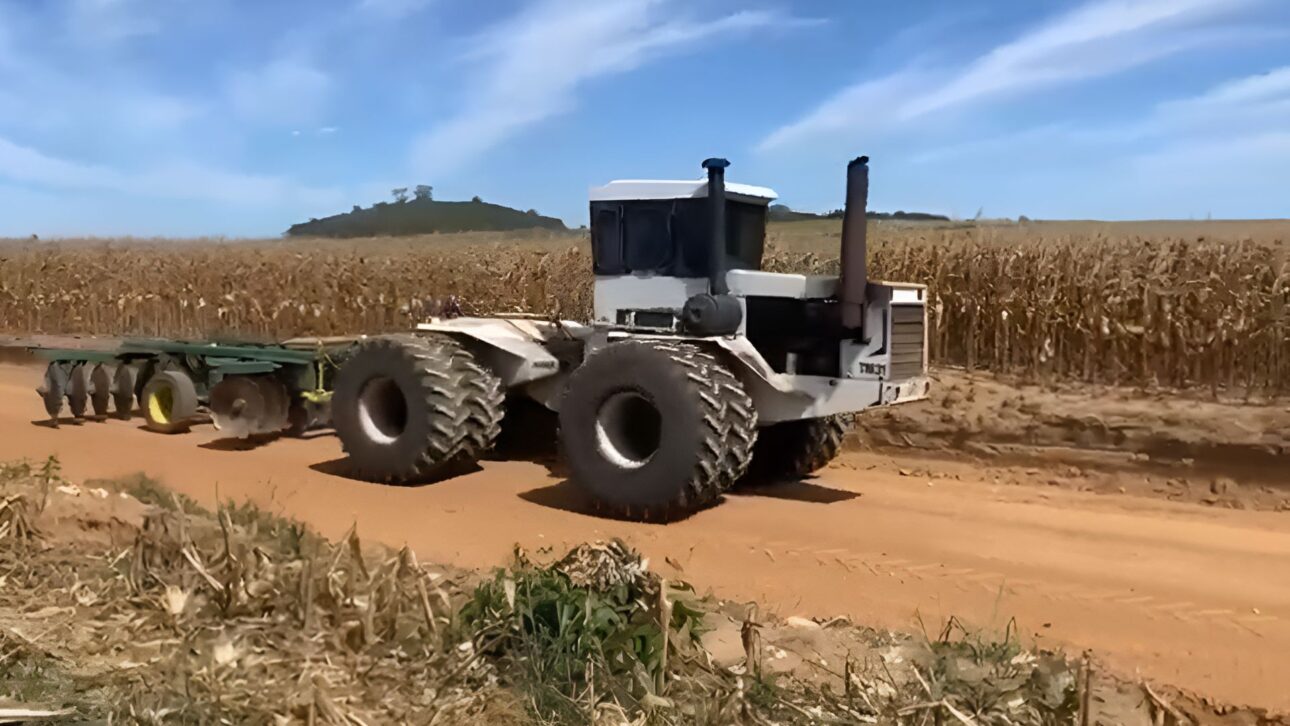
According to experts of the time, this differentiated transmission configuration gave the TM31 unprecedented versatility for the needs of large-scale agriculture.
The model also featured all-wheel drive 4×4 and an air-conditioned cabin, combining comfort for the operator with the robustness needed for long working hours in adverse environments.
Innovation in Turbocharger and Operational Comfort
Another innovative aspect of the MÜLLER TM31 was the adoption of the turbocharger, a technology that, until then, was limited to a few national models.
This solution allowed significant gains in torque and efficiency, increasing the tractor’s ability to tackle difficult soils and tow large implements, such as heavy harrows, plows, and high-productivity planters.
The reputation for durability and resistance, according to reports from farmers and mechanics of the time, solidified the TM31 as a benchmark in reliability among tractors in its class.
Many units, in fact, remained in operation for decades, being passed down through generations of farmers.
End of Production and Historical Legacy
Produced during a phase marked by the heating of the agricultural machinery market, the MÜLLER TM31 shared attention with other prominent national models, such as the ENGESA 1128 — manufactured by another Brazilian company, with its own mechanical solutions and aimed at the same audience of large properties.

However, the TM31 distinguished itself by bringing together in a single product high power, multi-speed transmission, and comfort features that were uncommon in tractors of that period.
The production of the TM31 was, however, interrupted in 2002, when Müller Máquinas Agrícolas decided to close its industrial operations.
The shutdown occurred in the midst of a contraction in the sector, marked by the entry of large multinationals and changes in policies supporting the national machinery industry.
Despite this, Müller remained in the market through product licensing and maintaining its brand.
In 2017, a new manufacturing unit was inaugurated in the state of Rio Grande do Sul, focusing on the production of heavy vehicles and machinery, although currently the company operates exclusively in the so-called “yellow line” segment, composed of equipment aimed at civil construction, such as wheel loaders, backhoe loaders, and motor graders.
The TM31 as an Icon of Brazilian Agriculture
Over the decades, the legacy of the MÜLLER TM31 has been solidified among enthusiasts of Brazilian agricultural mechanization.
The model is frequently cited in specialized publications and by collectors seeking to preserve the memory of the equipment that marked the modernization of farming in the country.
The tractor has also gained attention in exhibitions and thematic meetings, where restored units attract visitors interested in getting to know up close one of the most emblematic machines ever manufactured in Brazil.
Among the main factors that make the TM31 a historical reference are its high power, 22-speed transmission, and pioneering use of turbocharger in national tractors.
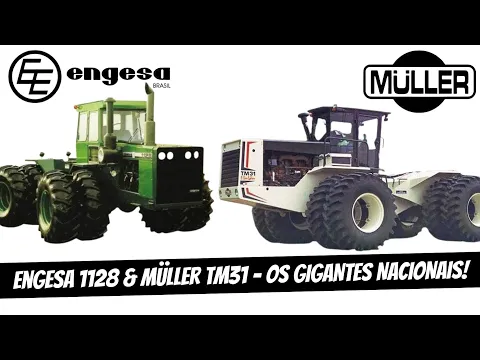
These elements, combined with the construction robustness and the recognition of farmers who used the model in their fields, transformed the tractor into a true icon of Brazilian agricultural engineering.
Many professionals in the sector attribute to the TM31 the role of protagonist in a key moment of rural productivity expansion, when the adoption of technology became decisive for increasing the competitiveness of the national agribusiness.
Even after the end of production, it is possible to find units of the MÜLLER TM31 still in operation, especially on large rural properties in the Midwest and Southern Brazil.
The longevity of the model is seen as a testament to the quality of the design and the historical significance of the tractor for the evolution of Brazilian agriculture.
Given so much innovation, strength, and tradition, many wonder: what will be the next Brazilian icon capable of uniting the power and resilience that made the MÜLLER TM31 a true symbol of agricultural mechanization in the country?
Have you ever witnessed one of these giants in operation or know curious stories involving this legendary Brazilian tractor?