Portuguese
  Spanish


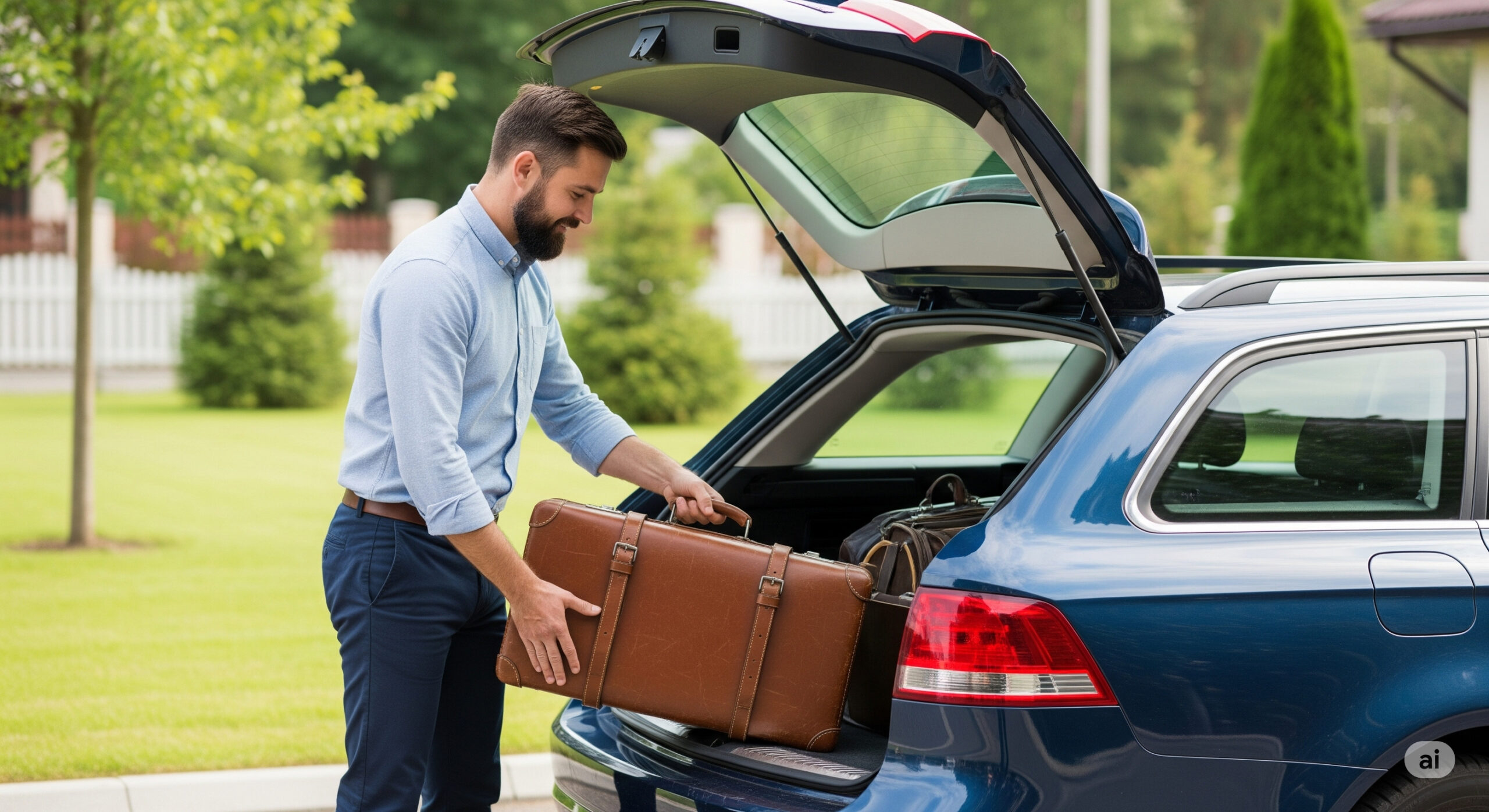

Be Aware of the Rules Governing the Transportation of Items in the Cabin to Avoid Fines and Ensure Safety on the Road
Transporting luggage in the car cabin is a common practice among many drivers, but it is important to know that this behavior can lead to infractions and even vehicle confiscation if not done properly.
Many people tend to store grocery bags on the seats, on the floor, or even in the trunk, but this practice can have legal consequences that affect road safety, according to the autoesporte/globo website.
The Legislation on Cabin Luggage
According to the National Traffic Department (Senatran), transporting loose items in the vehicle cabin is considered a traffic infraction.
-
German Shepherd Fails Guide Dog Test Due to Attachment to Plush Elephant, Viral Moment Captured at Train Station

-
50,000 Satellites with Giant Mirrors: Solar Light Sold via App Sparks Controversy Among Startup, FCC, Astronomers, and Environmentalists in the US

-
Brazil’s Cost-Cutting Housing Design Leaves Southern Residents Vulnerable to Cold Winters

-
Entrepreneur Turns Sweaty Helmet Problem into Million-Dollar Business with National Cleaning Machine, Aiming for $12 Million and 300 Locations by 2026 Amid Growing Demand from Delivery Services and 35 Million Motorcycles in Brazil




The legislation states that both the front and rear seats are prohibited from being used for this purpose.
The Article 248 of the Brazilian Traffic Code (CTB) classifies the transportation of cargo in passenger vehicles outside the established conditions of Article 109, which addresses safety regulations for this type of transportation, as a serious infraction.
Did you know that if caught transporting loose luggage, the penalty is a fine of R$ 195.23 and the application of five points on your National Driver’s License (CNH)?
Furthermore, the vehicle can be confiscated until the situation is regularized. This rule aims to protect the safety of all vehicle occupants and prevent potentially severe accidents.
Why Is It Important to Follow the Rules?
The prohibition against transporting loose items in the cabin is justified by Senatran as a safety issue.
In cases of sudden braking or collisions, these items can be forcefully thrown, endangering the lives of passengers and the driver.
Therefore, the recommendation is that, when there is no possibility to secure the luggage in the seats, it should be stored in the trunk, where it will be safe and secure.
Many drivers may not realize how dangerous a loose item can be.
During rapid braking, a simple shopping bag can turn into a projectile, causing serious injuries. Have you ever thought about the safety of your passengers when transporting items in the cabin?
Items Allowed in the Cabin
The Article 109 of the CTB establishes some exceptions for the transportation of items in the cabin.
Personal items, such as backpacks, bags, and briefcases, may be transported as long as they are not loose, do not obstruct the driver’s view, and do not compromise the vehicle’s handling.
Transportation of small volumes may occur on the floor space in front of the front or rear seats as long as they are properly organized.
However, it is important to highlight that placing items on the seats or on the shelf of the trunk is prohibited, as this increases the risk of projection in the event of sudden braking or an accident.
Thus, safety should always be the priority when organizing the vehicle’s interior.
What are your strategies to ensure your luggage does not pose a risk while driving?
Practical Rules for Transporting Items in the Cabin
The guidelines of Article 109 of the CTB include important rules for transporting items in the cabin:
1st Do not endanger people or cause damage to public or private property, ensuring that the load does not drag along the road and does not fall onto it.
2nd Do not obstruct the driver’s forward visibility or compromise the vehicle’s stability or handling.
3rd Do not cause excessive noise or dust during transportation.
4th Do not obscure the vehicle lights, including brake lights and turn signals, except in specific cases.
5th Do not exceed the maximum width of the vehicle or surpass the authorized dimensions established by Contran Resolution No. 210/06.
6th All accessories, such as cables, chains, and nets, must be properly secured and meet the requirements of Resolution No. 349/10.
7th Do not protrude or project beyond the vehicle in the front.
The enforcement of these rules is the responsibility of the traffic authority, which can apply a fine and confiscate the vehicle if it determines that the items are not in suitable conditions or pose a safety risk.
Consequences of the Infraction and Inspection
It is important to note that the infraction of transporting loose luggage can be verified “without approach”.
This means that a traffic officer does not need to be present at the time of the infraction, and the fine can be applied even if the driver is not notified at the time of the infraction.
This practice aims to enhance traffic safety, preventing unsuspecting drivers from jeopardizing the lives of others.
It is always good to remember that to avoid problems, the best practice is to properly organize the load and ensure that all luggage is adequately secured.
Have you ever had a negative experience related to this type of situation in traffic?
Tips to Avoid Problems on the Road
To ensure that you comply with traffic laws and avoid fines, here are some useful tips:
1st Use the trunk: Whenever possible, store your luggage in the trunk of the vehicle, where it will be safe and will not pose risks to the occupants.
2nd Organize the items: If you need to transport items in the cabin, organize them so they do not obstruct the driver’s view and are not left loose. Use nets or supports to secure the items.
3rd Be mindful: Always be aware of traffic rules and safety regulations. Knowing the legislation can prevent unpleasant surprises.
4th Check the dimensions: If transporting larger loads, be aware of the permitted dimensions according to the legislation. This will prevent issues during inspections.
5th Consider safety: Always prioritize the safety of all vehicle occupants and other road users. A small oversight can lead to serious accidents.
Share Your Experiences!
Now that you are more informed about the rules for transporting luggage in the car, share your experiences and opinions in the comments!
Have you ever received a fine for this reason?