






 Portuguese
  Spanish


Video from the Ugreen Consulting and Education channel, published on 06/07/2026, explains that cold houses in Brazil result from repeated construction choices: permanent ventilation, thin walls, glass, “tijolo baiano” brick, and low thermal retention. The analysis connects climate, urbanization, standards, and materials used in homes in the South and Southeast during winter.
Brazilian cold houses are not just the result of a crack in the window or a more intense polar front. In a video published on 06/07/2026 by the Ugreen Consulting and Education channel, Felipe Bone analyzes how design decisions, cheap materials, accelerated urbanization, and low thermal retention have shaped part of the housing in the country.
The explanation mainly targets regions below the Tropic of Capricorn, such as São Paulo, Paraná, Santa Catarina, Rio Grande do Sul, and parts of Mato Grosso do Sul and Mato Grosso. In these places, solutions designed to expel heat in the summer can work against comfort in the winter.
Houses were designed to ventilate, not to retain heat
The Brazilian architecture was largely formed under the need to deal with strong sun, humidity, and heat. Therefore, many traditional solutions prioritized shade, cross ventilation, eaves, openings, and constant air circulation.
-
50,000 Satellites with Giant Mirrors: Solar Light Sold via App Sparks Controversy Among Startup, FCC, Astronomers, and Environmentalists in the US

-
Entrepreneur Turns Sweaty Helmet Problem into Million-Dollar Business with National Cleaning Machine, Aiming for $12 Million and 300 Locations by 2026 Amid Growing Demand from Delivery Services and 35 Million Motorcycles in Brazil

-
Orphaned Youth Turns Dismissed Idea into Global Prestige with Innovative Wristwatch

-
English Skills Boost Career Opportunities in the Oil and Gas Industry




This reasoning works well in hot and humid tropical zones. The problem arises when the same logic becomes standard in cities where winter requires heat retention, protection against cold wind, and greater thermal mass in the walls.
Vernacular architecture had more climate-related responses
In the video, Felipe Bone explains that Brazilian vernacular housing brought together indigenous, African, and Portuguese influences. The “malocas,” for example, used thick roofing, high ceilings, and upper openings to favor the escape of hot air.
Techniques such as rammed earth and adobe created thicker walls, capable of storing heat during the day and releasing it slowly at night. This thermal inertia helped reduce abrupt temperature variations inside the house.
The loss of thermal mass changed the performance of the walls
With the advancement of urban construction, thick walls were replaced by lighter and faster systems. Solid brick and raw earth lost space to perforated ceramic blocks, thin masonry, reinforced concrete, and large glass panes.
This change reduced cost, weight, and construction time. But it also decreased the house’s ability to store heat. Without sufficient thermal mass, cold houses lose more quickly the heat generated by people, equipment, lighting, or heating.
Tijolo baiano became standard due to economic viability
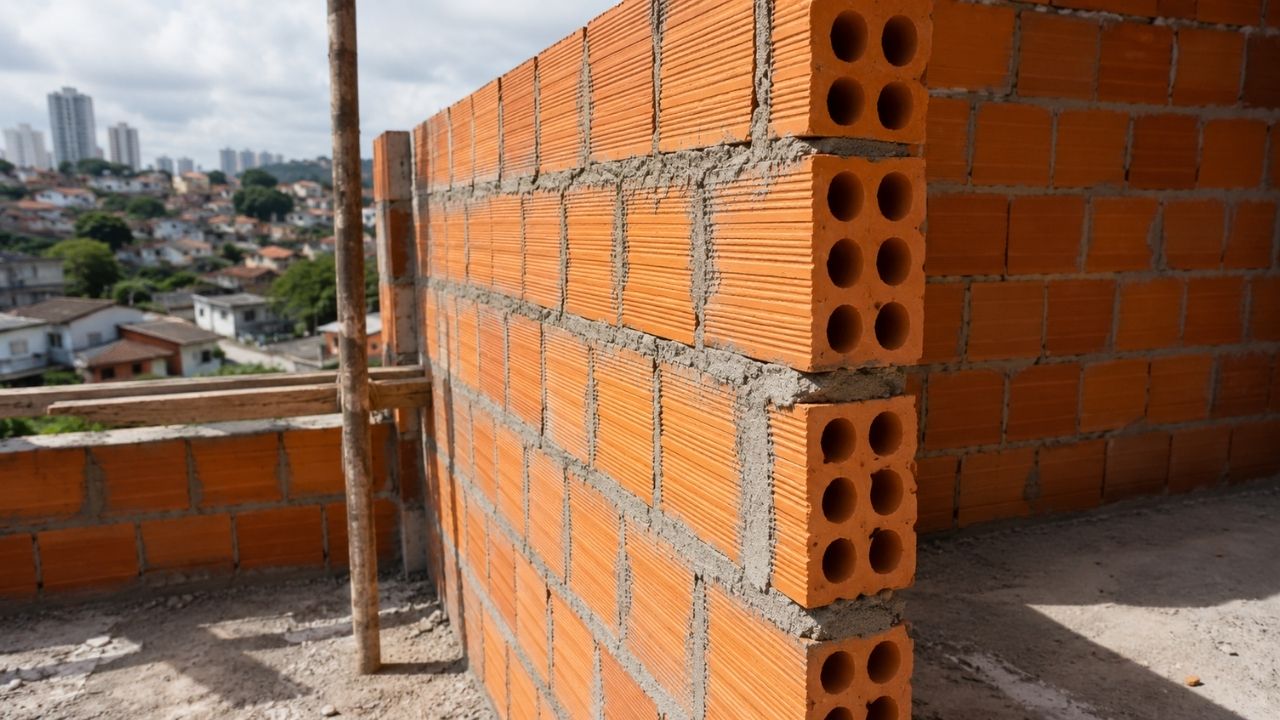
The tijolo baiano, also known as perforated ceramic block or eight-hole brick, gained strength because it is light, cheap, easy to transport, and quick to lay. For large-scale construction, these factors weigh heavily.
The economic advantage, however, comes with a thermal limit. When the wall is 9 cm or 14 cm, with internal cavities and poorly executed joints, it can create paths for heat loss. The result is a less efficient facade against the cold.
Reinforced concrete accelerated urbanization
Reinforced concrete expanded the possibilities of Brazilian engineering. It allowed for open floor plans, larger buildings, independent pillars, and facades less dependent on structural walls.
This change transformed urban architecture. At the same time, it favored solutions with thinner masonry, light partitions, and open surfaces. The system helped build quickly, but did not always deliver adequate thermal comfort for winter.
Large windows function differently in the cold
Large windows increase light entry and can favor ventilation. In hot cities, this can be positive when well combined with shade and solar orientation.
But glass has high thermal transmittance when compared to heavier walls. This means it allows for faster heat exchanges. In cold houses, large glazed areas without adequate performance can facilitate the loss of internal heat during the night and on colder days.
Constant ventilation is not always an advantage
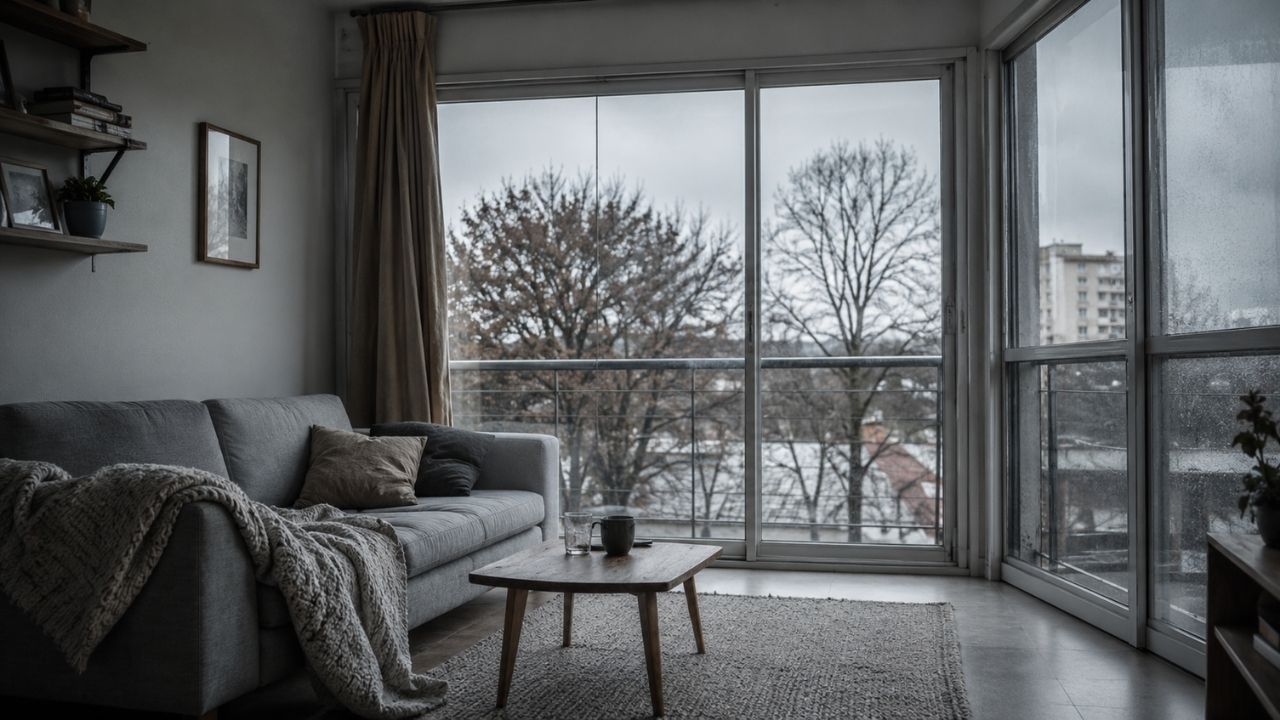
Cross ventilation, chimney effect, cobogós, and open walls make sense when the goal is to remove heat and humidity. These strategies help make environments cooler and healthier in many parts of Brazil.
In the winter of the South and Southeast, however, uncontrolled ventilation can worsen the feeling of cold. A very porous, shaded, and open house may work well in the summer but lose performance when it needs to conserve heat.
The same design does not work for all climates
A central point of the analysis is that Brazil cannot be treated as a single climate. Solutions suitable for the hot and humid coast may perform poorly in Curitiba, Serra Gaúcha, or cities with cold nights in winter.
The repetition of layouts, materials, and facades for market convenience created a predictable problem. When the design does not consider local climate, solar orientation, coverage, wall, glass, and ventilation, the house can be cold from the drawing board.
Standards have better divided the country
The video mentions the importance of NBR 15220, a standard associated with thermal performance and bioclimatic zoning. It helps to understand that different regions require distinct design strategies.
The standard also reinforces that thermal comfort should not be treated solely by intuition. For cold regions, passive solar heating, thermal inertia, reduction of losses through the envelope, and better ventilation control come into play.
The real construction site still limits performance
Even when there is a standard and technical knowledge, execution can compromise the result. More efficient systems, such as multilayer walls, insulation with EPS, XPS, or rock wool, require training, precision, and construction control.
For this reason, the market often chooses more error-tolerant systems, such as concrete, ceramic block, and thick plaster. They are easier to replicate on a large scale, but may deliver inferior thermal performance when winter requires heat retention.
Roofing also matters in cold houses
The roofing is not just the “closure” of the house. It directly participates in thermal exchanges. Roofs, slabs, ceilings, and insulation can reduce or increase heat losses.
The video also compares traditional solutions, such as colonial tiles with better ventilation and air cushions, with later choices that did not always maintain the same performance. In cold houses, poorly resolved roofing can be one of the main sources of discomfort.
Glass, wall, and orientation need to work together


A comfortable house in winter does not depend on a single material. Performance arises from the combination of solar orientation, size of openings, type of glass, wall thickness, insulation, shading, and controlled ventilation.
If the winter sun is blocked by eaves, brises, or poorly thought-out implementation, the house loses a free source of heating. When the project makes better use of sunlight, part of the cold can be reduced without immediately resorting to equipment.
Cold houses reveal a design and scale flaw
Brazilian cold houses show the effect of a construction industry organized to produce quickly, cheaply, and in large quantities. This logic solved part of the urban demand, but did not always deliver thermal performance compatible with each region.
The hidden error in the walls is not just in the Bahian brick, concrete, or large window individually. It lies in the repetition of solutions without sufficient climatic reading. Do you live in a cold house in winter? Do you think the problem comes more from the material, the design, or the execution of the work? Leave your opinion in the comments.


