






 Portuguese
  Spanish


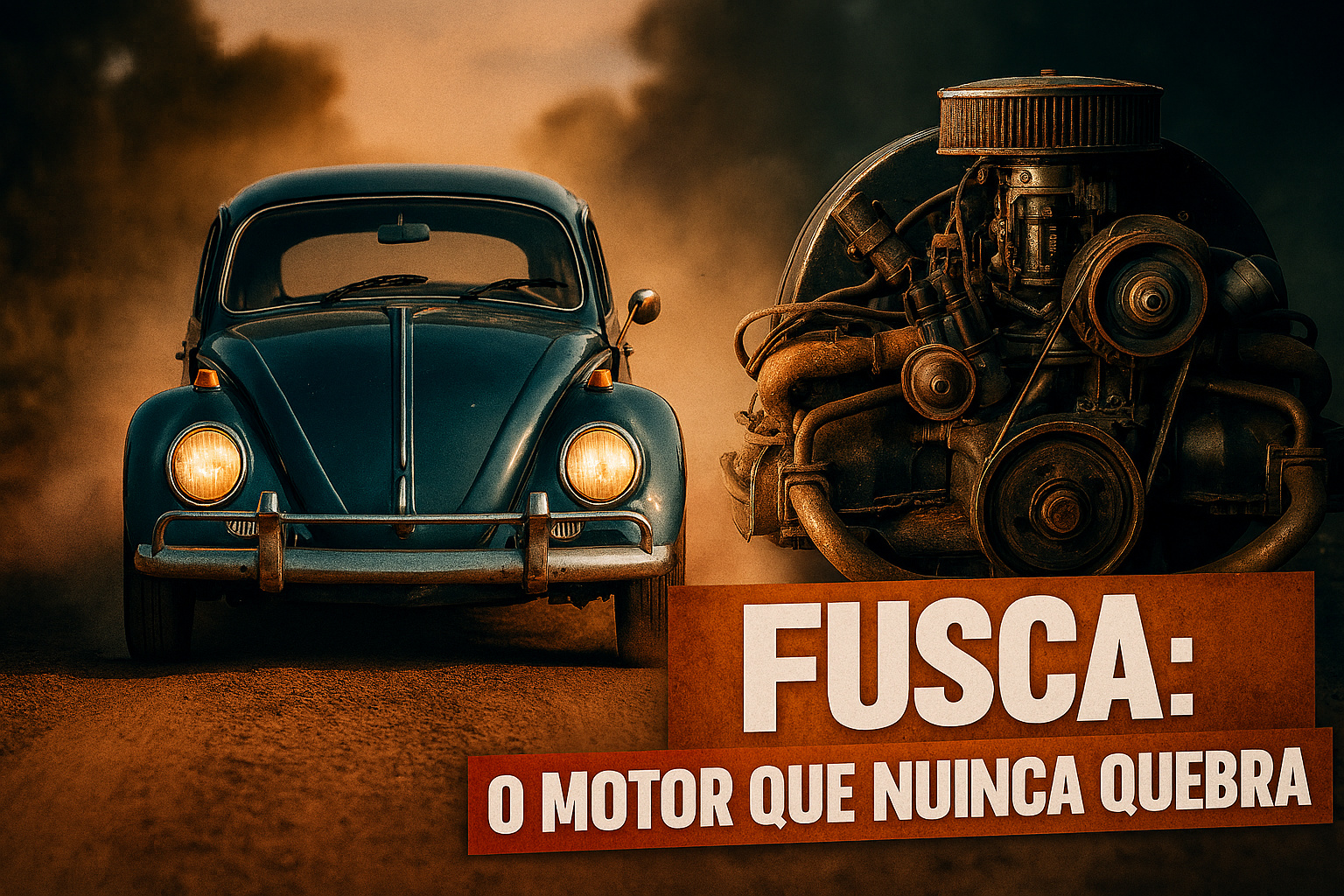
Volkswagen Beetle: Air-Cooled Boxer Engine Marked Generations with Reliability, Driving on Any Terrain and Becoming a Legend of Resilience in Brazil and the World.
The Volkswagen Beetle is more than a popular car — it’s a cultural phenomenon that marked generations in various countries. But beyond its iconic design and social role, the Beetle became a true legend for its air-cooled boxer engine’s reliability, which became famous for driving on precarious roads, withstanding intense heat, and allowing quick repairs even in the most remote places. This robustness transformed the Beetle into a synonym for resilience, especially in countries like Brazil, Mexico, Germany, and even in modified versions for off-road use.
Beetle’s Air-Cooled Boxer Engine: Simplicity and Resilience
The secret of the Beetle lay in its air-cooled four-cylinder boxer engine, mounted at the rear. Unlike conventional engines with radiators and liquid cooling systems, the Beetle eliminated the need for hoses, water pumps, and reservoirs. This reduced the chance of mechanical failures and made repairs easier.
With powers ranging from 25 hp in the early versions to about 65 hp in the more modern models, performance was never sporty, but it was sufficient to ensure economy and robustness.
-
Toyota Launches First 100% Electric Car in Brazil: bZ4X with 343 HP, All-Wheel Drive, 361 km Range, Priced at $419,990 BRL, Limited to 99 Units

-
Chinese SUV Achieves 24.4 km/l, Outperforms Toyota Yaris Cross in Real-World Tests with 224 hp Hybrid System, Offers 51-Liter Tank for Greater Range, and Costs Up to R$ 5,000 Less.

-
Uber Black Revamps Fleet, Drops Ten Car Models and Sets Deadline for Electric BYD Dolphin
-
Chinese Giant Uses Metal Structures and Cranes to Deliver Over 700 Electric Cars to Brazil


The air-cooled engine also had the advantage of adapting well to hot climates and areas with limited infrastructure, where maintenance was often performed by makeshift mechanics.
Beetle in Extreme Terrains: From Fields to Dirt Roads
In Brazil, the Beetle became known as the car that “drives anywhere.” Its sturdy chassis and simple suspension allowed it to tackle dirt roads, potholes, mud, and conditions that would disable more sophisticated cars.
In countries like Mexico and the United States, modified versions called “Baja Bug” emerged, adapted for racing in deserts and dunes. In these models, the air-cooled boxer engine showcased its ability to withstand dust, sand, and high temperatures without failing, reinforcing its reputation for resilience.


Inexpensive Maintenance and Accessible Mechanics
Another factor that solidified the Beetle’s fame was its ease of maintenance. With simple, interchangeable, and inexpensive parts, practically any mechanic could take apart and reassemble a boxer engine. This made the car ideal for remote areas, where specialized shops were rare.
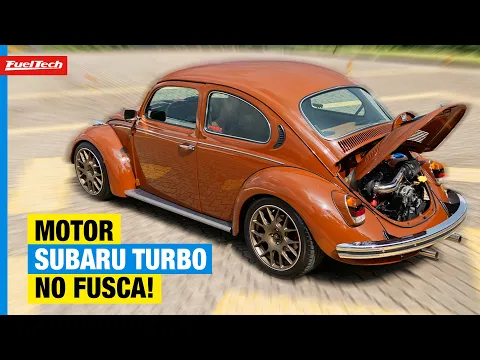
The Beetle’s own manual encouraged owners to perform small repairs at home, something unthinkable in modern cars.
This simplicity created a legion of fans and kept the car running even decades after the end of production.
Beetle in Brazil: Proven Resilience
In Brazil, the Beetle was produced between 1959 and 1986 (with a return from 1993 to 1996). During this period, it established itself as the most popular car in the country.
Models with 1,300 and 1,600 engines gained a reputation for durability: reports of Beetles running 300,000 to 400,000 km without major repairs are not uncommon.
Additionally, its resilience made it a key asset for farmers, taxi drivers, and families in need of a reliable car in rural areas. No wonder there are still collectors who maintain original specimens running perfectly today.
Comparison with Other Engines of the Era
While competing car engines required more maintenance and suffered from overheating, the air-cooled boxer stood out for its longevity. This reputation made the Beetle an icon in emerging markets and even in desert climate countries, where traditional cooling systems were more likely to fail.
Even without the sophistication of six-cylinder engines or more powerful units, the air-cooled boxer earned respect as an ingenious, simple, and effective solution.
The Legacy of the Beetle’s Boxer Engine
More than 21 million Beetles were produced worldwide, and many still run smoothly, often with original engines. This fact alone showcases how the reliability of the air-cooled engine has solidified as a symbol of Volkswagen.
Today, the Beetle is seen both as a collector’s item and as a daily driver in various parts of the planet.
The image of durability has crossed generations, and the boxer engine continues to be remembered as one of the most resilient in automotive history.
The Volkswagen Beetle became famous not just for being affordable or popular. Its true strength lay in the air-cooled boxer engine, a simple yet brilliant design that showed the world that reliability does not depend on power, but rather on engineering intelligence.
From the mud of the Brazilian interior to the “Baja Bug” races in the deserts, the Beetle proved it was much more than a popular car: it was a machine of resilience, capable of facing conditions that would leave other models behind.




Be the first to react!