Portuguese
  Spanish


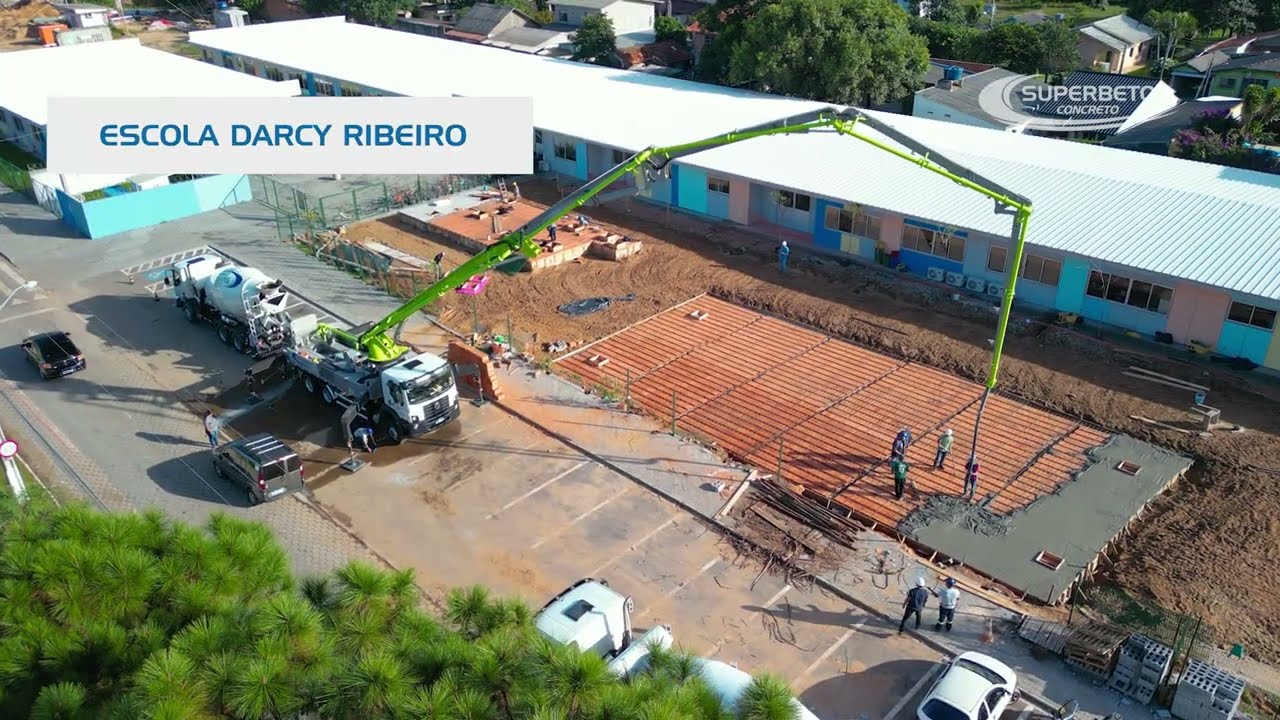

School in Florianópolis was built in 42 days with 3,018 m² and more than a thousand spots and shows advancement of modular construction in Brazil.
In March 2023, the City Hall of Florianópolis, in partnership with the Government of the State of Santa Catarina, inaugurated the Darcy Ribeiro Municipal Basic School, located in the North of the Island, with a characteristic that quickly drew attention in the construction sector: the unit was erected in just 42 days. The information was disclosed by official channels of the state government and echoed by regional media such as ND Mais, highlighting the unusual speed for a public work of this magnitude. With 3,018 square meters of built area, the school was designed to accommodate more than a thousand students and features 18 classrooms, as well as spaces like a library, science lab, and computer room.
The project was executed using industrialized modular construction, a method that allows for drastically reducing execution time compared to conventional works.
The case draws attention because it occurs in Brazil, a country where public works often take months or years to be completed, creating a direct contrast with international examples that tend to go viral.
-
A 180-meter ship with a deck the size of a football field was christened to carry 25,000 tons of giant energy modules around the world.

-
While modern cities rely on pumps and electricity, in Iran, ancient tunnels carried water through the desert using only slope and gravity.
-
In the land of soybeans, Sinop’s first 42-story skyscraper will consume 1,900 truckloads of concrete and 350,000 kilograms of steel, with a foundation of 50 meters, deeper than that of the future “tallest building in Brazil” in Balneário Camboriú.
-
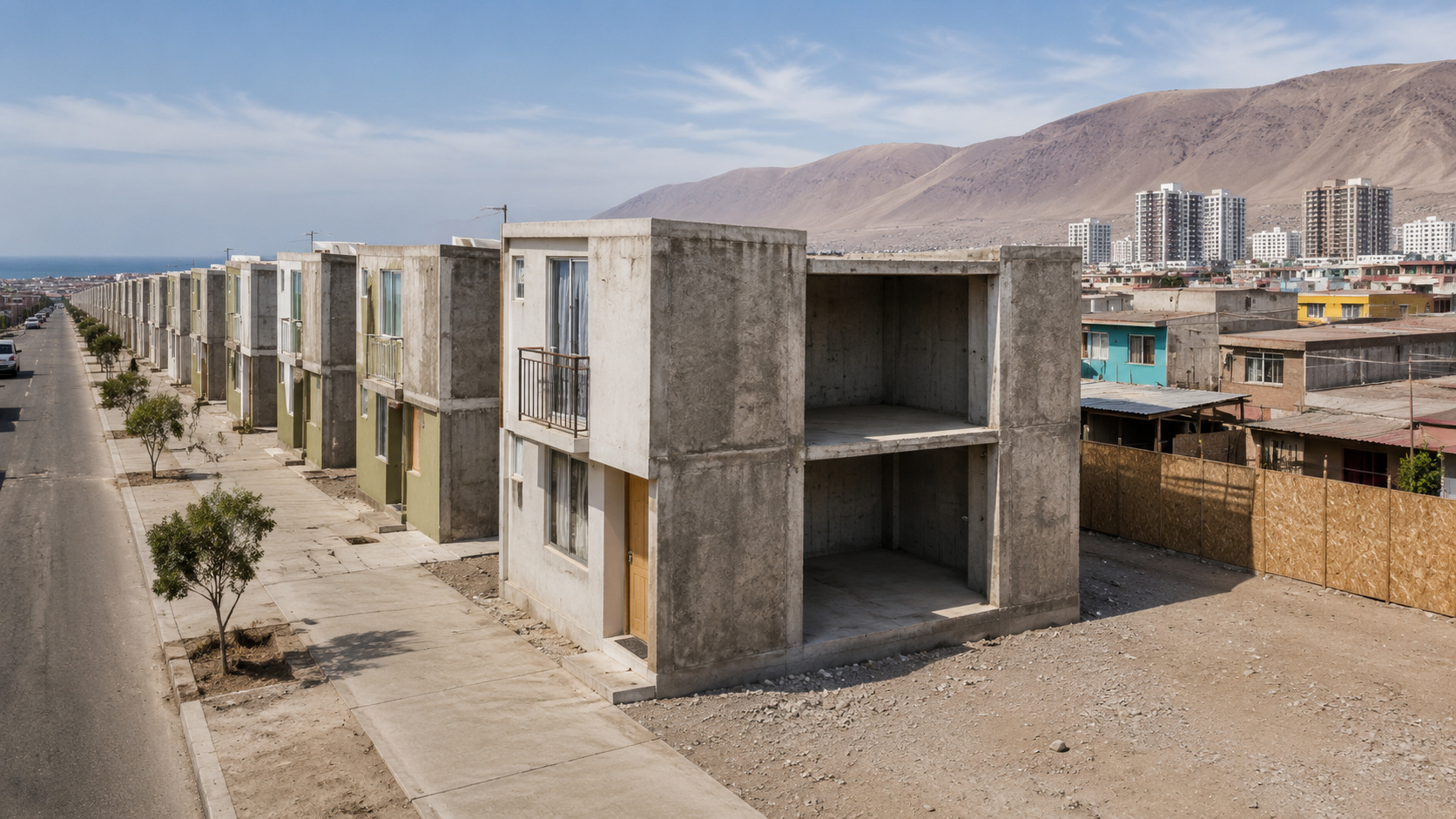
Instead of sending families far from the city, a project in Chile intentionally created incomplete houses on expensive urban land and left technical space for each to grow.


Modular construction allowed to transform a process of months into a few weeks
The main factor that enabled the delivery of the school in 42 days was the use of the so-called modular construction, a model that transfers a large part of the work to controlled industrial environments.
In this system, structural components are manufactured beforehand in factories and transported to the construction site already ready or semi-finished. On-site, these modules are assembled in a manner similar to a fitting process, reducing execution time.


Unlike traditional construction, which relies on sequential stages such as foundation, wall raising, installations, and finishing, the modular model allows several of these phases to occur simultaneously.
This eliminates common bottlenecks and significantly reduces the total time of the work, without necessarily compromising structural quality. In the case of the school in Florianópolis, this approach was essential to meet the accelerated schedule.
Structure of the Darcy Ribeiro Municipal Basic School brings together classrooms, laboratory, library, and technological spaces
The unit built in the North of the Island is not a simplified or temporary project. On the contrary, it is a complete structure designed to meet medium-sized educational demands.
The school features:
18 classrooms intended for elementary education, arranged to optimize circulation and use of spaces. There is also an equipped library, a science laboratory, and a computer room, elements considered essential for contemporary education.
Additionally, the project includes administrative areas, common spaces, and infrastructure compatible with current educational standards. The combination of rapid construction and structural complexity reinforces the unusual nature of the project within the Brazilian context.
Capacity for over a thousand students meets growing demand in the region
The construction of the school is directly linked to the population growth in the North region of Florianópolis, which has seen urban expansion in recent years.
The capacity for more than a thousand students allows for significant demand for spots in elementary education, reducing the need for commuting to other areas of the city.
This type of construction has a direct impact on urban organization, as the availability of nearby schools influences mobility and the quality of life of families.
The quick delivery of the unit also allowed the school to begin operations in a short time, serving students as early as the following school year.
Structural guarantee and durability indicate that it is not a temporary solution
An important point highlighted by the authorities is that the school was not conceived as a temporary structure. According to institutional information, the construction model adopted provides for a projected lifespan of decades, with structural guarantees comparable to permanent buildings.
This differentiates the project from emergency solutions, such as temporary schools or improvised structures, which tend to have a limited duration.
The modular construction, in this case, was used not as an emergency solution but as a permanent strategy for educational infrastructure. This aspect is relevant for understanding the potential of the method in public policies.
Comparison with traditional constructions highlights differences in time and efficiency
In the conventional model of public construction in Brazil, school projects can take several months to years to be completed, depending on factors such as bidding, execution, and availability of resources.
This timeframe is influenced by a series of variables, including weather conditions, material logistics, and team management.
In the case of the school in Florianópolis, the adoption of an industrialized model allowed for a significant reduction in these variables. The construction was completed in just over a month, a timeframe that would normally be insufficient even for initial stages in traditional projects.
This difference in time highlights the transformative potential of modular construction.
Industrialized model reduces waste and increases quality control

In addition to speed, modular construction offers other technical advantages. Since a large part of the production occurs in a controlled environment, there is greater precision in the manufacturing of components.
This reduces material waste and improves quality control, as the processes follow industrial standards.
The predictability of the process also contributes to the reduction of indirect costs, such as delays and rework. These factors make the model attractive for public projects that require efficiency and resource control.
Brazilian case contrasts with international examples that go viral on social media
In recent years, rapid construction projects in countries like China and Japan have gained prominence on social media and in international news, often associated with technological advancements and mobilization capacity.
The case of Florianópolis presents an interesting contrast, as it demonstrates that this type of accelerated execution can also occur in Brazil.
The difference is that, often, these national examples receive less visibility, despite having similar characteristics in terms of speed and scale. This contrast reinforces the potential for narratives that explore lesser-known Brazilian projects.
Project raises debate on efficiency in public works execution
The construction of the school in 42 days raises a broader discussion about efficiency in the execution of public works in Brazil.
The existence of a successful case completed in a reduced timeframe shows that alternatives to the traditional model are possible, provided there is adequate planning and the choice of appropriate technologies.
This opens the floor for questions about why this type of approach is not yet widely adopted on a large scale. Factors such as legislation, construction culture, and the production chain may influence this adoption.
The experience of Florianópolis shows that it is possible to execute complex works in significantly shorter timeframes than those traditionally observed.
With the advancement of technologies and construction models, new possibilities arise to accelerate the delivery of essential infrastructure.
In light of this, a reflection arises: can this type of rapid construction become the standard in Brazil or will it continue to be an exception within a system still based on traditional methods?