Portuguese
  Spanish


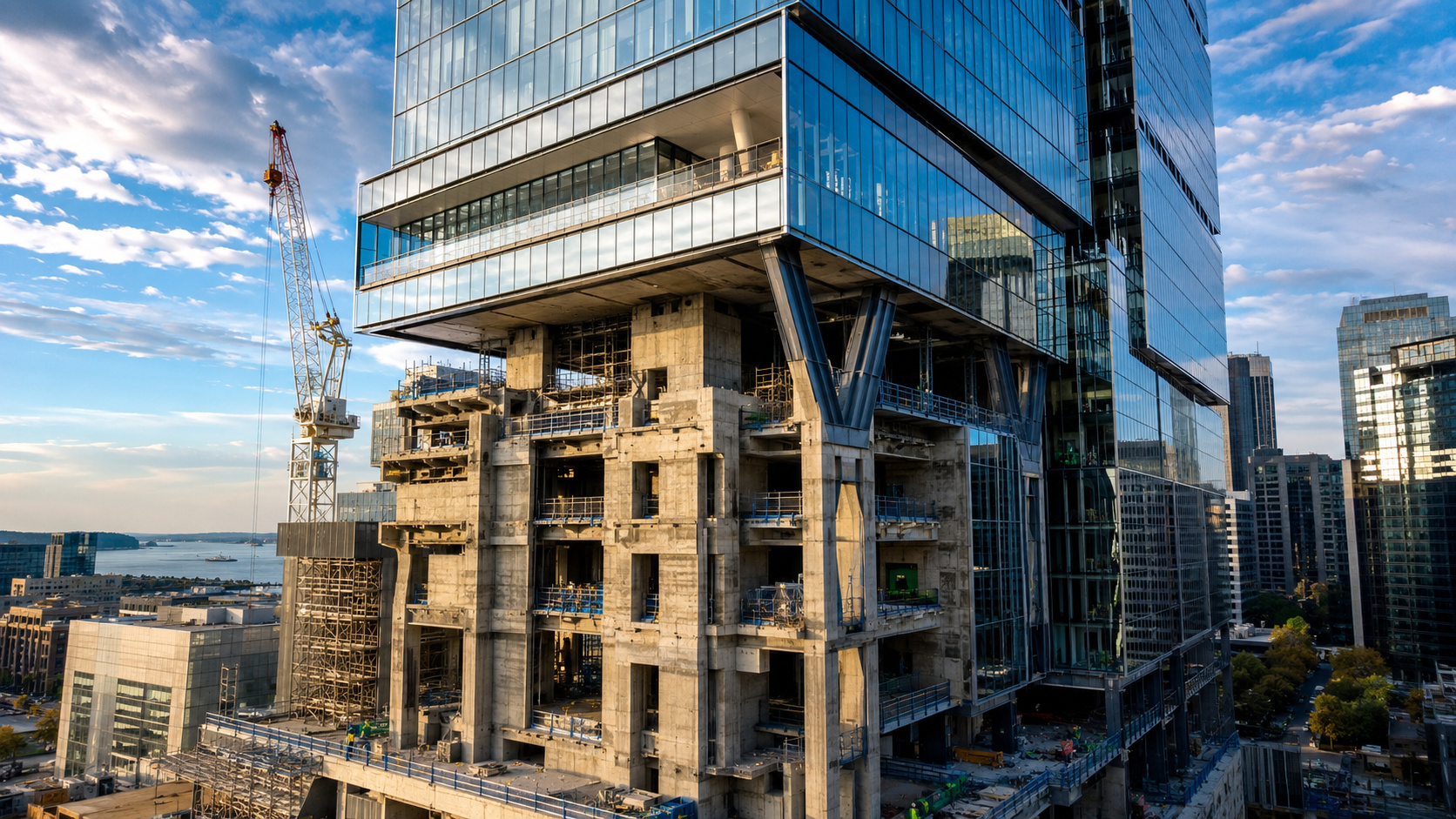

The Quay Quarter Tower shows how the reuse of structures allowed the expansion of a commercial tower in Sydney, preserving concrete and steel installed in the 1970s, reducing debris generation, and extending the building’s lifespan without resorting to complete demolition.
The Quay Quarter Tower in Sydney almost doubled its area without requiring the complete destruction of the building that occupied the site. The project preserved 95% of the original core and transformed the old structure into part of the new tower.
The question that guided this solution was simple: why demolish thousands of tons of concrete that could still support a building? Instead of starting from scratch, the construction cut, reinforced, and connected old parts to new structural elements.
The information was released by 3XN, the architecture firm responsible for the tower project in Sydney. The transformation placed the reuse of structures at the center of a large-scale project.
-
California wants to dig a 72 km long and 11 meters wide tunnel capable of swallowing more than 609 million liters per hour during “atmospheric rivers,” store the deluge for droughts, and protect the supply for 27 million people.

-
Builder reveals the real cost of roofing with sandwich panels and explains the difference between EPS, PUR, and PIR, showing why calculating only the price of the panel can blow the budget and cause leaks in the construction.

-
285 trucks work non-stop for 54 hours, pour over 24,000 m³ of concrete, and place a religious temple in the Golden Book of World Records with the largest foundation ever built for this type of construction.

-
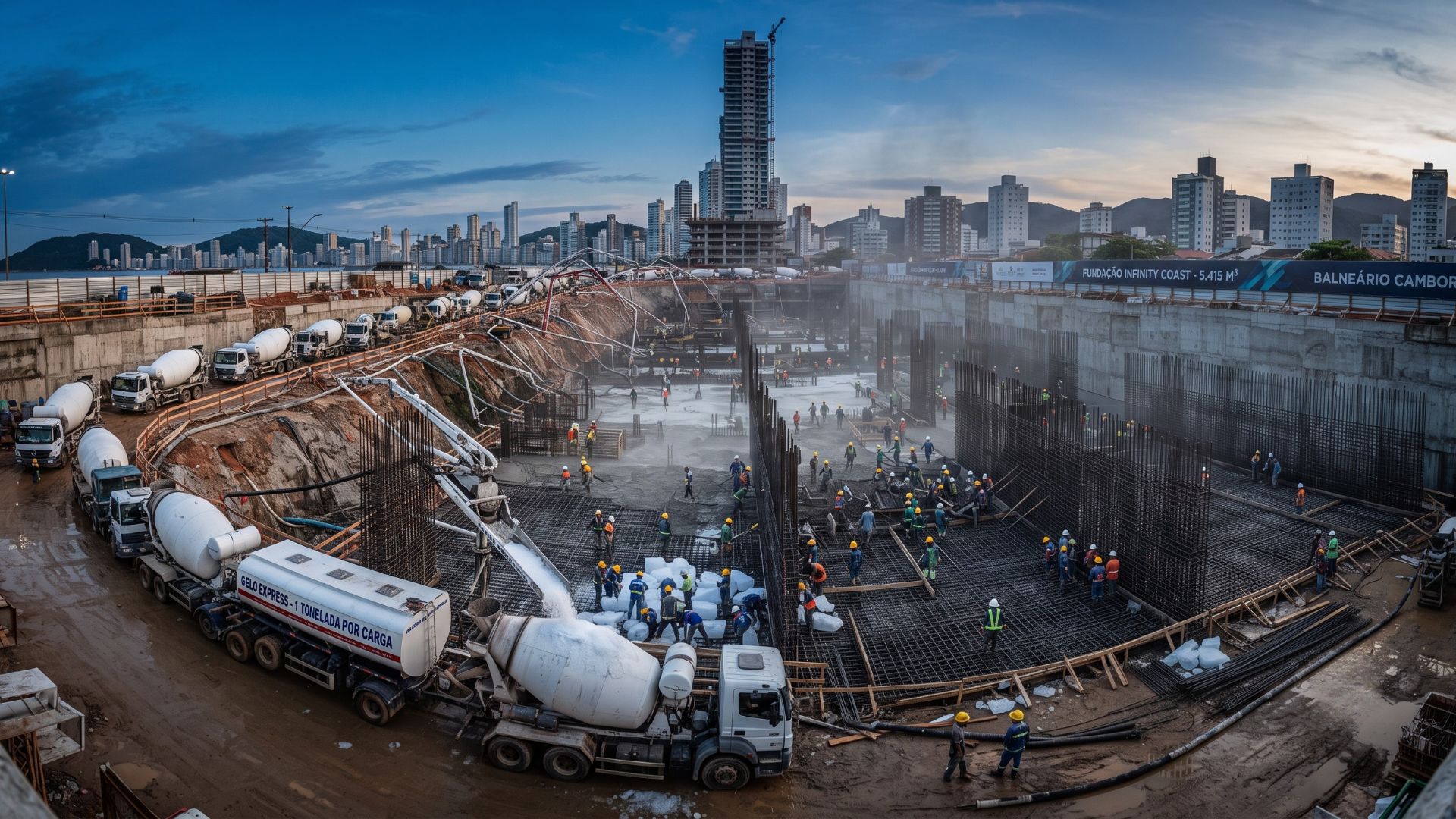
775 concrete mixer trucks poured 5,415 m³ of concrete, 570 thousand kg of steel reinforced the block, and one ton of ice was added to each load to lay the foundation of the Infinity Coast, a 234.7-meter residential tower in Balneário Camboriú.


A 1970s tower became raw material for another building
A conventional demolition would remove beams, columns, slabs, and the central core before the start of the new construction. In the Quay Quarter Tower, these components were analyzed to identify what could still remain in use.


The project reused about 65% of the beams, columns, and slabs. When the entire construction is considered, more than 60% of the existing structure was incorporated into the expanded tower.
The old building, therefore, did not serve merely as a temporary base. Its elements became directly integrated into the new construction, reducing the need to produce and transport new volumes of concrete and steel.
Preserving 95% of the core went far beyond renovating the facade
The core is the central and resistant part of the building. In the Quay Quarter Tower, 95% of this element was maintained, but the rest of the construction had to be adapted to accommodate the expansion.
The operation involved cutting old parts, reinforcing points of the structure, and connecting the preserved elements to the new sections. This required checking the strength of materials installed decades earlier.
The work shows the difference between a visual renovation and a structural transformation. The facade changed, but the main work took place inside the building, where old and new structures began to work together.
Stacked volumes allowed the building’s area to almost double
The new tower was divided into stacked and connected volumes. This organization allowed for expanding the available space without abandoning the existing structure.
The usable area became approximately twice as large. The result demonstrates that preserving an old building does not mean maintaining the same size, design, or internal distribution.
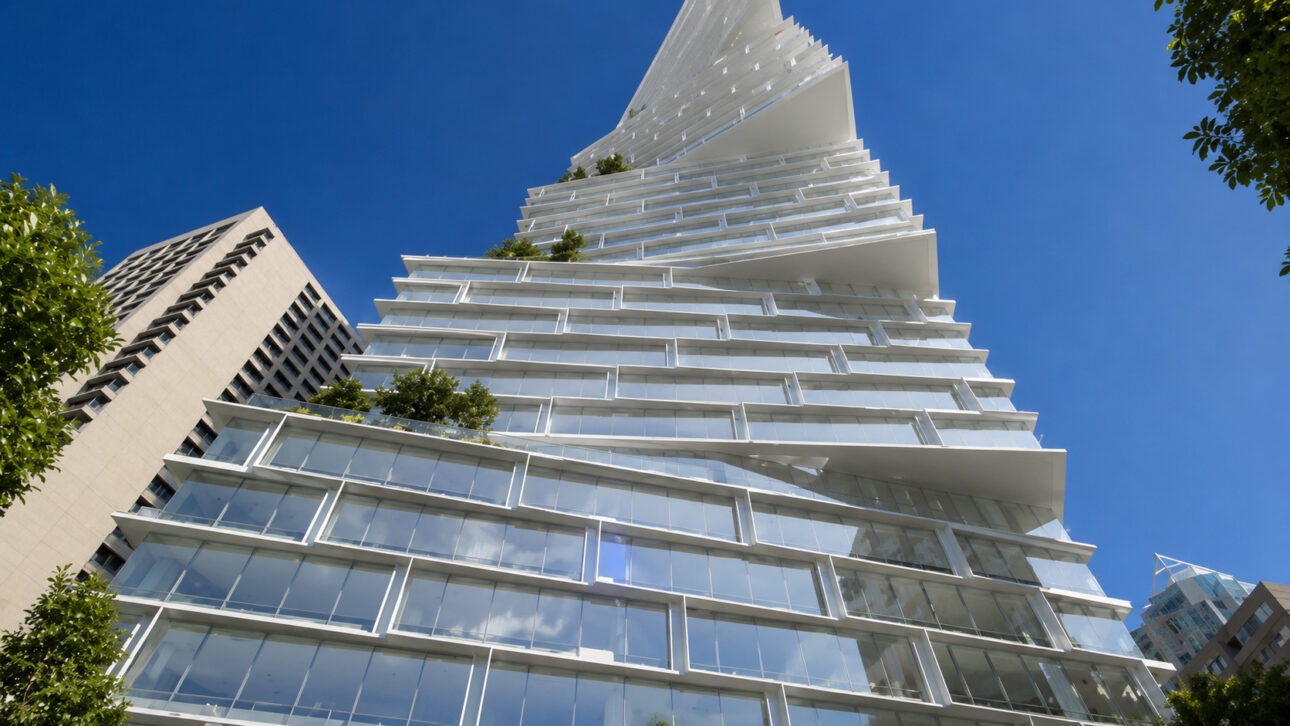
Sustainable construction has ceased to be just a choice of materials. It has come to guide the entire engineering of the work, from assessing the old concrete to connecting the preserved parts and new spaces.
Estimate indicates 12 thousand tons of emissions avoided
3XN, the architecture firm responsible for the tower project in Sydney, presented an estimate of 12 thousand tons of emissions avoided compared to complete demolition and reconstruction.
These emissions are mainly linked to the production and transportation of new materials. Manufacturing concrete and steel to replace a structure that can still be used increases the environmental impact of construction.
Less demolition means less debris and heavy transport
Demolishing a tower requires removing large volumes of material and transporting them to another location. Then, new supplies need to arrive at the site to replace what was destroyed.
By conserving more than 60% of the structure, the project reduced the amount of new concrete and steel needed. It also limited the volume of debris associated with the complete removal of the previous building.
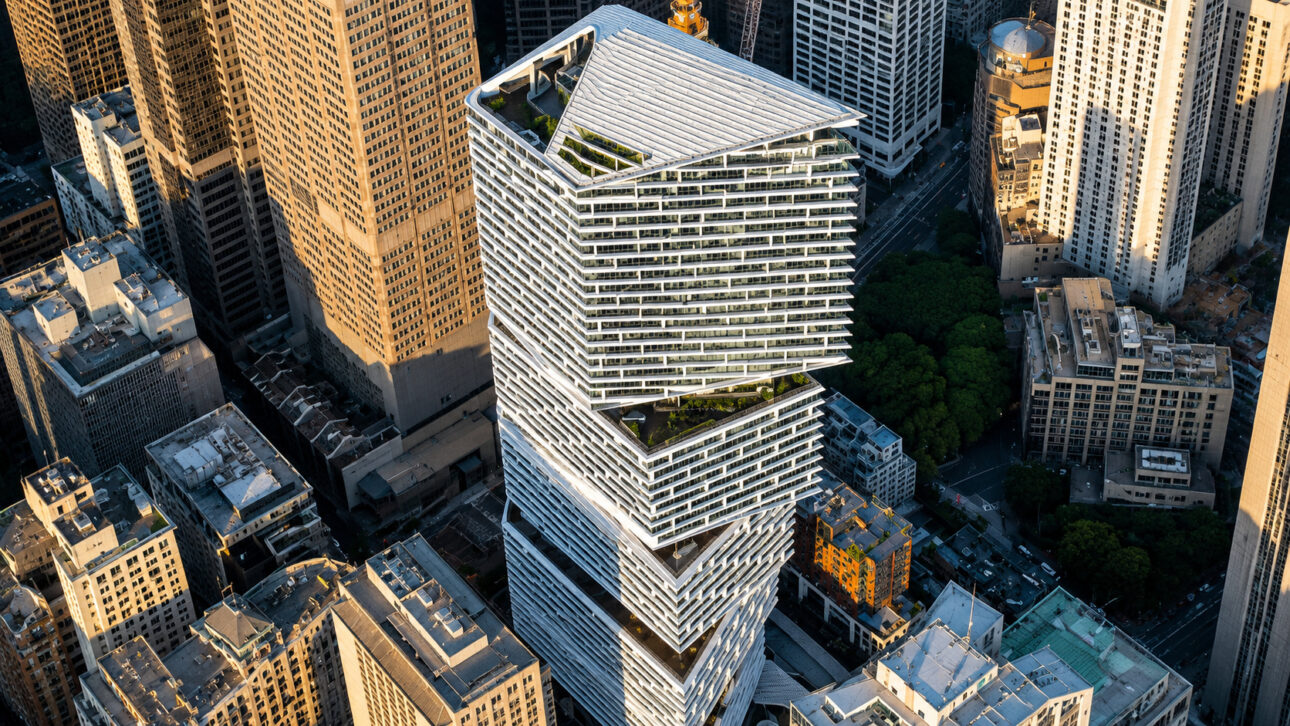
The impact involves different parts of the construction chain. There is a saving of materials, less need for heavy transport, and better utilization of a structure that still had usable capacity.
Project aims to extend the building’s lifespan by another 50 years
The transformation of the Quay Quarter Tower aims to extend the building’s lifespan by another 50 years. Instead of ending the use of the 1970s building, the project opened a new cycle for the same structure.
This model is of interest to large Brazilian cities because it presents an alternative for areas where demolishing and rebuilding generate costs, debris, and truck traffic. Each building needs its own assessment, as not every old structure offers conditions for expansion.
The experience in Sydney shows that an existing building can be treated as an engineering resource. When the structure remains strong, preserving it can reduce material consumption and allow for a larger construction.
The Quay Quarter Tower almost doubled its area, maintained 95% of the original core, and reused approximately 65% of the beams, columns, and slabs. The project transformed an old tower into an essential part of another building, instead of turning it into debris.
The case also separates two different outcomes: the physical reuse of the construction and the estimate of 12 thousand tons of emissions avoided. Together, these data show the industrial, urban, and environmental impact of reusing structures.
If an old tower can still support a larger building for another 50 years, is demolishing everything still the best choice for large Brazilian cities? Leave your opinion in the comments and share the publication.