Portuguese
  Spanish


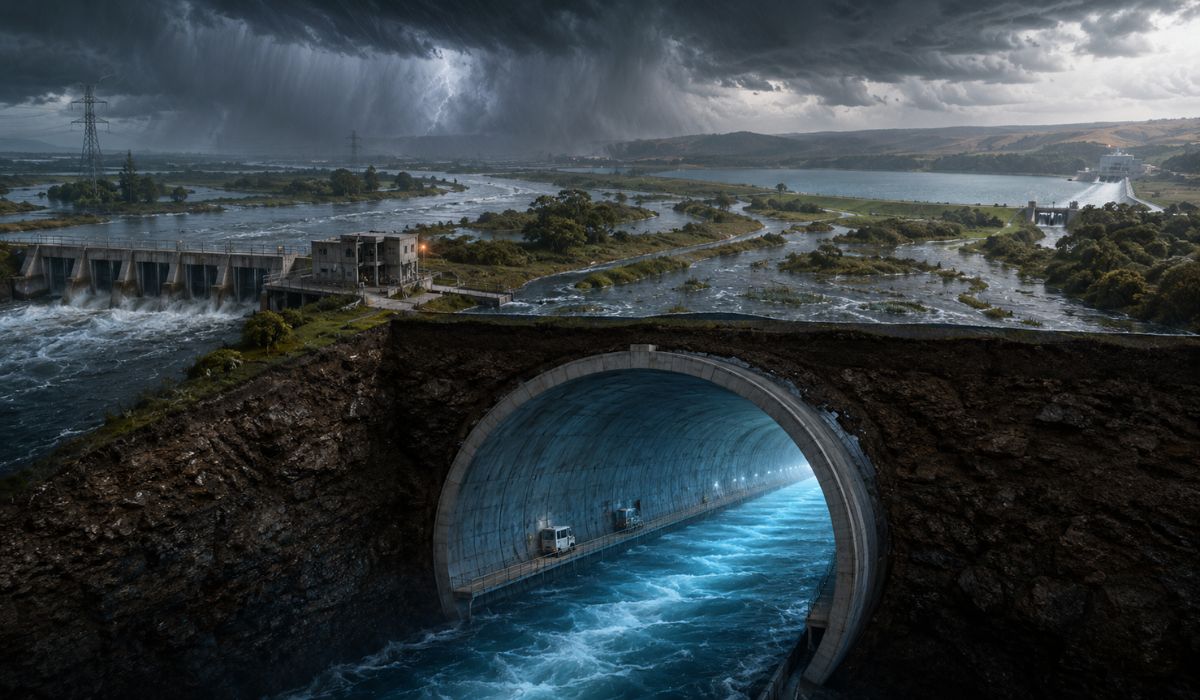

California Delta Tunnel Project plans to capture water from major storms, expand reserves against droughts, and supply millions, while facing environmental criticism, political dispute, and rising state billion-dollar costs.
California is trying to move forward with one of the most discussed water projects in the United States: an underground tunnel of about 72 kilometers, planned to capture part of the Sacramento River’s water during major storms and deliver it to the state system of reservoirs and canals.
The project, known as the Delta Conveyance Project, is presented by the state government as a response to the combination of prolonged droughts, extreme rains, and the risk of supply loss caused by climate change.
The project envisions a single tunnel approximately 11 meters in diameter, large enough to transport more than 161 million gallons per hour, equivalent to more than 609 million liters per hour.
-
Builder reveals the real cost of roofing with sandwich panels and explains the difference between EPS, PUR, and PIR, showing why calculating only the price of the panel can blow the budget and cause leaks in the construction.

-
285 trucks work non-stop for 54 hours, pour over 24,000 m³ of concrete, and place a religious temple in the Golden Book of World Records with the largest foundation ever built for this type of construction.

-
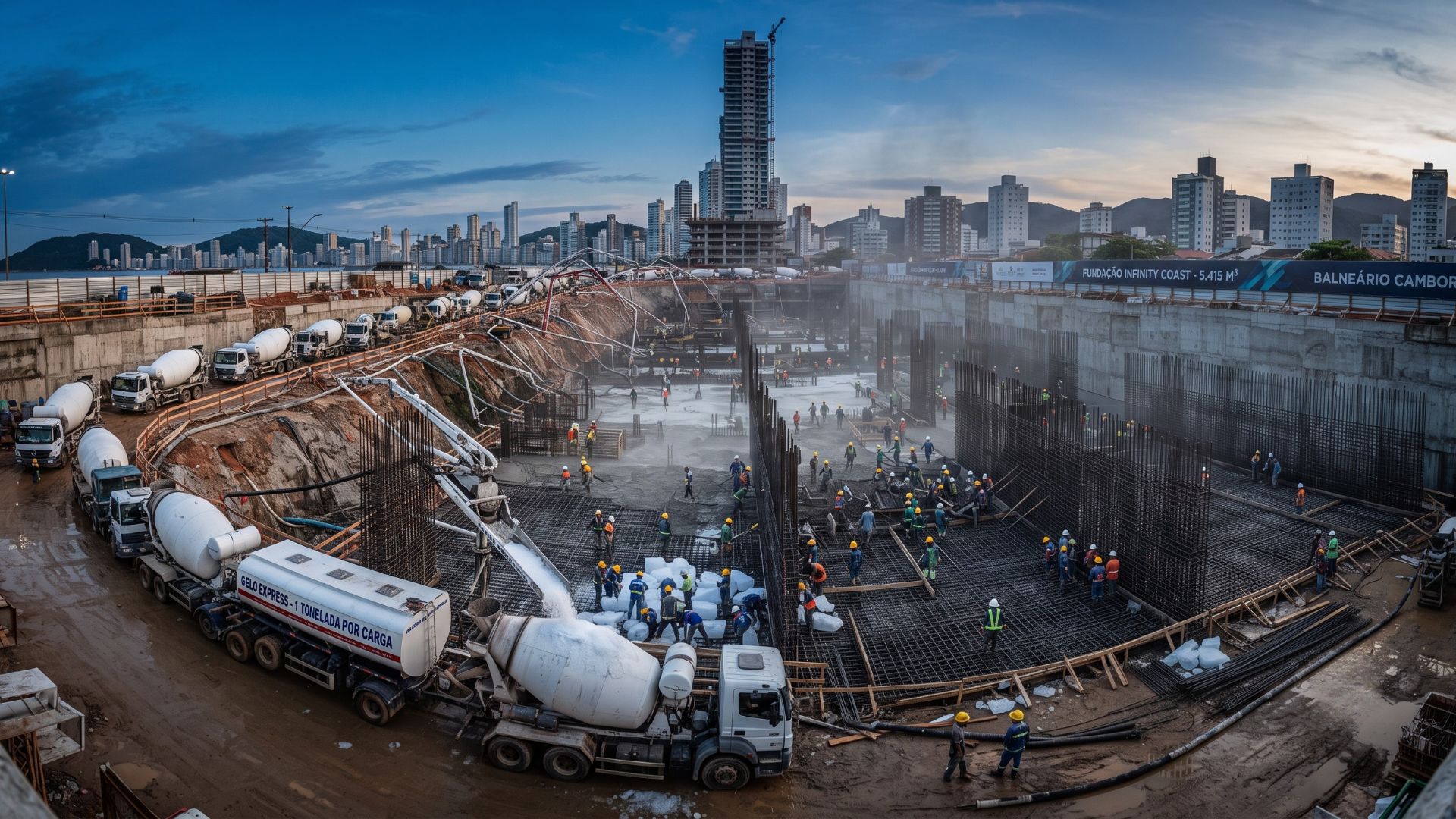
775 concrete mixer trucks poured 5,415 m³ of concrete, 570 thousand kg of steel reinforced the block, and one ton of ice was added to each load to lay the foundation of the Infinity Coast, a 234.7-meter residential tower in Balneário Camboriú.
-
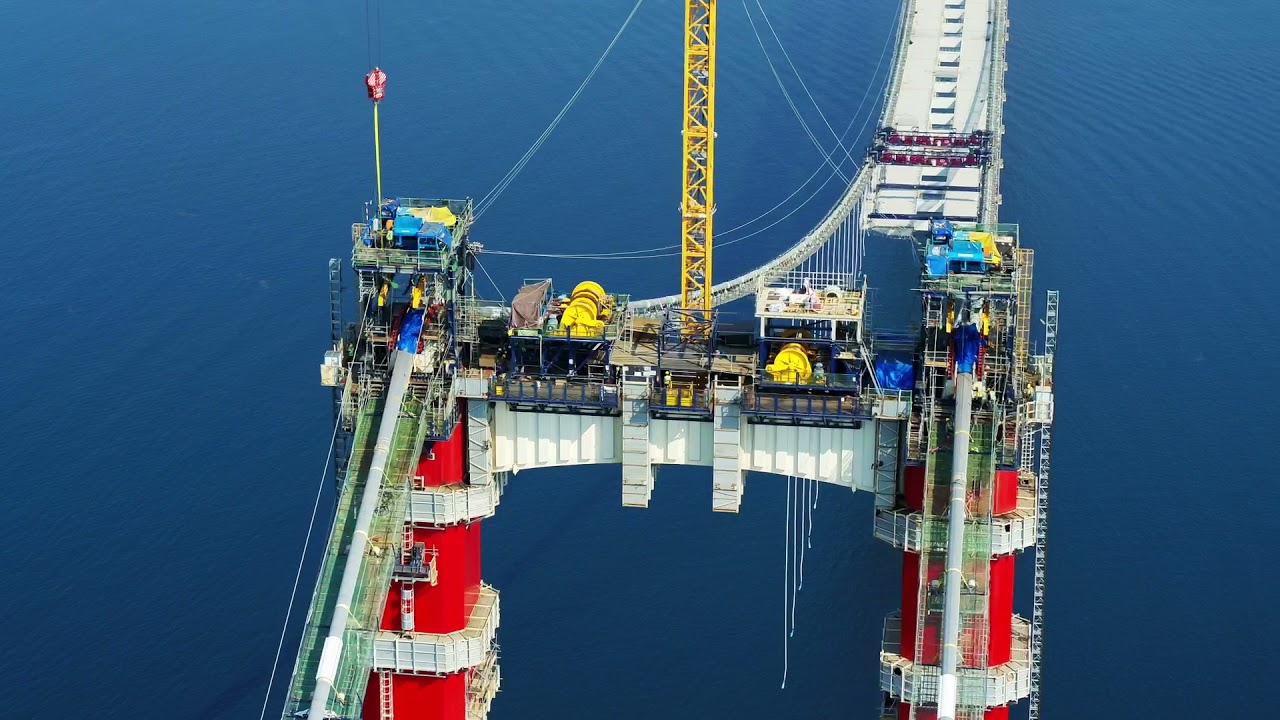
At midnight, a 330-ton crane lifted a 155-ton piece to 318 meters over the Dardanelles Strait, marking the record lift of the 1915 Çanakkale Bridge, the largest suspension bridge in the world, which reduced the crossing to just 6 minutes.

The proposal is to use this capacity during intense rain events, especially the so-called atmospheric rivers, storms capable of dumping large volumes of water over California during the rainy season.
The current version of the plan is supported by Governor Gavin Newsom’s administration and replaces a previous proposal from Governor Jerry Brown’s administration, which envisioned two tunnels.
In June 2026, the project received federal biological opinions related to the Endangered Species Act, a step described by the state government as progress in the planning and licensing process.
Despite this progress, there is no confirmation of construction start nor a defined date for operation.
The tunnel still depends on regulatory, financial, and legal steps, and remains under strong contestation from environmental groups, Sacramento-San Joaquin Delta communities, and political representatives from the Central Valley.
The estimated cost has also increased.
In 2024, the California Department of Water Resources released an analysis that raised the projected cost of the project to US$ 20.1 billion.
The previous estimate, from 2020, was US$ 16 billion.
According to the state government and the Associated Press, the increase was mainly attributed to inflation recorded after the pandemic.
Delta Conveyance Project
The Delta Conveyance Project is part of an attempt to modernize the State Water Project, a system of reservoirs, dams, canals, power plants, and pumping stations that transports water from the north to central and southern California regions.
This system serves about 27 million people and irrigates approximately 750,000 acres of farmland, according to the California Department of Water Resources.
The water is used by cities, industrial areas, and rural properties, especially in regions that rely on supply transported over long distances.
The tunnel proposal aims to change the way part of this water crosses the Sacramento-San Joaquin Delta.
Instead of relying solely on the current infrastructure, the project would create a new intake in the north of the Delta, connected by tunnel to facilities already linked to the State Water Project.


In practice, the government claims this would allow more water to be withdrawn during high flow periods, when storms increase river volumes, and stored for later use.
The logic is to capture some of the water in wet years to reduce losses in dry years.
The idea is not new.
California authorities have been discussing versions of a tunnel or canal system in the Delta for decades.
Newsom’s version reduced the plan to one tunnel but kept the essence of the proposal: to create an underground route to increase the flexibility of water transport.
Atmospheric Rivers and Droughts in California
The climate justification is one of the central points of the project.
California faces an alternation between severe droughts and very intense storms, a situation that complicates water storage and distribution.
Atmospheric rivers are bands of moisture that transport large volumes of water vapor across the sky and can cause prolonged rains when they reach the west coast of the United States.
In some years, these events help replenish reservoirs; in others, they cause floods, landslides, and damage to communities.
According to the state government, if the tunnel had been operational during recent events, the system could have captured enough water to supply millions of people for a year.
This calculation appears in official materials as an argument in favor of the project, but it is contested by opponents who question costs, impacts, and investment priorities.
The government’s concern also involves the reduction of snow in the Sierra Nevada.
Historically, the snow accumulated on the mountains functioned as a kind of natural reservoir, melting slowly and feeding rivers and supply systems.
With higher temperatures, the trend pointed out by state authorities is less snow, faster melting, and greater difficulty in capturing water when it is available.
The California government states that the State could lose 10% of its water supply by 2040 due to warmer and drier conditions, while the reliability of the State Water Project could drop by up to 23%.

Cost of $20.1 billion
The cost-benefit analysis released in May 2024 estimated the cost of the tunnel at $20.1 billion and pointed to benefits of about $38 billion.
The study was conducted by the Berkeley Research Group and paid for by the State.
According to the Department of Water Resources, the benefits would mainly come from greater supply reliability, climate adaptation, earthquake protection, and improved water quality.
The report also states that for every dollar spent, there would be $2.20 in benefits.
David Sunding, emeritus professor at the University of California, Berkeley, and responsible for the analysis, stated that the benefits would justify the costs.
The statement was released by the state government and reproduced by the Associated Press.
“The project easily passes the cost-benefit test, with benefits that are more than double the cost,” said Sunding, according to the Department of Water Resources.
Funding, however, is one of the most sensitive parts of the proposal.
The project would not be paid directly by the State’s general budget, but by local public water agencies participating in the State Water Project and obtaining resources from their consumers.
This point fuels criticism about the impact on rates.
Opposing groups claim that residents and water users could end up paying for an expensive project, while alternatives such as conservation, recycling, local capture, and environmental restoration would receive less priority.
Delta Sacramento-San Joaquin
The main area affected by the project is the Delta Sacramento-San Joaquin, the largest estuary on the west coast of the United States.
The region is home to rural communities, agricultural areas, canals, islands, wetlands, and endangered fish species.
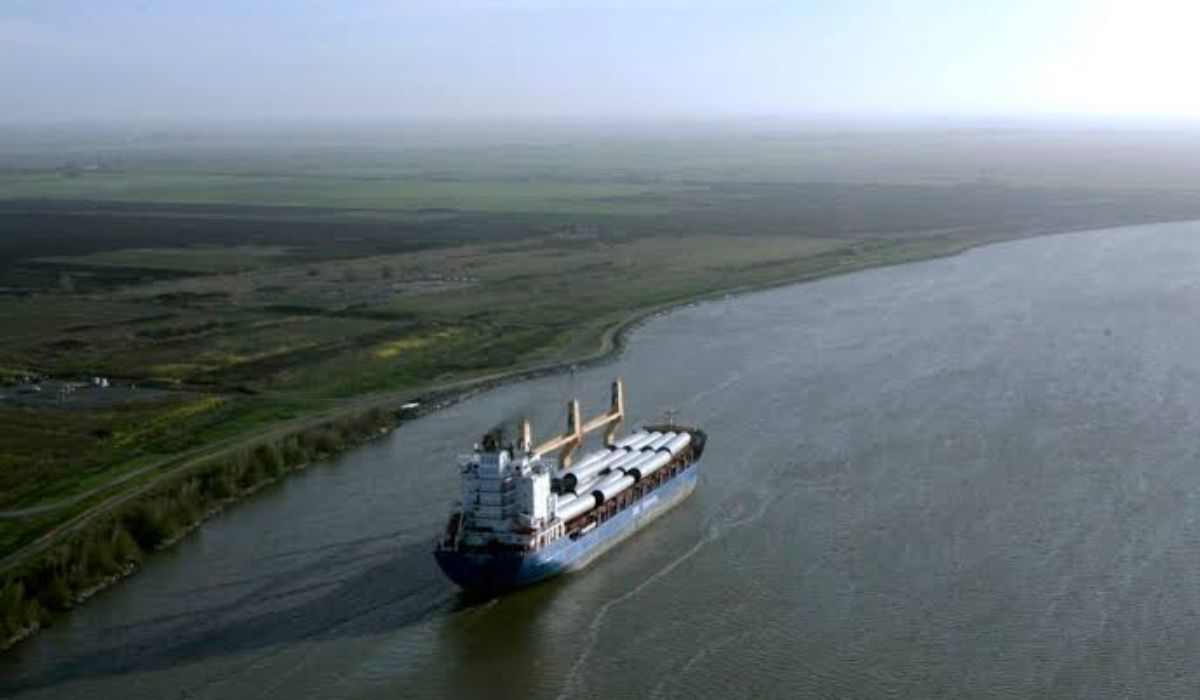
Environmental groups claim that the construction and operation of the tunnel could harm the Delta ecosystem, already pressured by reduced flows, habitat alteration, water pumping, invasive species, and climate change.
Among the species mentioned in the debate are salmon and other endangered fish.
The analysis released by the State acknowledges environmental impacts, including loss of agricultural land, effects on water quality, transportation, noise, and air quality during construction.
The government states that the project includes mitigation measures and resources for affected areas.
According to the Associated Press, the plan provides $200 million in grants for local projects in communities impacted by the construction.
Critics consider the amount insufficient given the scale of the work.
Barbara Barrigan-Parilla, executive director of the organization Restore the Delta, criticized the project and advocated for investments in solutions that, according to her, restore the Delta ecosystem instead of expanding the impacts on the region.
“Instead of pushing the costs of this project onto Californians, the State should invest in sustainable water solutions that promise to restore the Delta ecosystem, not destroy it,” she stated.
Political Dispute in the Central Valley
In addition to the environmental discussion, the tunnel has become a topic of political dispute in the Central Valley.
The region includes agricultural communities that see the project as a new attempt to divert water from the north to benefit urban and agricultural areas further south.
Although much of California’s population is in the southern part of the State, a large portion of the water originates or passes through northern regions.
This historical division sustains conflicts over who should receive water, how much should be exported, and which communities bear the environmental impacts.
Federal Representative Josh Harder, a Democrat representing communities like Stockton, Lodi, and Galt, criticized the cost-benefit analysis and stated that the tunnel would benefit wealthy areas while leaving Delta communities vulnerable.
“This new analysis acknowledges what we already knew: the Delta Tunnel was made to benefit Beverly Hills and leave Delta communities without water,” Harder told the Associated Press.
The statement reflects the opposition from part of the Central Valley, where the project is associated with longstanding disputes over water transfer.
In the state Legislature, proposals to accelerate or directly benefit the construction of the tunnel faced resistance.