Portuguese
  Spanish


According to the Sebrae News Agency, Cristiane Lima transformed surplus fruits into frozen pulps in the quilombola community Esperança, in Belo Oriente, left her cashier job, formalized the only pulp factory in the municipality, and today processes up to 10,000 kg monthly, supplying schools, regional commerce, and industrial meals in Minas.
The frozen pulps changed the fate of the fruits cultivated by Cristiane Lima’s family in the quilombola community Esperança, in Belo Oriente, Minas Gerais. What started as an alternative to avoid waste turned into a formalized agro-industry, with a monthly production reaching 10,000 kilos.
The story was published by the Sebrae News Agency Minas Gerais on March 11, 2026, and updated on March 12, 2026. According to the report, Cristiane left her supermarket cashier job in 2020 to take over the factory full-time after the demand for the pulps grew.
Surplus fruits became raw material for the business
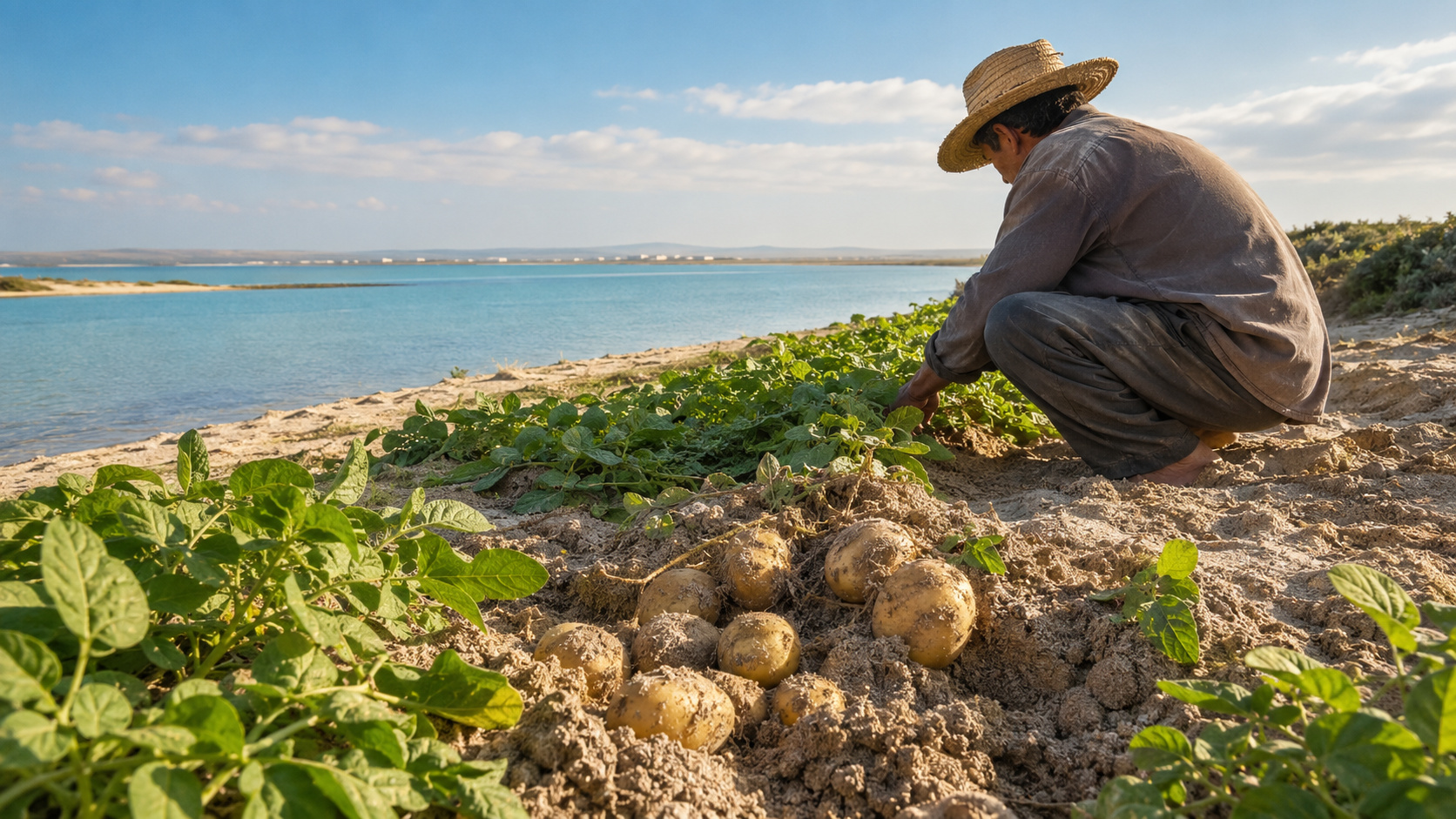
The origin of the project lies in the agricultural production of Cristiane’s brothers, Diego and Warley Lima. In 2018, they left work outside the city and began investing in family farming, starting with passion fruit cultivation and gradually expanding to other fruits.
-
Drivers hugged after a car crash in Santa Catarina, surprising those who expected a fight in the middle of the street, and went viral with a rare scene: the man who was hit got out of the vehicle, consoled the person who caused the accident, and turned traffic tension into a lesson in empathy.

-
An Australian island closes roads, diverts vehicles, and installs kilometers of barriers to guide over 100 million red crabs to the sea.

-
Detectorists find three Bronze Age torcs near Carlisle, 3,000 years old and valued at £500,000 each, in an area where an energy project may build a substation and a 28 km overhead line.
-
He throws ice cubes into the dough to bake the pizza and the result turns into parmesan cream: at 73 years old, pizzaiolo Sudário Silva makes a pizza in São Roque that he claims is unique in all of Brazil.




When the second harvest exceeded expectations, Cristiane suggested turning the surplus into frozen pulps. The idea didn’t start as a ready-made factory but as a solution to commercially redirect fruits that could be lost on the family’s farm.
Small structure gave rise to Polpas Puro Sabor
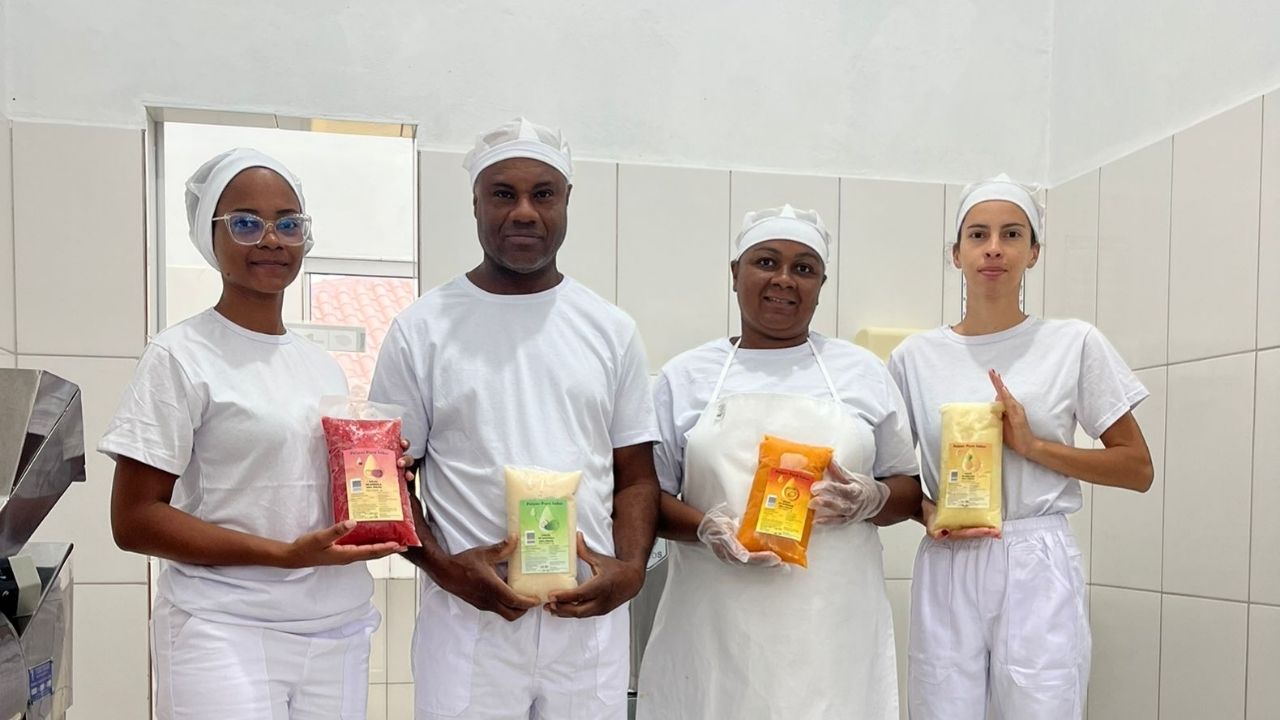
The first stage of production began with simple equipment: a pulper, freezers, and an industrial blender. It was from this initial structure that Polpas Puro Sabor was born, still with family operation and distribution focused on the local market.
In the beginning, Cristiane’s mother and daughter took on the production. The pulps supplied municipal schools in the region through the National School Feeding Program, the PNAE, as well as fairs and fruit and vegetable markets around Belo Oriente.
Cristiane left the supermarket to run the factory
With the growth in demand, the siblings focused on the orchards and Cristiane began to manage the factory full-time. In 2020, she left her job as a supermarket cashier to dedicate herself to fruit processing and business organization.
The change represented a management decision within the family. While some relatives stayed in cultivation, Cristiane took over the industrial stage, creating a bridge between family farming, food processing, and regular sales to different buyers.
Formalization required structure and technical adaptation
According to ASN Minas Gerais, Cristiane received support from the Association of Quilombola Remnants of Esperança and resources obtained from the public authorities to adapt the structure to the Ministry of Agriculture’s standards.
With this reorganization, the factory received a cold room, generator, and delivery vehicle. The adaptation was decisive in expanding service capacity, maintaining production regularity, and strengthening the company’s position as a formalized factory in the municipality.
Only formalized pulp factory in the municipality
Today, the company is highlighted in the report as the only formalized pulp factory in Belo Oriente. Production can reach 10,000 kilos of frozen pulps per month, depending on demand and fruit supply.
The portfolio includes passion fruit, soursop, lime, acerola, guava, pineapple, mango, and cashew. The fruits come from Cristiane’s siblings and also from other farmers in the community, creating a supply network linked to the quilombola territory.
Quilombola community strengthens local production
The quilombola community Esperança is described in the report as one of the largest in Alto and Médio Rio Doce. There are 286 families, with about 100 directly dedicated to agricultural production, serving eleven cities in the region.
This context helps explain the importance of the factory. By purchasing and processing fruits from the local community, the business increases the utilization of the harvest, generates local income, and helps farmers maintain activity in the field with more predictability.
Training helped reorganize brand and processes
In 2025, Cristiane participated in training sessions promoted by Sebrae Minas in partnership with the Instituto Cenibra, the Association of Quilombola Remnants, and the City Hall of Belo Oriente. The Empretec Rural is highlighted in the report as an important point of this new phase.
The company also received consultations from Sebraetec, which helped with visual identity, reorganization of production processes, and guidance on the new name, “Gostim di Fruta,” in the process of registration with INPI. The packaging was modernized to better convey the business identity.
New contract opened space in industrial meals
The report states that Cristiane and two other local producers signed an unprecedented contract to supply food to GRSA, a company that supplies the industrial restaurant of Cenibra. The products are already part of the menu of about 5,000 meals served daily to the employees of the pulp industry.
This advancement expands the reach of frozen pulps beyond schools, fairs, and regional commerce. The entry into industrial meals shows that a local production, when formalized and organized, can access larger markets without losing connection with family farming.
Family also started working within the company
The growth of the factory involved other members of Cristiane’s family. Her husband, José Silva, left formal employment to dedicate himself to the business, while the couple’s daughter, Lívia Cristine, works in production and is studying Nutrition.
Lívia’s education is directly related to the company’s technical plans. According to the report, the goal is to contribute to the growth of the business by bringing food production closer to knowledge in nutrition, quality, and the development of new processes.
Case shows how surplus can turn into local economy
The trajectory of frozen pulps in Belo Oriente shows that agricultural surplus can gain value when there is processing, organization, and market access. What was once leftover fruit in family production turned into a factory, income, and supply for different channels.
Cristiane still plans to expand the factory’s capacity, improve logistics, and continue investing in management. Do you think more rural communities should receive support to transform agricultural surpluses into formalized products, like frozen pulps, or is this path still difficult for small producers? Leave your opinion in the comments.