Portuguese
  Spanish


The official delivery will still come after a testing phase, but the presentation already puts the country at the forefront of the new variant. The detail that matters most to Brazil is not the second seat itself, but the technology transfer that trained hundreds of Brazilian engineers and brings part of the production to São Paulo.
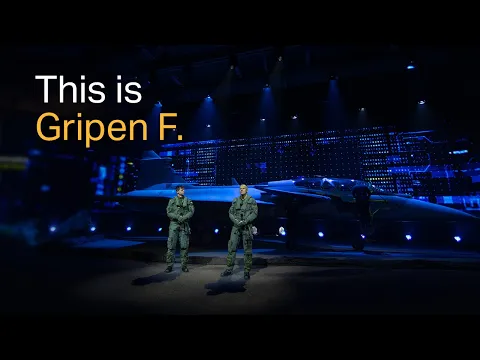
Brazil has become the first country in the world to have a Gripen F, the two-seater version of the fighter jet from the Swedish manufacturer Saab. The aircraft was presented on June 2, 2026, at a ceremony in Linköping, Sweden, with direct participation of Brazilian engineers in its development, marking the program that foresees the delivery of 36 fighters to modernize the Brazilian Air Force over the coming years.
It is necessary, however, to be precise about the stage: the June 2 event was the official presentation of the first Gripen F, known in Brazil as F-39F, and not the final delivery. Before arriving in the country, the aircraft will still undergo a flight test campaign at Saab’s center in Sweden. It is also worth clarifying that this report deals with the subject in an informative way, without advertising character, and that part of the operational qualities described below comes from the manufacturer itself and should be understood in this context.
What is the Gripen F
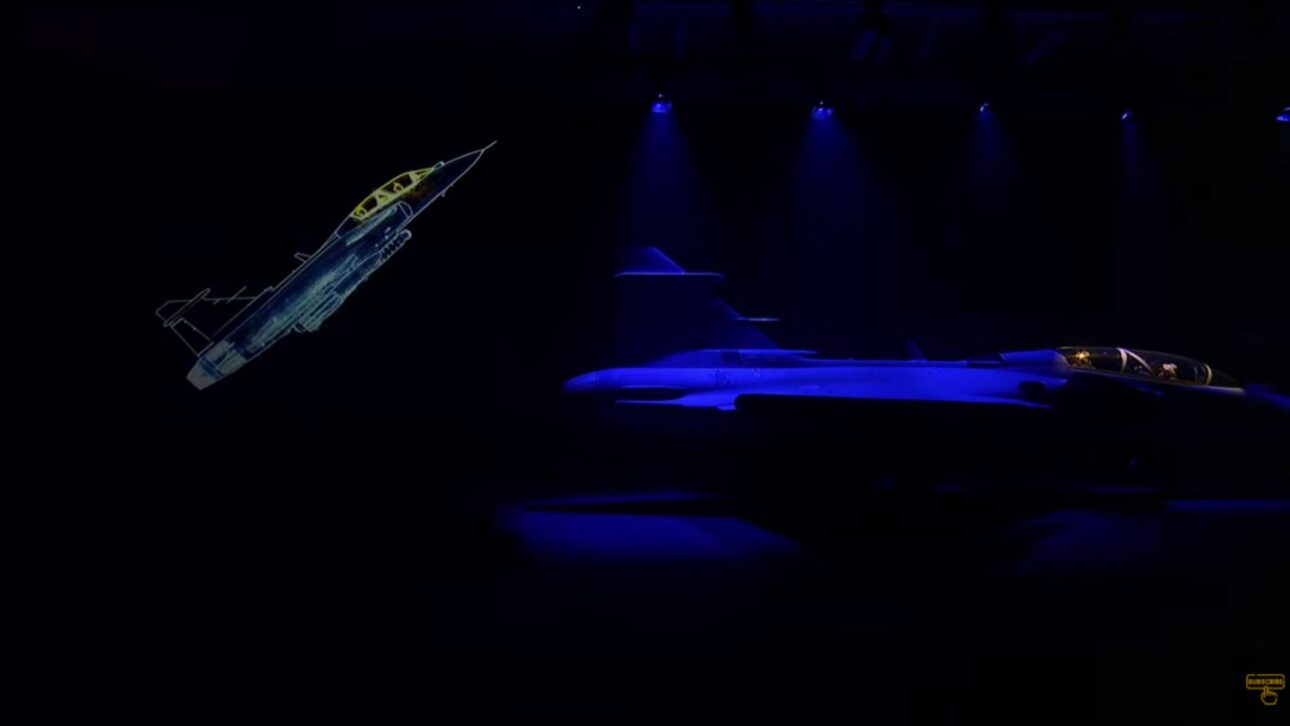
The Gripen F is the two-seater version of the Gripen E fighter jet, maintaining the same sensors, mission systems, engine, and armament capacity as the single-seat version, but adding a fully independent second cockpit, which changes how the aircraft can be used in training and operations.
-
The Trap of Modern Technology: How Screen Overload and Digital Connections Can Impact Your Mental Health and Well-being

-
Wyoming Couple Grows Tropical Fruits Year-Round in -40°C Using Geothermal Greenhouse, Demonstrating Earth’s Heat Can Produce Oranges and Lemons in Snow Without Traditional Heating

-
Ship Returns from Brazilian Coast with Thirty Newly Discovered Life Forms
-
Nigerian Professor Invents Electricity-Free Refrigerator Using Clay Pots and Wet Sand, Extending Shelf Life of Vegetables to 27 Days; 7,000 Units Distributed in Energy-Deprived Villages



According to released technical information, the F-39F is about 70 centimeters longer than the single-seat model and does not have the internal 27-millimeter cannon present in the Gripen E, due to the structural changes necessary to accommodate the second cockpit.
The proposal from Saab is that it serves both as an advanced training platform and as a fully operational fighter, capable of carrying out real missions, and not just as a training aircraft.
Why the two-seater version matters
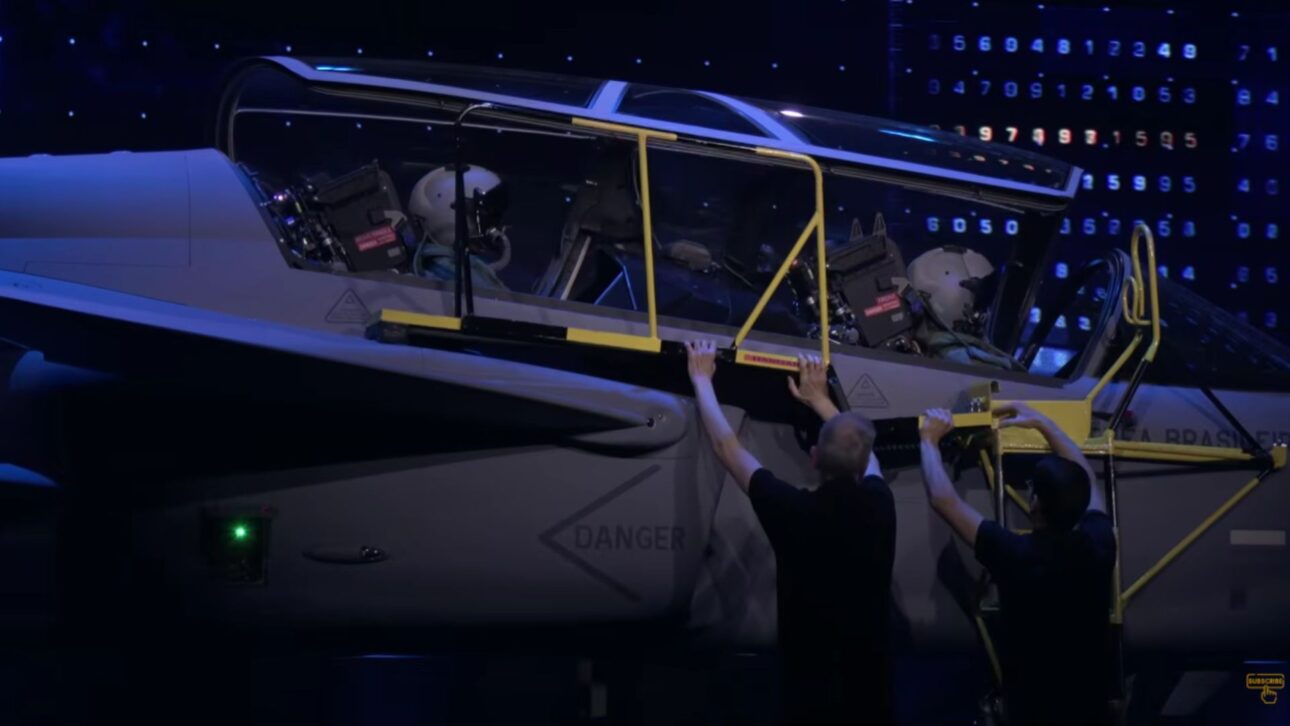
According to Saab, the second cockpit allows an instructor to accompany missions aboard a fully operational fighter, enabling trainee pilots to practice in real combat conditions, which, according to the company, would reduce the time and cost of preparation compared to the traditional training path.
Historically, becoming a fighter pilot requires going through several different aircraft, from the basic trainer to intermediate jets, until reaching the frontline fighter.
The manufacturer argues that the Gripen F shortens this path by allowing the pilot to train on the same model they will use in operations.
In higher-risk environments, the company also states that two crew members can share tasks, with support from artificial intelligence, although this type of operational advantage is presented by Saab itself and depends on practical evaluation.
The contract and the modernization program
The arrival of the Gripen F is part of a long-term agreement.
The program originates from a contract signed in 2014 between Saab and the Brazilian government, which includes a total of 36 fighters, 28 of the single-seat version, the Gripen E, and eight of the two-seater version, the Gripen F, with an estimated value of around 5.4 billion dollars, aimed at modernizing the Brazilian Air Force fleet.
Deliveries began in 2020 and, so far, 11 of the 36 aircraft have already been handed over to Brazil, according to Saab.
The presentation of the first Gripen F starts the next phase of this schedule.
In Brazil, the aircraft is designated F-39, gradually replacing older fighters and representing one of the largest military re-equipment programs in the country in recent decades, conducted over several years.
Brazilian participation and technology transfer

This is possibly the most relevant point for the country.
More than buying ready-made fighters, Brazil actively participated in the development of the Gripen F as a launch customer, and the contract includes a comprehensive technology transfer program that trained hundreds of Brazilian engineers and technicians in Sweden, with the aim of enabling the country to maintain, modify, and even produce systems derived from the fighter internally.
Embraer, Saab’s main local partner, assembles Gripen aircraft at its factory in Gavião Peixoto, in the interior of São Paulo, and in March 2026 presented the first Gripen E assembled on Brazilian soil.
The logic of the program is to avoid permanent dependence on Swedish support and strengthen the national aerospace industry, leaving the country with long-term knowledge and technical capability, something considered strategic for sovereignty in the defense area.
How the fighter emerged and who else adopts it
Curiously, the very existence of the Gripen F originates from Brazilian needs.
Sweden did not initially plan to develop a two-seat version of the Gripen E, intending to use the older Gripen D for training, but the requirements of the Brazilian Air Force were decisive for the creation of the two-seater variant, which reinforces Brazil’s role in the project.
Since then, the model has sparked interest from other countries.
According to Saab, besides Brazil, which is the launch customer, the Gripen F has also been ordered by Thailand and Colombia, expanding the aircraft’s operator base.
Still, it is the Brazilian program, due to its scale and the depth of the industrial partnership, that stands out as the flagship of this new phase of the Swedish fighter.
The presentation of the first Gripen F marks an important moment for the Brazilian Air Force and the country’s defense industry, which ceases to be just a buyer to become an active part of the development of a next-generation fighter.
With the final delivery still dependent on a testing phase, what stands out is not just the aircraft itself, but the knowledge transferred to Brazilian engineers and the strengthening of national production.
More than a combat aircraft, the program is closely followed by those interested in technology, defense, and Brazil’s autonomy in a strategic sector.
And you, what do you think of the program that brought the Gripen F to Brazil and the participation of the national industry in the project? Do you consider it important for the country to invest in defense technology and the training of engineers? Leave your comment, share your opinion with respect to different views, and help spread the article to those who follow aviation, technology, and defense.