Portuguese
  Spanish


Artificial nests created by Yanin Proud Tangkaravakoon from Thailand use recycled plastic bottles to help endangered hornbills. At 17, she won the regional stage of The Earth Prize 2026, installed 20 structures in southern Thailand, involved 60 students, and saw 14 chicks fly in 2025 with community support and research.
The artificial nests created by the Thai Yanin “Proud” Tangkaravakoon, aged 17, were born from an environmental concern that began in childhood. After seeing hornbills on a school trip to Khao Yai National Park, she discovered that many species of these birds were declining and decided to turn concern into a project.
The initiative, called Homes for Hornbills, uses recycled materials, such as plastic bottles, to build nests for hornbills. On May 15, 2026, in an announcement made in Geneva, Switzerland, Proud was named the winner for Oceania and Southeast Asia of The Earth Prize 2026, an environmental competition aimed at young people aged 13 to 19.
School trip sparked a concern that turned into an environmental project
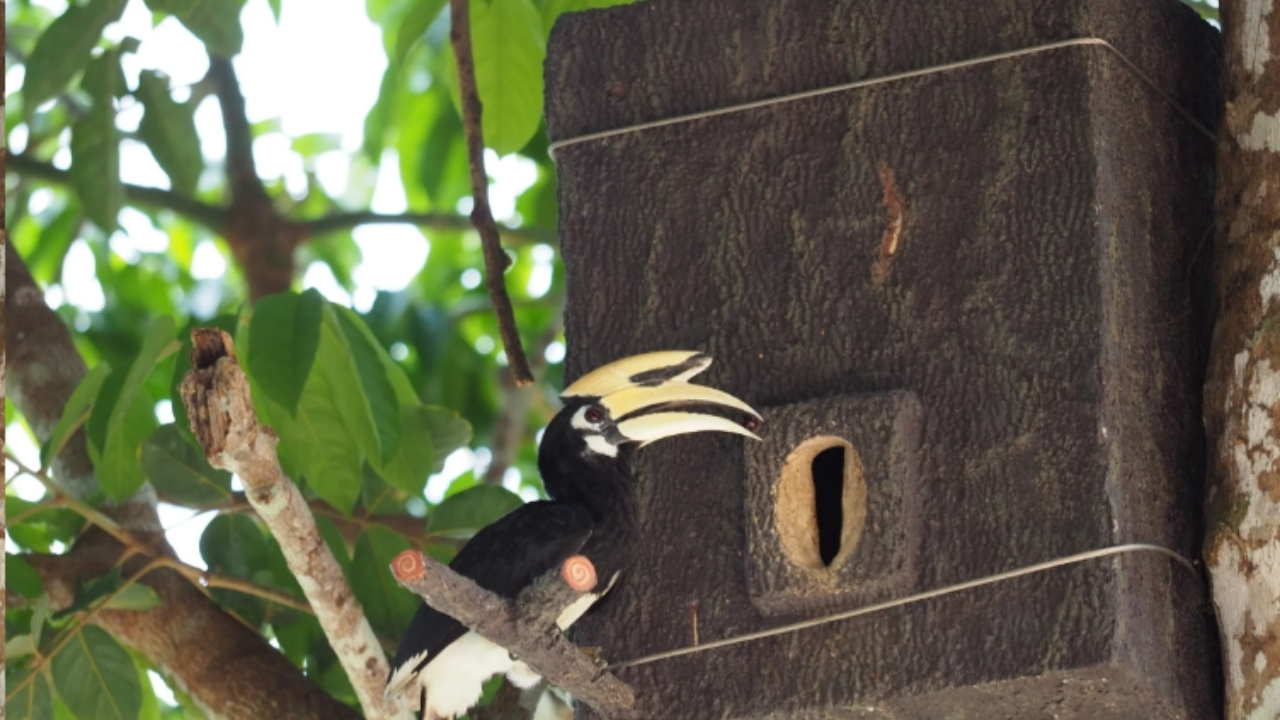
Proud’s first connection with hornbills happened when she was in fourth grade, during a visit to Khao Yai National Park in Thailand. The behavior of the birds caught her attention, but the enchantment soon mixed with a greater concern.
-
Steam Machine Converts All Types of Plastic Waste into Durable Building Blocks, Processes Over 90 Tons Monthly, and Is Sold to Municipalities

-
John Deere’s Autonomous 9RX Tractor Uses 16 Cameras for 360-Degree Vision, Operates in Short Weather Windows While Monitored by Smartphone

-
Scientists Develop Needle-Free Insulin That Penetrates Skin, Reduces Glucose in Animals Within an Hour, Paving the Way for Diabetes Patches and Creams for Humans

-
After 40 Years of Research, Powdered Coconut Water to Be Produced in Brazilian Biorefinery, Aiming to Revolutionize Health for Children, Elderly, and Hospital Patients


According to The Earth Prize, she later discovered that 51 of the 62 hornbill species in the world were experiencing population declines. From this data, the student began to see the problem as something beyond the birds: it was also about the health of the forests.
Hornbills play an important role in forest regeneration
Hornbills are birds known for helping in seed dispersal. By feeding on fruits and moving through forested areas, they contribute to spreading seeds and maintaining natural regeneration cycles.
Therefore, the decline of these populations worries environmentalists. When a disperser species decreases, the impact can reach trees, forests, and communities that depend on these ecosystems. Proud’s solution attempts to address precisely this connection between biodiversity and environmental balance.
Artificial nests use recycled plastic as raw material
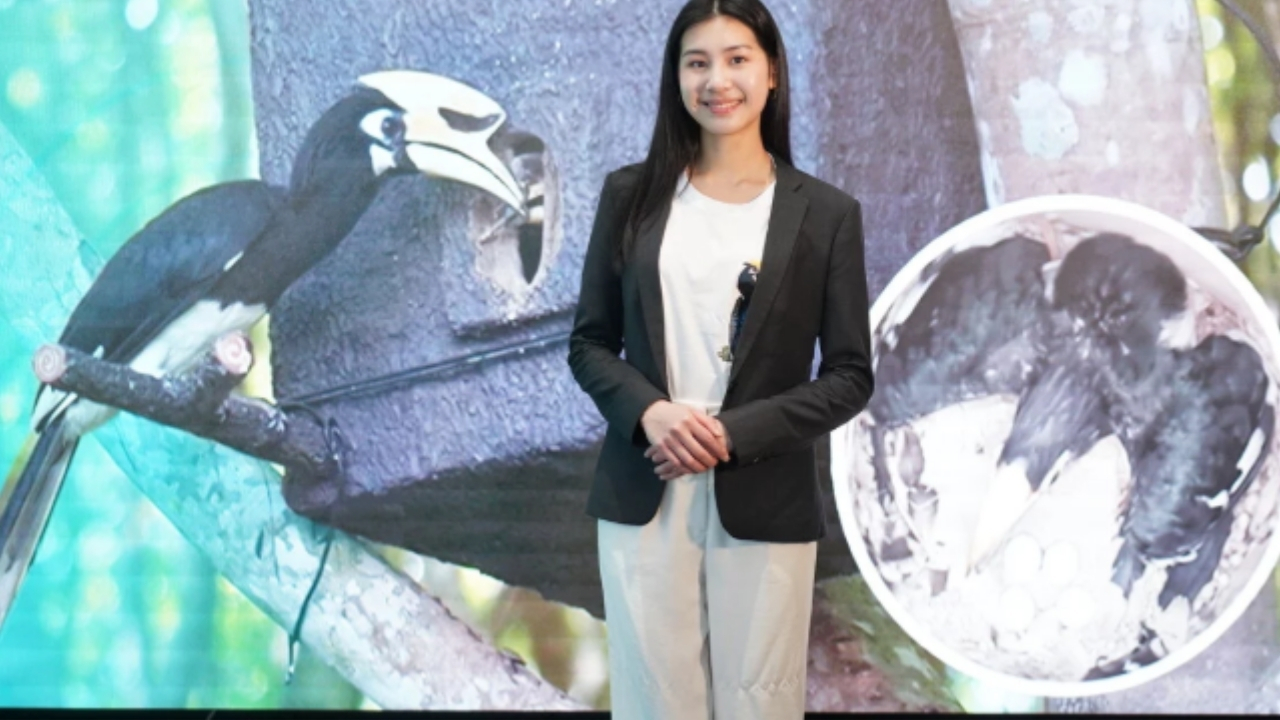
The central idea of the Homes for Hornbills project is to create durable artificial nests, adapted to the behavior of hornbills. For this, Proud started working with recycled materials, including plastic bottles transformed into nesting structures.
The proposal unites two environmental problems in one solution: the loss of bird habitat and the excess of plastic waste. What could have been discarded now has an ecological function, helping chicks develop in areas where natural nests are scarcer.
Project was developed with research and community support
Proud worked with the Thailand Hornbill Research Foundation, the THRF, to design and refine the solution. The project was structured in three fronts: creation of artificial nests, conservation program in schools, and, in the future, alternative income opportunities for local communities.
This last front is important because The Earth Prize cites illegal hunting and deforestation among the threats to hornbills. By involving residents and students, the initiative aims to turn environmental protection into community participation, not just an isolated laboratory action.
Structures have already been installed in southern Thailand
By the time of the prize announcement, 20 nests had been installed in southern Thailand. The project also recorded 14 hornbill chicks that managed to fly in 2025, a relevant data point to measure the initial impact of the solution.
In 2026, according to the information released by the award, 14 nests were already occupied. These numbers do not mean a definitive solution to the global decline of species, but they show that the artificial nests have started to be used by birds in the field.
Sixty local students participated in the initiative
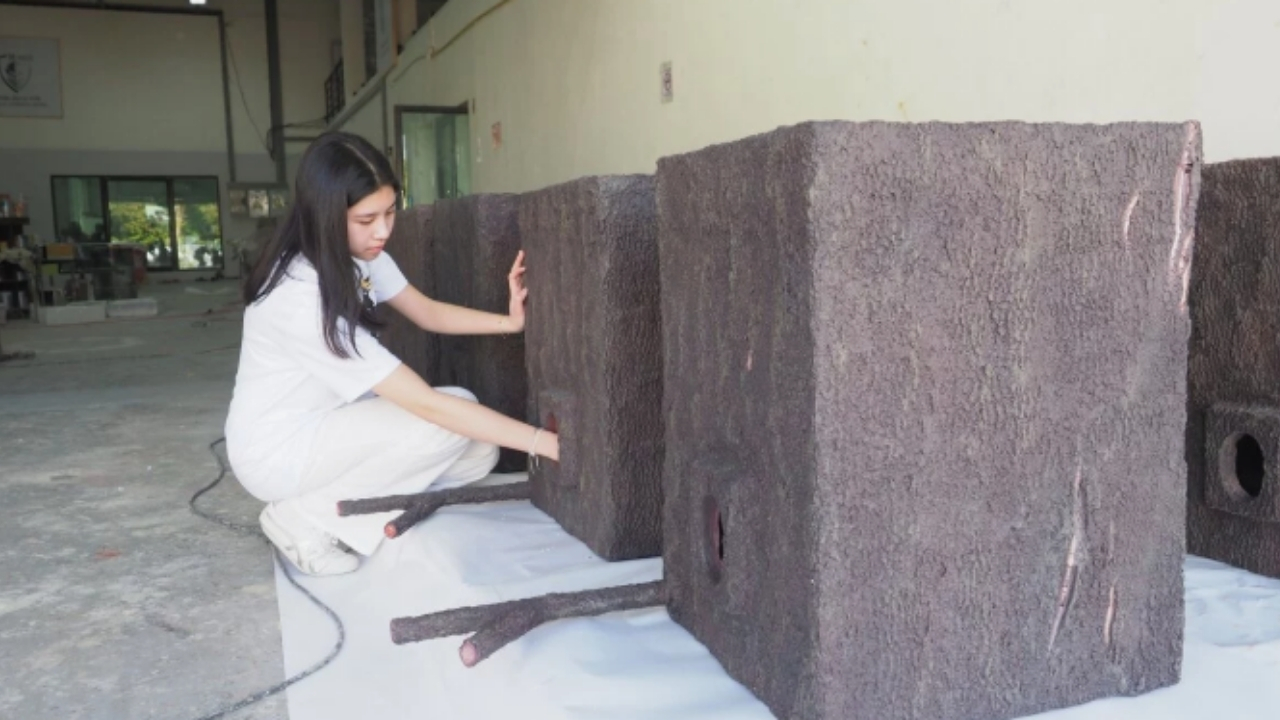
The project also involved 60 local students, reinforcing the educational dimension of the proposal. The presence of young people in the actions helps to spread knowledge about hornbills, deforestation, illegal hunting, and forest conservation.
This point gives the project a reach that goes beyond the construction of the nests. By bringing the topic to schools and communities, Proud increases the chance that the protection of hornbills is understood as a collective responsibility.
Partnership supported the use of recycled plastic materials
The initiative partnered with TOA Venture Holding, TOAVH, to support the use of recycled plastic materials in the production of the nests. The project also includes the development of material in the laboratory, using recycled unsaturated polyester resin.
This stage shows that the artificial nests are not just makeshift boxes. The proposal involves testing, refining, and adapting the materials so that the structures are durable and compatible with the birds’ behavior.
Documentary and university helped to give visibility to the project
Besides the fieldwork, Proud produced the documentary Homes for Hornbills, which ranked among the top ten in an award and started being shown on the VIPA platform, by Thai PBS. The student also presented her research results to the Faculty of Forestry at Kasetsart University.
The visibility helped to transform a local project into an international reference for young innovation. When an environmental solution manages to bring together research, community, communication, and field results, it gains more strength to be replicated in other territories.
The Earth Prize recognized the solution among young innovators
The Earth Prize is an international environmental competition aimed at students aged 13 to 19. In 2026, Proud was chosen as the winner for the Oceania and Southeast Asia region for her solution to protect hornbills and forests.
Each regional winning team receives $12,500 to develop and implement their idea. In Proud’s case, the funds should help expand the installation of nests, increase partnerships with communities, and strengthen actions against illegal hunting and deforestation.
Prize seeks to turn climate anxiety into concrete action
The organization reports that The Earth Prize has already reached over 21,000 students in 169 countries and territories since its inception. The award is conducted by The Earth Foundation, a non-profit organization based in Geneva, founded after the student climate mobilizations of 2019.
Founder Peter McGarry stated that the 2026 winners represent teams from seven global regions and show that age does not prevent significant changes. Proud’s story fits this logic: a student identified an environmental problem and created a solution applied in the territory.
Next step is to expand habitats and create income alternatives
With the support of the prize, Proud intends to expand the model to important hornbill habitats. The idea is to increase the installation of nests and work with local communities on long-term solutions.
Among the possibilities mentioned are activities such as building and monitoring nests, which can offer income alternatives and reduce pressures related to illegal hunting and deforestation. The protection of the chicks, in this case, also depends on creating reasons for communities to see value in keeping the birds alive and the forests standing.
Solution shows how a school idea can achieve international impact
Proud’s journey began on a school trip, went through research, involved students and communities, and reached an international award. The artificial nests project shows how a discovery made in childhood can mature into concrete environmental action.
The story also reinforces that innovation does not always come from large laboratories. Sometimes, it arises when someone observes a local problem, listens to researchers, tests repurposed materials, and involves those living near the forest.
The project by Yanin “Proud” Tangkaravakoon makes one think about the role of young people in environmental protection. Do you believe that solutions created by students can have a real impact on nature conservation? Leave your opinion in the comments.