






 Portuguese
  Spanish


Losses from the field to the refrigerator show how food waste increases product costs, amplifies environmental impacts, and reveals a severe contrast with food insecurity in the country
The food waste in Brazil reveals a contradiction that is hard to ignore. On one side, tons of food are lost in the field, in retail, and within homes. On the other, nearly 7 million people go hungry, according to the IBGE.
The United Nations estimates that about 1 billion tons of food are wasted worldwide every year. In Brazil, the scenario is even more significant because 18.9 million families experience some degree of food insecurity.
The problem, therefore, does not represent just food thrown away. Waste also pressures prices, causes economic losses, and increases environmental damage. Data from 2020 by the World Bank indicates that global waste results in an annual loss of US$ 1 trillion.
-
Brazil Approves Landmark Bill Requiring Workplace Adaptations for Autism Inclusion

-
Brazil’s Micro-Entrepreneur Program May See Major Changes: Income Cap Could Increase to R$ 130,000, Annual Inflation Adjustments, and Allow Hiring of an Additional Employee
-
DoorDash Founder Tony Xu, CEO of an $85 Billion App, Becomes Delivery Driver for an Hour, Completes Four Orders, Makes $19

-
Lufthansa CEO Jens Ritter Takes on Flight Attendant Role, Uncovers Overlooked Issue in Economy Class


Losses in the field expose failures before the harvest reaches the market
The losses begin even in the fields, where planning, technique, and market access make a difference. According to Gustavo Porpino, researcher at Embrapa Alimentos e Territórios, perishable products need quick sales to avoid being discarded.
Lettuce, strawberries, and bananas, for example, require a specific destination right after the ideal harvest point. Climate changes, droughts, heavy rains, pests, and diseases also harm production and increase the volume lost.
The lack of technology reduces food preservation and compromises harvest efficiency. The aesthetic standard required by the market also matters, as fruits and vegetables with blemishes or different shapes lose commercial value.
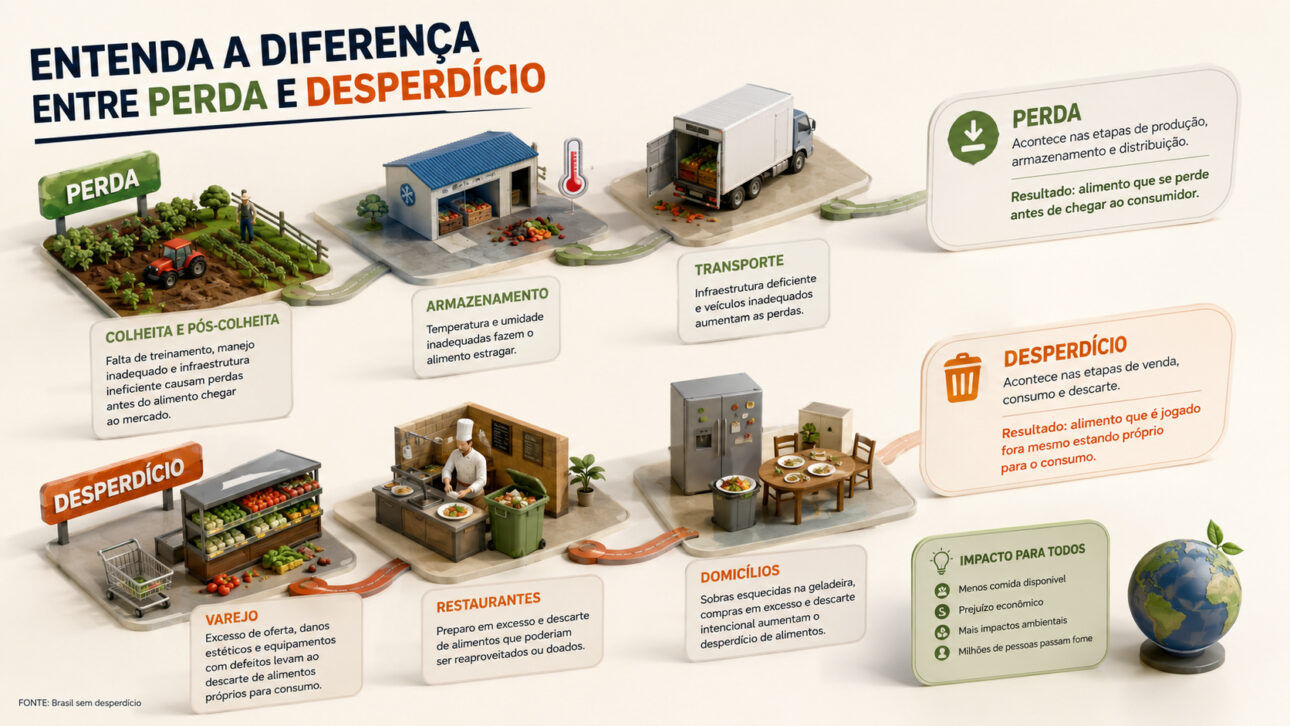
Inadequate transportation and overproduction increase waste
Very high harvests can leave food left over in the field. The producer often cannot find enough buyers or faces prices too low to cover the costs of harvesting.
Inadequate logistics exacerbate the problem. Vegetables transported without refrigeration arrive at sales points with reduced quality. Improper boxes and packaging also damage fruits and vegetables during transit.
Investments in technique, preservation, and transportation can reduce a significant portion of these losses. The solution, however, requires organization of the production chain and greater integration between farmers, distributors, and retailers.
Retail and restaurants also contribute to losses
The United Nations Environment Programme estimates that retail and restaurants waste 427 million tons of food. In stores, excess supply and consumers’ visual demands increase waste.
Consignment sales worsen this scenario. In this model, the retailer pays only for items sold. Fruits that spoil in the store can become a loss for the producer, even after being displayed on shelves.
Large volumes, thus, can be purchased without a real calculation of demand. Donation initiatives, on the other hand, help collect food in good condition and allocate it to social institutions.

Culture of abundance turns full refrigerators into lost food
The majority of waste occurs within households. According to the UNEP, households discarded 631 million tons of food in 2022.
The responsibility, however, is not solely on the consumer. Many products reach the shelves with a short shelf life after long journeys, inadequate transportation, or poor storage.
Cultural habits also increase waste. According to Maria Siqueira, co-founder and executive director of the Pact Against Hunger, the pursuit of abundance encourages unplanned purchases. The habit of stocking food also leads to food being forgotten at the back of the refrigerator.
Waste increases food prices and amplifies environmental impacts
According to Daniela Teston, director of corporate relations at WWF-Brazil, the retail sector calculates losses in the final price of products. Thus, the consumer also pays for part of the food that is lost.
Discarded food also generates greenhouse gases, such as methane. During decomposition, they also produce leachate, which can contaminate the groundwater.
Reducing food waste can lower the cost of basic items, protect the environment, and improve access to nutrition. In the face of so much lost food, how does Brazil still coexist with millions of people without adequate food every day?


