






 Portuguese
  Spanish


In the best secret boss style, the CEO of DoorDash, Tony Xu, owner of an app valued at around $85 billion, became a delivery driver for an hour. Through the WeDash program, which requires every employee to deliver, he took four orders, got one wrong, and earned only $19 on the run. The event occurred in December 2025.
Is there a more unexpected scene than the founder of a tech giant pushing his own delivery cart? The man who runs one of the world’s largest food apps spent an hour performing the most basic task of the operation: picking up the order at the restaurant, checking the address, and trying to deliver everything correctly to the customer. The difference is that, instead of a board meeting, his office that day was the traffic of San Francisco.
According to Fortune magazine, which closely followed the journey, the episode was as revealing as it was entertaining. On a route through the city, the CEO of DoorDash, Tony Xu, tried to handle four orders, completed three, stumbled on one, and finished the hour of work as a delivery driver with a modest $19, a number that highlights the contrast between the size of the company and the simplicity of the task.
$85 billion and $19: the contrast that went viral

On one side, an app valued at tens of billions of dollars; on the other, the owner himself receiving the equivalent of a lunch tip for an hour of manual labor. It’s the kind of image that amuses precisely because it inverts expectations, and it was this unlikely contrast that made the case of the CEO of DoorDash go viral as a classic example of a secret boss.
-
Lufthansa CEO Jens Ritter Takes on Flight Attendant Role, Uncovers Overlooked Issue in Economy Class

-
7-Year-Old Estela Wins Ballet Qualifier; Family Crowdfunds for Argentina Finals in October

-
Before taking over as CEO of Starbucks, Laxman Narasimhan spent about six months training as a barista and committed to working a half shift each month to stay connected to the store floor.
-
After Selling Meetup for $200 Million, Founder Scott Heiferman Spent Nine Months Working at an Amazon Distribution Center to Reconnect with the Everyday Worker


More than just a curiosity, the episode works as a joke that teaches. Seeing the billionaire in charge of everything end the race with $19 humanizes the executive figure and breaks the aura of someone who decides everything from a high floor. For Tony Xu, however, the humor was never in the amount received, but in what that hour of deliveries, in a secret boss style, revealed about the real functioning of the app he himself created.
Who is Tony Xu, the founder of DoorDash
Behind the gesture is one of the most influential names in the app economy. Tony Xu is the co-founder and CEO of DoorDash, a company he helped build into the leading food delivery service in the United States, ahead of powerful competitors. Under his leadership, DoorDash went from being just another startup to becoming a public giant, valued at tens of billions of dollars and present in thousands of cities.
The trait that defines his leadership, according to those who follow the company, is a declared obsession with the customer and the product. Instead of governing only by charts, Xu has built a reputation for wanting to understand the app through direct experience, not just through headquarters reports. This philosophy explains why the founder of DoorDash insists on periodically leaving the boardroom to become a delivery driver, even if it only results in anecdotes and $19 at the end of the day.
The WeDash program: when the CEO also delivers
The detail that differentiates the case from a simple enactment is that it is part of an internal rule. At DoorDash, there is a program called WeDash, which requires all corporate employees, from interns to the president, to make deliveries and handle support calls throughout the year. The logic of WeDash is simple and powerful: no one should design the app without occasionally experiencing what it’s like to use it from the other side, making the actual delivery or listening to the customer on the line.
Therefore, Tony Xu’s hour as a delivery driver was not an isolated event staged for the photo, but the fulfillment of an obligation that applies to the entire company. Reports indicate that each corporate employee needs to complete some delivery shifts per year within WeDash. This institutionalization is what gives strength to the gesture because it turns the experience at the front line into company policy, rather than an occasional whim of a CEO seeking the spotlight.
Four orders, one mistake, and $19 in an hour
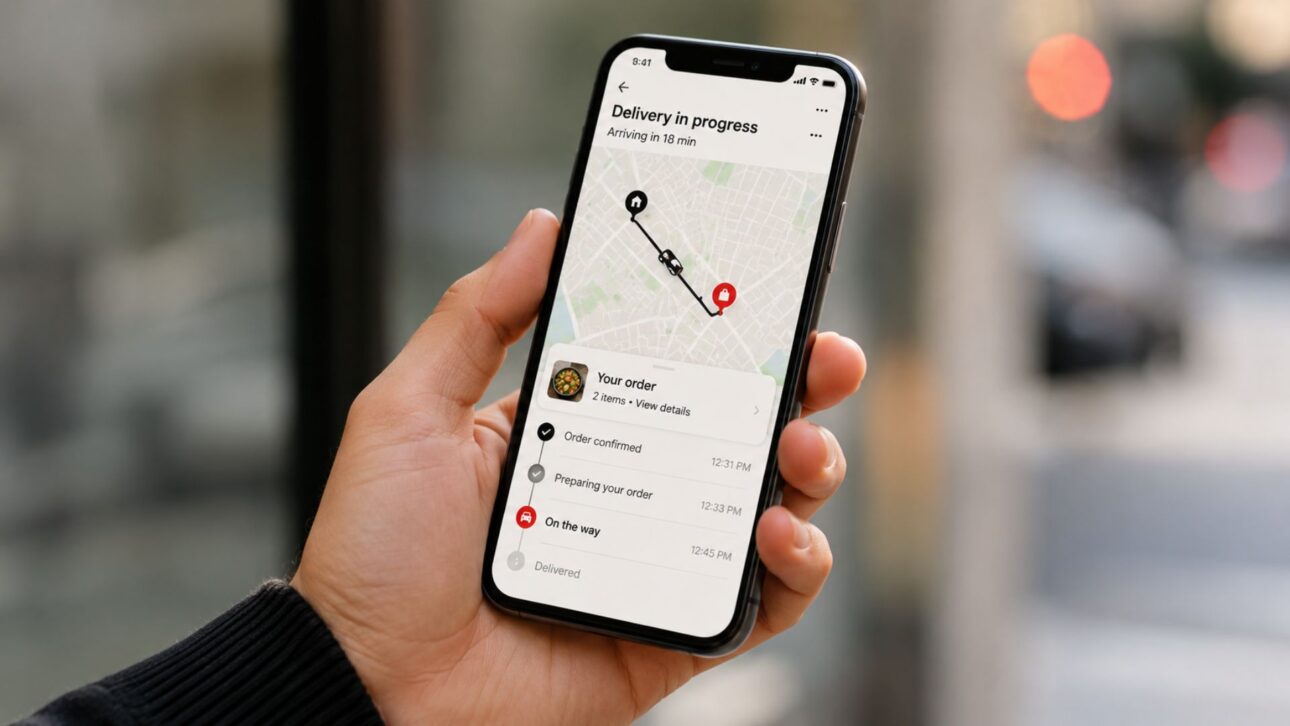
In one hour, the CEO of DoorDash managed to pick up four orders but only successfully completed three, slipping up on one of them, exactly the type of stumble any beginner would make. In the end, the sum of earnings and tips from that lightning shift was around $19, proving that mastering the app’s theory doesn’t mean being good at using it in practice on the street.
The error in one of the orders is perhaps the most endearing part of the story. Even knowing the system inside out like no one else, Xu showed that executing the task in the real world is harder than it seems from above. This small failure by the boss is valuable precisely because it exposes the product’s rough edges, the details that only appear to those who are truly on the app, not to those observing it from a metrics panel.
What a CEO learns by pushing the cart
Behind the anecdote, the hour of deliveries has a very concrete business objective. By becoming a delivery person, the executive tests firsthand every stage of the product: waiting for the order at the counter, the app’s instructions, navigating to the address, and the moment of delivery to the customer. Every friction felt in this journey is a precious input to improve the app, the kind of information that hardly reaches a board meeting intact after passing through various layers of the company.
This is where the secret boss gesture stops being folklore and becomes a management tool. Tech companies thrive on reducing friction, and few methods are as effective as having decision-makers use their own product in the rawest condition possible. When the CEO of DoorDash pushes the cart and makes a mistake on an order, he returns to the table with a list of real problems to solve, turning an intriguing hour into improvements that can benefit millions of users.
Genuine gesture or marketing ploy?
Like any secret boss initiative, WeDash also has its critics, and the skepticism is legitimate. Some see the image of the billionaire in uniform as a well-crafted communication stunt, designed to generate good headlines and reinforce the brand more than to actually change anything. The question that lingers is whether an hour of deliveries, however symbolic, really translates into decisions, or if it merely serves to humanize the CEO of DoorDash in the eyes of the public.
In defense of the program, however, is the fact that it is mandatory and longstanding, not an isolated trick. Unlike a boss who delivers once for the camera, WeDash has the entire corporation repeat the experience year after year, suggesting culture rather than a one-time act. In the end, the value of the gesture depends less on the photo and more on what comes after it: if the problems felt by the improvised delivery person turn into app adjustments, the hour will have been worth every one of the $19.
What the case of the DoorDash CEO as a delivery person shows
The story of Tony Xu is both entertaining and instructive, and deserves to be read without exaggeration. It shows the smart side of a DoorDash CEO who obliges himself, along with the entire company, to become a delivery person through the WeDash program, keeping leadership in direct contact with the product that sustains the business. Still, it’s worth keeping your feet on the ground, because an hour of running, with four orders and one mistake, is a symbolic gesture, and its merit is only confirmed if the experience turns into concrete improvements in the app.
The balance between example and skepticism is where the most useful learning lies. Institutionalizing the experience at the forefront, as WeDash does, is a better idea than never leaving the boardroom, but it only becomes a real advantage when the friction felt on the street turns into a decision at the table. Still, few cases summarize so well the value of a leader getting hands-on with their own product: it took the owner of an $85 billion business to take four orders to end the hour with $19, a delivery mistake, and a lesson that no report would give him.
And you, would you like to see the president of the app you use every day testing their own service on the street, like Tony Xu did? Comment here if you think seeing the CEO of DoorDash become a delivery person is a good management strategy or just a well-executed image move.


